
1.
Overtrading happens when a trader takes too many trades within a short period of time, usually without proper analysis or a clear strategy. It’s often driven by emotions like greed, fear of missing out, or the desire to recover previous losses quickly. Instead of focusing on high-quality setups, the trader starts entering the market impulsively, which increases the chances of mistakes.
2.
One of the biggest dangers of overtrading is the emotional pressure it puts on a person. As losses start to add up, the trader becomes more stressed, confused, and mentally drained. This emotional overload pushes them into an unhealthy cycle of taking even more unnecessary trades, which usually leads to even bigger losses.
3.
Overtrading also damages a trader’s long-term financial and psychological stability. It increases transaction costs, reduces account balance, and destroys discipline—all of which are essential for successful trading. Over time, the habit of overtrading can make even a profitable strategy fail because the trader is no longer following proper risk management.
4.
The best way to avoid overtrading is to create a solid trading plan and stick to it. Setting daily trade limits, taking breaks, analyzing past trades, and managing emotions can help a trader stay in control. Successful trading is not about trading more—it’s about trading smart and staying patient. Learning to recognize the signs of overtrading early can save a trader from unnecessary stress and financial loss
.
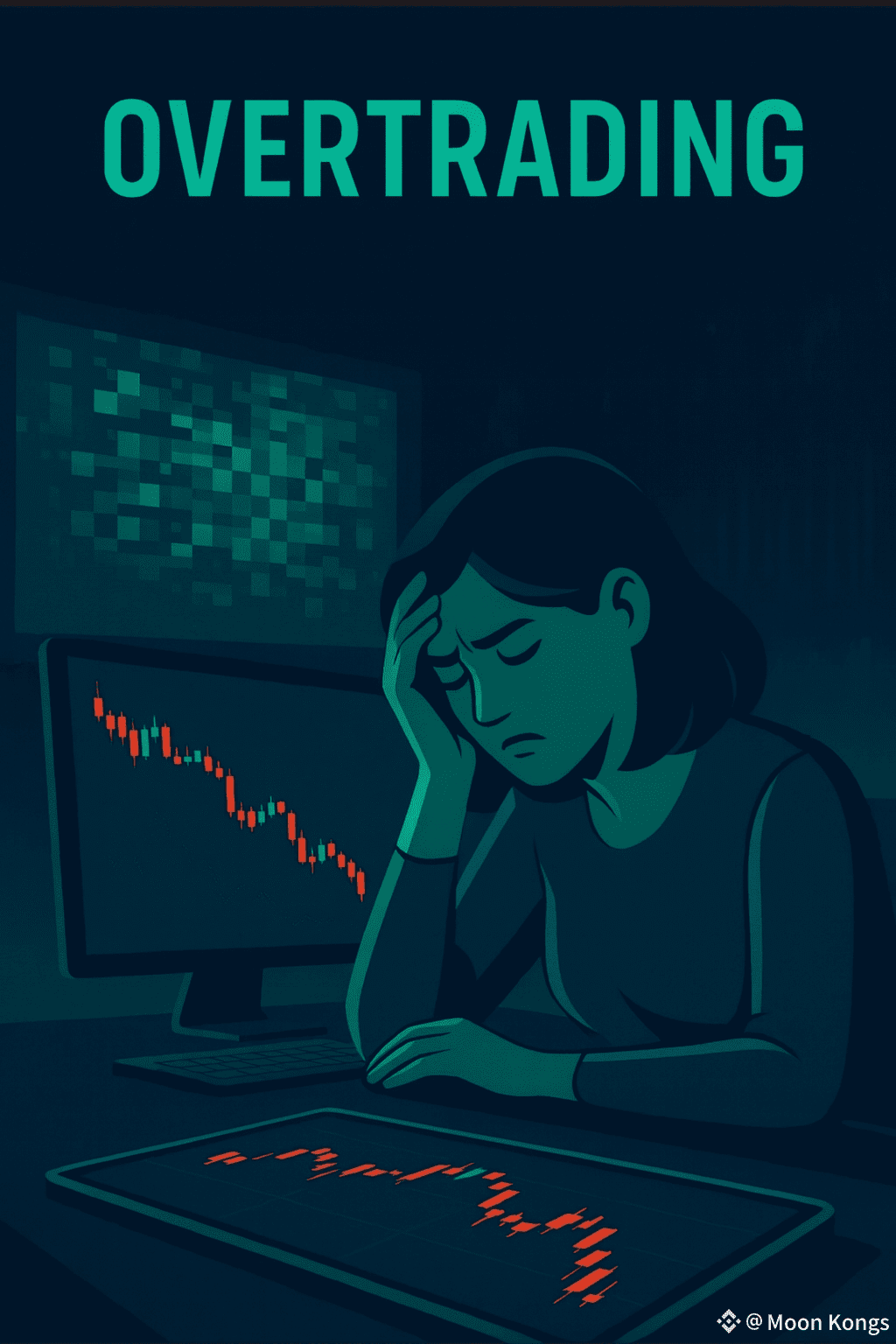
Overtrading is one of the most destructive habits in trading, not because it happens suddenly, but because it grows quietly.