

In most blockchain systems, compliance is framed as an external burden. Identity checks, reporting obligations, and regulatory constraints are treated as frictions imposed from outside the protocol. This framing leads to architectures where legal responsibility is pushed to applications, custodians, or centralized gateways. Dusk takes a different stance. It treats compliance as a first-order infrastructure requirement, inseparable from how the network itself is designed.
This distinction matters because regulated assets behave differently from permissionless tokens. Securities, bonds, and structured products are not merely transferable units of value. They carry embedded rights, disclosure duties, and jurisdictional constraints. If a blockchain cannot express these constraints natively, it cannot host such assets at scale without reintroducing centralized control points.
Dusk’s design begins with this reality.
At the protocol level, Dusk integrates privacy-preserving mechanisms that allow transaction validity to be proven without exposing sensitive information. This is essential for compliance because regulated finance depends on selective transparency, not public disclosure. Regulators require visibility; counterparties require confidentiality. These goals are often framed as incompatible, but in practice they coexist across traditional financial systems through controlled access and legal process. Dusk mirrors this model cryptographically.
The key architectural insight is that auditability does not require public readability. A transaction can be compliant if it is verifiable by authorized parties, even if its details remain encrypted to the broader network. By enabling this separation, Dusk avoids the false choice between total opacity and radical transparency that constrains many public blockchains.
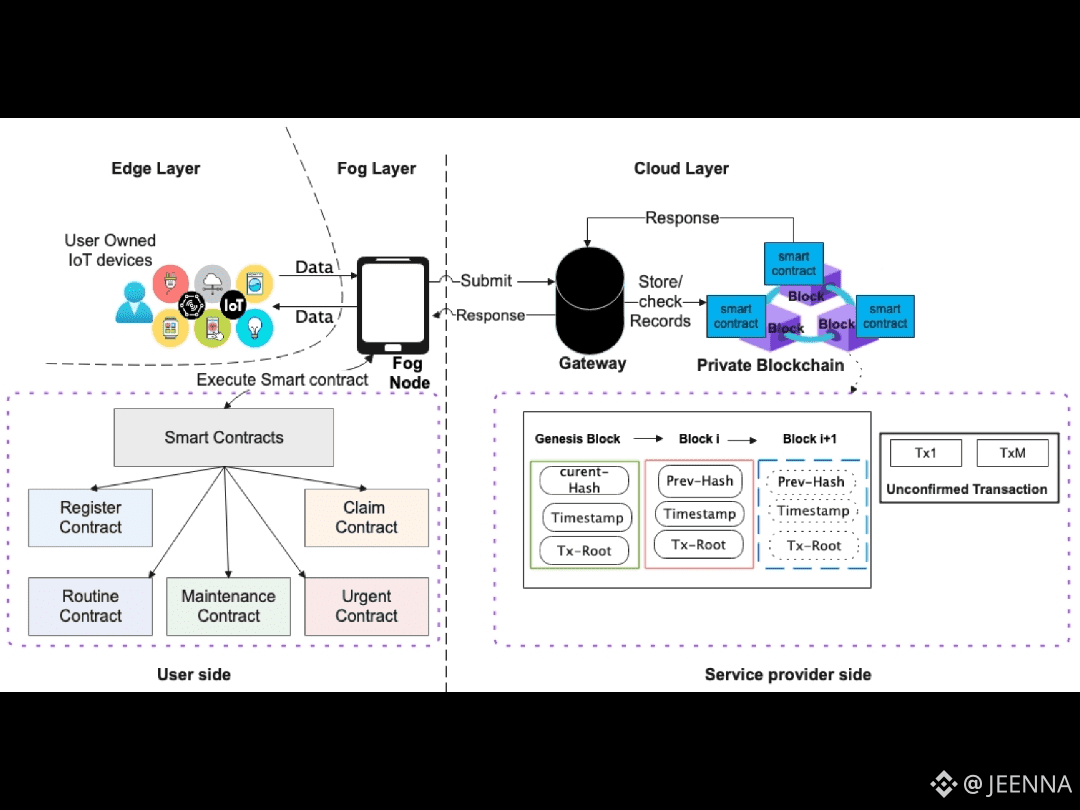
This approach extends beyond privacy into how compliance workflows are handled. Rather than assuming that KYC, AML, and reporting will be enforced off-chain by intermediaries, Dusk enables these requirements to be reflected in smart contract logic. Asset issuance rules, transfer restrictions, and investor eligibility can be encoded directly into contracts that execute deterministically. This reduces operational risk and lowers the cost of compliance by making it systemic rather than procedural.
From an institutional perspective, this matters more than throughput or composability. Financial institutions do not optimize for maximum flexibility; they optimize for predictability and legal certainty. A system that behaves the same way under audit as it does in normal operation is easier to integrate into existing risk frameworks. Dusk’s emphasis on deterministic settlement and compliance-aware execution aligns with this requirement.
Another often overlooked aspect is data retention and historical verification. Regulated markets require long-term audit trails. Transactions must remain verifiable years after execution, even if participants or service providers change. Dusk’s architecture supports this by ensuring that compliance proofs and settlement records are preserved without exposing raw transactional data. This preserves evidentiary value while minimizing information leakage.
The economic implications of this design choice are subtle but important. Infrastructure that supports regulated assets does not benefit from viral adoption patterns. Growth is incremental and gated by licensing, legal review, and institutional onboarding. However, once embedded, such infrastructure becomes difficult to replace. Switching costs are high because compliance systems are deeply integrated into operational processes. Dusk appears to be optimizing for this high-friction, high-durability adoption path rather than short-term network effects.
This also reframes how success should be measured. Metrics like transaction count or retail wallet growth are secondary. More relevant signals include the number of regulated issuers deploying on the network, the volume of compliant assets settled, and the breadth of jurisdictions supported. These indicators evolve slowly, but they correspond directly to real economic activity rather than speculative flow.
In this context, Dusk’s strategy can be understood as an attempt to internalize the constraints of traditional finance rather than disrupt them rhetorically. It does not assume that regulation will become simpler or weaker. It assumes the opposite: that compliance requirements will intensify as digital asset markets mature. By building for that future now, Dusk positions itself as infrastructure that remains usable when regulatory scrutiny increases rather than retreats.
Whether this approach captures a dominant share of tokenized asset markets is uncertain. But structurally, it aligns with how capital actually moves in regulated environments. If blockchain technology is to become a substrate for real financial markets rather than a parallel system, compliance cannot be optional. Dusk’s architecture reflects that understanding at a foundational level.