
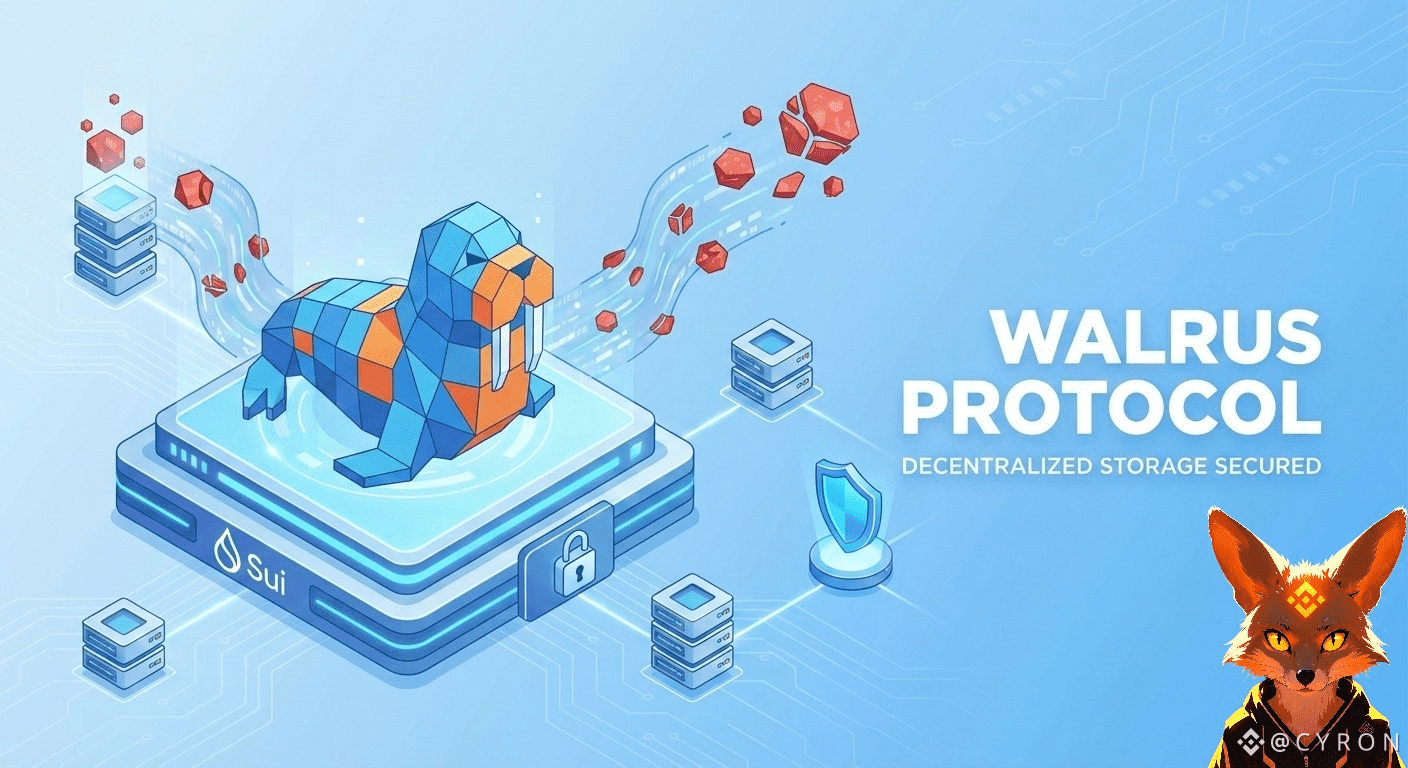
Walrus is designed to solve one of the most critical challenges in decentralized systems: reliable data storage. Decentralized applications depend on data availability to function correctly. When data is unavailable, applications fail regardless of how secure or decentralized their execution layer may be.
Traditional storage relies on centralized servers that introduce risks related to outages, censorship, and control. Walrus replaces this model with a decentralized storage network where data is distributed across independent participants. This approach improves reliability and resilience.
Rather than serving as a general purpose platform, Walrus focuses specifically on storage infrastructure. Its architecture is optimized for availability, durability, and long term data persistence.
The Importance of Data Availability in Decentralized Systems
Decentralized applications rely on data for state, content, and user interaction. If data becomes inaccessible, application logic cannot function. Many decentralized systems underestimate this dependency, focusing primarily on execution while relying on centralized storage.
Centralized storage creates single points of failure. Outages, censorship, or provider shutdowns can disrupt application functionality. Walrus eliminates these risks by distributing data across a network of independent participants.
By ensuring data availability at the infrastructure level, Walrus strengthens the entire decentralized application stack.
Distributed Storage as a Core Principle
Walrus stores data by distributing it across multiple nodes. No single participant controls the data. This distribution improves fault tolerance and reduces the risk of data loss.
If individual nodes go offline, the network can still retrieve stored information from other participants. This redundancy ensures that data remains accessible under adverse conditions.
Distributed storage also reduces trust assumptions. Users do not need to rely on a single provider to maintain access to their data.
Network Participation and Storage Providers
Walrus relies on participants who contribute storage resources to the network. These storage providers maintain data availability by storing and serving data fragments.
Participation is open, allowing a diverse set of contributors to support the network. This diversity improves resilience and reduces concentration risk.
Storage providers are economically incentivized to maintain data availability, ensuring reliable service over time.
The Role of Economic Incentives
The WAL token plays a central role in coordinating network behavior. Storage providers are rewarded for contributing resources and maintaining data availability. This incentive structure aligns participant behavior with network goals.
Economic incentives discourage malicious activity and encourage honest participation. Providers who fail to meet availability expectations risk losing rewards.
By embedding incentives into the protocol, Walrus reduces the need for centralized enforcement mechanisms.
Data Integrity and Retrieval Assurance
Walrus ensures that stored data remains intact and retrievable. Mechanisms are in place to verify that providers store correct data and serve it when requested.
Users can request data with confidence that it will be available. This reliability is essential for applications that depend on persistent storage.
Data integrity verification ensures that retrieved content matches the original stored data, protecting against corruption or tampering.
Supporting Data Intensive Applications
Many decentralized applications require large volumes of data. Media content, historical records, and application state all place demands on storage infrastructure.
Walrus supports these data intensive use cases by providing scalable storage without relying on centralized servers. Applications can grow without facing storage bottlenecks.
By separating storage from execution, Walrus allows developers to design systems that scale efficiently.
Long Term Sustainability of Decentralized Storage
Sustainability is a key concern for storage networks. Temporary storage solutions fail to support applications that require persistent data over long periods.
Walrus is designed with long term storage in mind. Incentives encourage continued participation and data maintenance. The network structure supports durability rather than short lived availability.
This focus makes Walrus suitable for applications that require consistent data access over extended time frames.
Walrus addresses a foundational need in decentralized systems by providing reliable and resilient data storage. Through distributed architecture, economic incentives, and integrity assurance, it ensures that data remains accessible and secure.
By focusing exclusively on storage infrastructure, Walrus strengthens the decentralized application ecosystem as a whole. Its design supports availability, durability, and scalability without centralized control.
As decentralized applications continue to grow, reliable storage will remain essential. Walrus provides the infrastructure needed to support this growth in a decentralized and sustainable manner.
