


As we step into 2026, the Walrus Protocol stands out as a pivotal player in the decentralized storage landscape. Built on the Sui blockchain by Mysten Labs, Walrus is designed as a privacy-first, programmable storage layer that uses erasure coding to ensure efficient, verifiable data availability. The native $WAL token powers the ecosystem, facilitating staking, governance, and storage payments while introducing deflationary mechanics through burns tied to usage. With its mainnet launch in March 2025 and token generation event (TGE) shortly after, Walrus has transitioned from experimental phases to real-world production, supporting applications in AI, health tech, EVs, and more.
Entering 2026, the protocol is poised for scaling, with a focus on sustainability, broader integrations, and addressing enterprise demands. This article explores predicted roadmap milestones for Walrus Protocol and $WAL, drawing from official updates, ecosystem developments, and market analyses.
A Quick Recap of 2025: From Launch to Production
2025 marked Walrus's shift from testing to tangible impact. Key highlights include:
Mainnet Launch and Wal TGE: In March, the protocol went live, enabling decentralized blob storage with on-chain verifiability via Sui. The $WAL token launch aligned incentives for storage, staking, and economics, with a total supply capped at 5 billion and allocations emphasizing community (60% for airdrops, incentives, and subsidies).
Ecosystem Growth: Walrus powered diverse dApps, such as Cudis Wellness for user-owned health data, Alkimi Exchange for verifiable ads, DLPLabs for EV data markets, Talus Labs for AI agents, and Myriad Markets for transparent prediction markets. Partnerships with projects like Pudgy Penguins for NFT storage and integrations with Pipe Network (for latency reduction) and Baselight (for data monetization) expanded its reach.
Protocol Upgrades: Features like Seal introduced native encryption and programmable access control, while Quilt optimized small-file storage, saving millions in $WAL costs. These enhancements improved upload reliability and developer tools.
By year-end, Walrus had processed terabytes of data, with over 1 billion Wal staked and real adoption across 100+ nodes. However, challenges like the Tusky publisher shutdown highlighted the need for seamless migrations, which Walrus supported through alternative publishers like Zark Lab and Nami HQ.
This foundation sets the stage for 2026, where Walrus aims to test sustainability and execution against 2025's production focus.
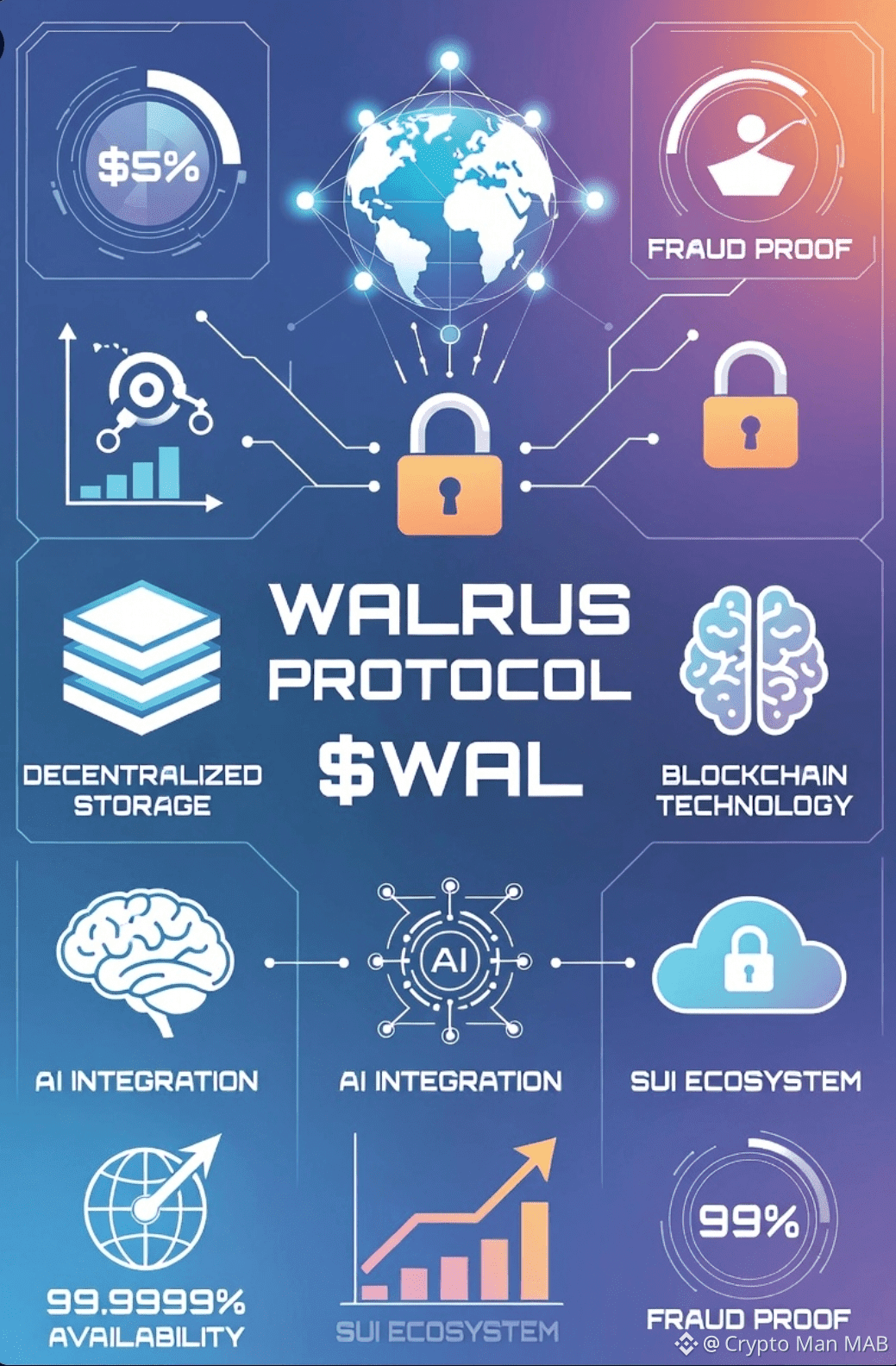
Predicted Roadmap for 2026: Scaling, Integration, and Expansion
Based on official statements and analyst insights, Walrus's 2026 roadmap emphasizes maturation into a robust data infrastructure for AI, media, and institutions. While not exhaustive, key predictions include:
Q1: Stability and Core Enhancements
Stable Storage Pricing: Walrus plans to introduce USD-denominated pricing to eliminate volatility confusion for users. This move caters to enterprise needs, making costs predictable and fostering broader adoption.
XL Blobs Support: To handle massive AI models and datasets, Walrus will expand blob sizes, enabling efficient storage for high-volume use cases like AI training data and large media files.
Builder Support Growth: With 170+ partners already onboard, expect intensified developer tools and grants to accelerate integrations.
Q2-Q3: Ecosystem and Infrastructure Expansion
AI and Media Focus: Deeper partnerships in AI (e.g., via FLock.io and Talus Labs) and media sectors will advance data markets. Walrus's programmable storage will support verifiable AI datasets, positioning it as a backbone for the "AI era."
Sui Stack Integrations: As part of Sui's ecosystem, Walrus will strengthen ties with features like programmable privacy and free stablecoin transfers. This includes cross-chain bridges for broader accessibility.
Use Case Diversification: Moving beyond data-heavy verticals, Walrus will target commerce, gaming, and institutional applications, leveraging Seal for privacy-centric solutions.
Q4: Sustainability and Optimization
Abstractions and UI/UX Improvements: Further simplifications to make Walrus integration seamless, reducing friction compared to centralized alternatives.
Deflationary Mechanics and Incentives: With burns from storage usage and staking rewards, the protocol will balance decentralization with enterprise demands, potentially introducing more burns to counter supply pressure.
Overall, 2026 is framed as a "test of sustainability," with Walrus aiming to scale production usage while mitigating risks like Sui ecosystem dependency and node participation incentives.
Wal Token Predictions: Growth Amid Volatility
As of mid-January 2026, Wal trades around $0.15, down from its all-time high of $0.87 but showing signs of stabilization. Analysts project moderate to optimistic growth, driven by utility and deflationary pressures:
Short-Term (Q1-Q2): Potential rebound to $0.20-$0.55, fueled by Q1 upgrades and AI narrative momentum.
Full-Year Average: Forecasts range from $0.17 to $1.10, with highs up to $1.98 if adoption surges. Key catalysts include Grayscale's institutional trust, Binance/Kraken listings, and integrations like Scallop's lending boosts.
Longer-Term Potential: By year-end, Wal could hit $0.45-$1.02, with 10x upside (to $1.50+) if decentralized storage becomes critical for AI. However, daily unlocks and market dumps pose risks.
Sentiment is neutral to bullish, with the Fear & Greed Index at 61 (Greed), but competition from Filecoin and Arweave remains a factor.
Opportunities and Challenges Ahead
Opportunities: Walrus's alignment with 2026 trends like AI data markets, tokenization, and programmable privacy positions it for explosive growth. Institutional validation (e.g., a16z, Grayscale) and Sui's innovations could drive adoption, with Messari highlighting its role in AI, gaming, and data services.
Challenges: Supply pressure from unlocks, ecosystem concentration on Sui, and UI/UX friction could hinder progress. Addressing these through better communication and burns will be crucial.
A Year of Maturation and Potential Breakthroughs
2026 could be transformative for Walrus Protocol, evolving it from a storage solution to essential Web3 infrastructure. With a focus on scaling, AI integrations, and stable features, combined with $WAL's utility-driven model, the protocol is well-positioned for growth. As data becomes the "new oil" in the AI economy, Walrus's emphasis on ownership and verifiability may lead to widespread adoption. Investors and builders should monitor official updates via the Walrus newsletter for the latest developments. While risks persist, the roadmap signals a commitment to long-term value in a maturing crypto space.