

@Dusk Network emerged in 2018 from a realization that runs counter to much of blockchain culture: transparency, while valuable, is not how finance actually works. In traditional financial systems, confidentiality is foundational. Customer balances are private, trading strategies are protected, and institutions are required to demonstrate compliance without exposing sensitive data. Public blockchains typically invert this model by making transactions fully visible. Dusk was created to reconcile this contradiction by enabling privacy, regulatory compliance, and verifiability to function together at the protocol level.
Rather than positioning itself as a universal blockchain for all applications, Dusk is purpose-built as a layer-1 network for regulated financial assets. Its focus is narrow but deliberate, centering on instruments such as securities, bonds, funds, and other assets that already operate within legal frameworks. The primary challenge it addresses is not throughput or fees, but regulated trust. Financial institutions require certainty, finality, and legal enforceability. Regulators demand evidence that rules are upheld. Users expect discretion around their financial data. Most blockchain systems force compromises between these needs; Dusk is designed to eliminate the need for those compromises.
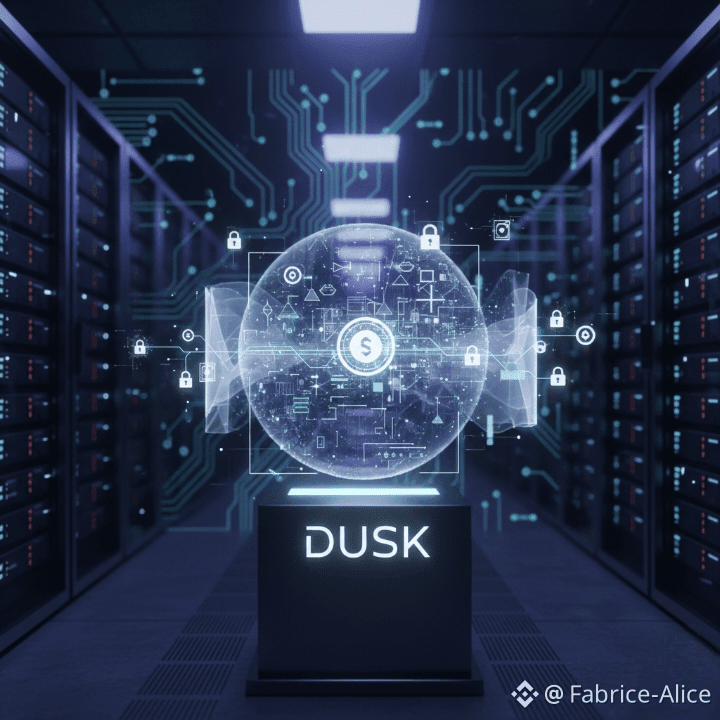
The network’s architecture reflects the complexity of regulated finance. At the foundation lies Dusk’s own blockchain, which handles consensus and settlement with strong finality guarantees similar to traditional financial systems. Built on top of this is a privacy layer powered by zero-knowledge cryptography. This allows transactions to be validated against all required rules without revealing the underlying information. Balances, ownership details, and transactional data remain confidential, while cryptographic proofs ensure accuracy and compliance. The result is privacy that supports accountability rather than obscuring it.
Smart contracts on Dusk are tailored to operate within this regulated environment. Instead of assuming full transparency, they can execute logic while keeping sensitive parameters hidden. This makes it possible to encode real-world financial mechanisms—such as issuance rules, transfer limitations, and compliance checks—directly on-chain without exposing proprietary logic or private agreements. At the same time, Dusk maintains compatibility with familiar Ethereum development tools, allowing developers to work within an ecosystem they already understand while gaining access to privacy-preserving features.
The DUSK token underpins the network’s operation. It is used for staking, enabling validators to secure the network by committing economic value to honest participation. This design discourages malicious behavior by making it financially punitive. The token also covers transaction and execution fees, ensuring efficient use of network resources. Beyond these mechanics, the token ties participants to the network’s long-term sustainability, as governance and protocol evolution depend on aligned economic incentives. Its value is therefore linked less to speculation and more to real financial usage on the network.
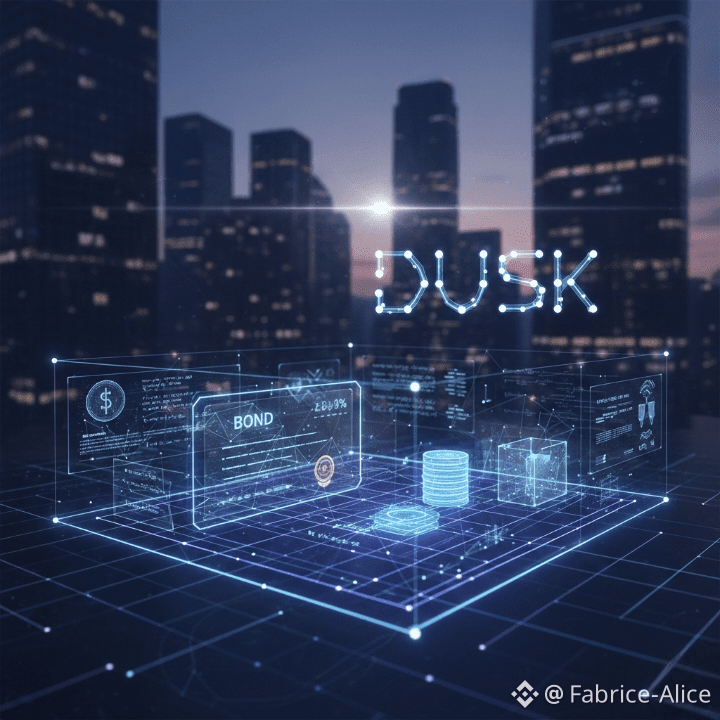
Dusk does not aim to replace existing blockchains or financial systems. Instead, it positions itself as a specialized layer that integrates with them. Through interoperability, standard development tooling, and connections to off-chain infrastructure, Dusk can interact with exchanges, custodians, compliance platforms, and legacy systems. This integration is critical, as regulated finance operates across interconnected systems rather than isolated environments. Dusk’s objective is to fit into established workflows rather than force institutions into a closed or unfamiliar ecosystem.
The practical significance of Dusk’s design becomes clear in real-world applications, particularly in the tokenization of securities and other real-world assets. These are not symbolic representations, but legally meaningful instruments issued and managed on-chain in compliance with jurisdictional rules, investor qualifications, and reporting obligations. Dusk has collaborated with regulated trading venues, especially within Europe, to support compliant secondary markets. This marks a shift from experimental pilots toward infrastructure capable of handling real capital and real obligations.
Development on Dusk has followed a measured trajectory. The project has launched its mainnet, expanded smart contract functionality, and continued refining its privacy and compliance frameworks. Rather than chasing rapid adoption, Dusk has focused on credibility, regulatory alignment, and technical robustness. This slower pace may lack spectacle, but it mirrors how financial infrastructure is typically adopted and trusted.
Challenges remain substantial. Regulatory requirements vary across jurisdictions and evolve continuously, demanding ongoing adaptation. Maintaining the balance between confidentiality and regulatory transparency is both a technical and legal challenge, and missteps could erode trust from institutions or regulators alike. Competition is also intensifying as other blockchain projects target institutional and privacy-focused use cases. Dusk must prove not just technical capability, but a clearer and safer adoption path than competing solutions.
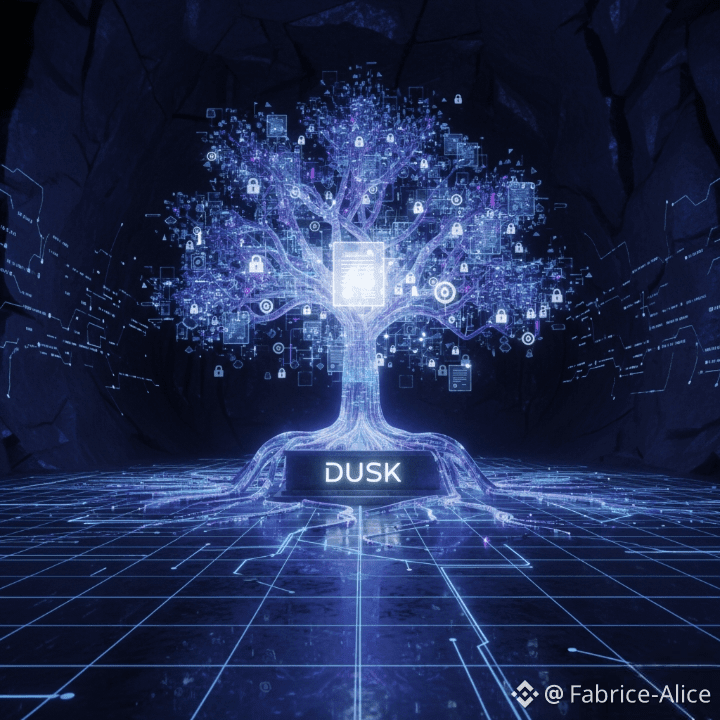
Ultimately, Dusk’s success is likely to depend more on institutional adoption than market sentiment. If financial entities increasingly turn to blockchain to gain efficiency and automation without compromising confidentiality, Dusk is positioned as foundational infrastructure rather than a speculative platform. Its future lies in deeper integrations, expanded regulatory alignment, and continued refinement of privacy-preserving financial logic. If it succeeds, that success may be largely invisible—measured not in hype, but in quiet, reliable usage underpinning how regulated assets are issued, transferred, and settled.
In this way, Dusk reflects a different vision for blockchain. It does not aim for viral attention or rapid disruption. Instead, it aspires to become something closer to infrastructure: largely unseen, rarely discussed, but essential. If blockchain technology is to mature into a trusted component of global finance, systems like Dusk may represent what that maturity actually looks like.
