
The alert pinged in the dead of night. A major dApp serving thousands of users had just lost a cluster of nodes. In any other system, panic would ripple through servers and dashboards, users screaming in chat logs, files vanishing like smoke. But not here. Walrus doesn’t just “try” to survive—it engineers resilience into its core. Erasure coding slices each file into fragments, dispersing them across nodes, ensuring recovery even when nearly half the network goes dark. In this case, the dataset came back in under 2 seconds, with zero intervention from operators. Users never noticed.
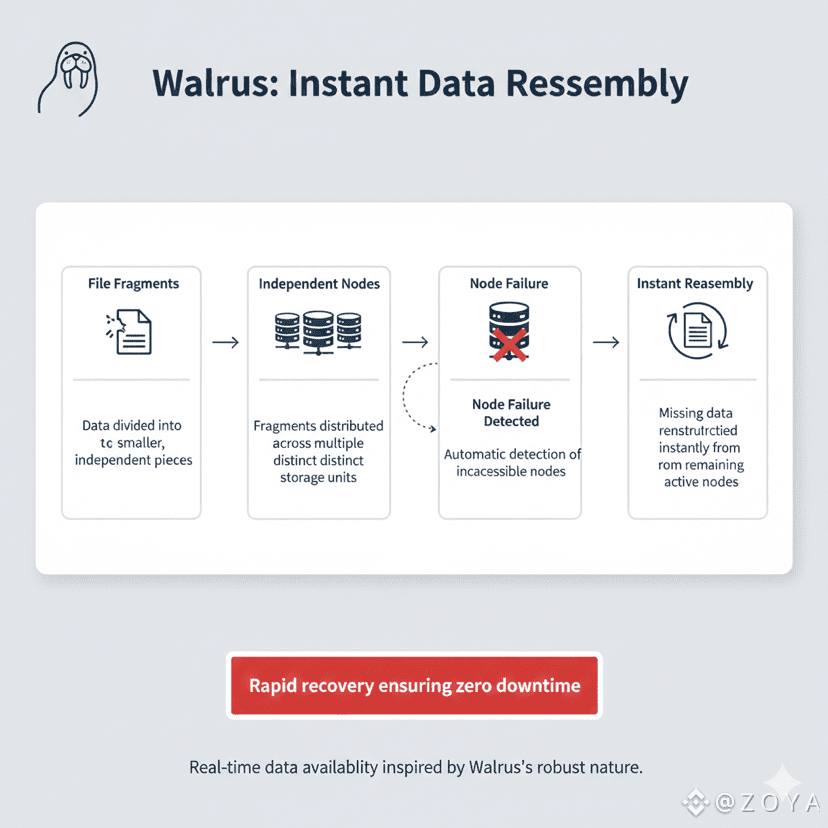
Behind the scenes, the WAL token hums its quiet command. Nodes earn rewards only if fragments remain available; penalties kick in if they falter. That token-driven accountability isn’t abstract—it directly protects users’ files, ensures developers’ apps don’t freeze, and keeps critical data flowing during network turbulence. One node down isn’t a hiccup; it’s a test Walrus passes without a ripple. For devs, it’s the difference between frantic firefighting and calm monitoring. For users, it’s invisible reliability—silent, invisible, indispensable.
Files weren’t the only things at stake. Imagine a trading dashboard mid-update, hundreds of portfolio snapshots updating per second. A node cluster fails—without Walrus, some snapshots vanish. With it, the same system reconstructs missing pieces in milliseconds, preserving data integrity and trust. The network doesn’t just recover; it enforces consistency through economic incentives, turning tokenomics into real-world dependability. Operators follow the rules, yes, but the true beneficiaries are the users who never even see the disruption.
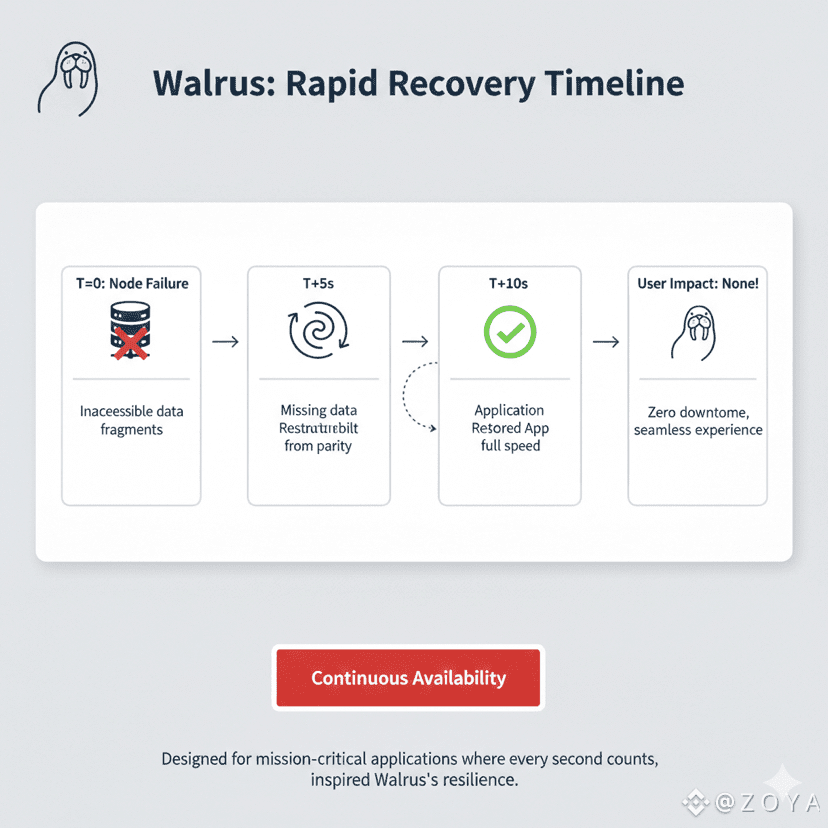
Walrus’s silent orchestration makes the chaos irrelevant. Users continue uploading images, running analytics, or playing real-time games without missing a beat. Developers watch logs, nod quietly, and move on—no firefights, no angry support tickets. It’s not flashy. It’s not loud. It’s infrastructure doing its job so well that no one notices, until something goes wrong somewhere else. Then they remember, this layer never fails.
