
Here’s the thing: As AI keeps growing, it chews through mountains of data every day. But where does all that information actually go, and how do we keep it from getting trapped behind some company’s firewall? That’s where Walrus comes in. It’s a developer platform that works with any blockchain, and it’s actually solving this problem. On Sui, Walrus turns basic storage into real, verifiable markets you can trade and program—no middlemen needed. It’s not just another place to stash files. It’s building an ecosystem where your data is an asset you own and control, ready for the new era of AI. If you care about crypto and where it intersects with AI, keep an eye on this—Walrus is quietly changing the way Web3 handles information.
Walrus does something most blockchains can’t: it handles unstructured data. We’re talking huge AI training sets, videos, app states—stuff that would make a regular chain grind to a halt. It uses Sui for things like payments and incentives, but the data gets stored across a bunch of independent nodes. That’s how it stays truly decentralized. And the tech behind it? Pretty slick. Walrus chops your data into coded pieces, spreads them out for privacy and resilience, and backs it all up with on-chain proofs. So even if some nodes drop off, you can recover your data fast, without wasting bandwidth. Developers get the tools to build entire data markets—users can share or sell their datasets directly, with smart contracts making sure ownership and permissions stay tight.
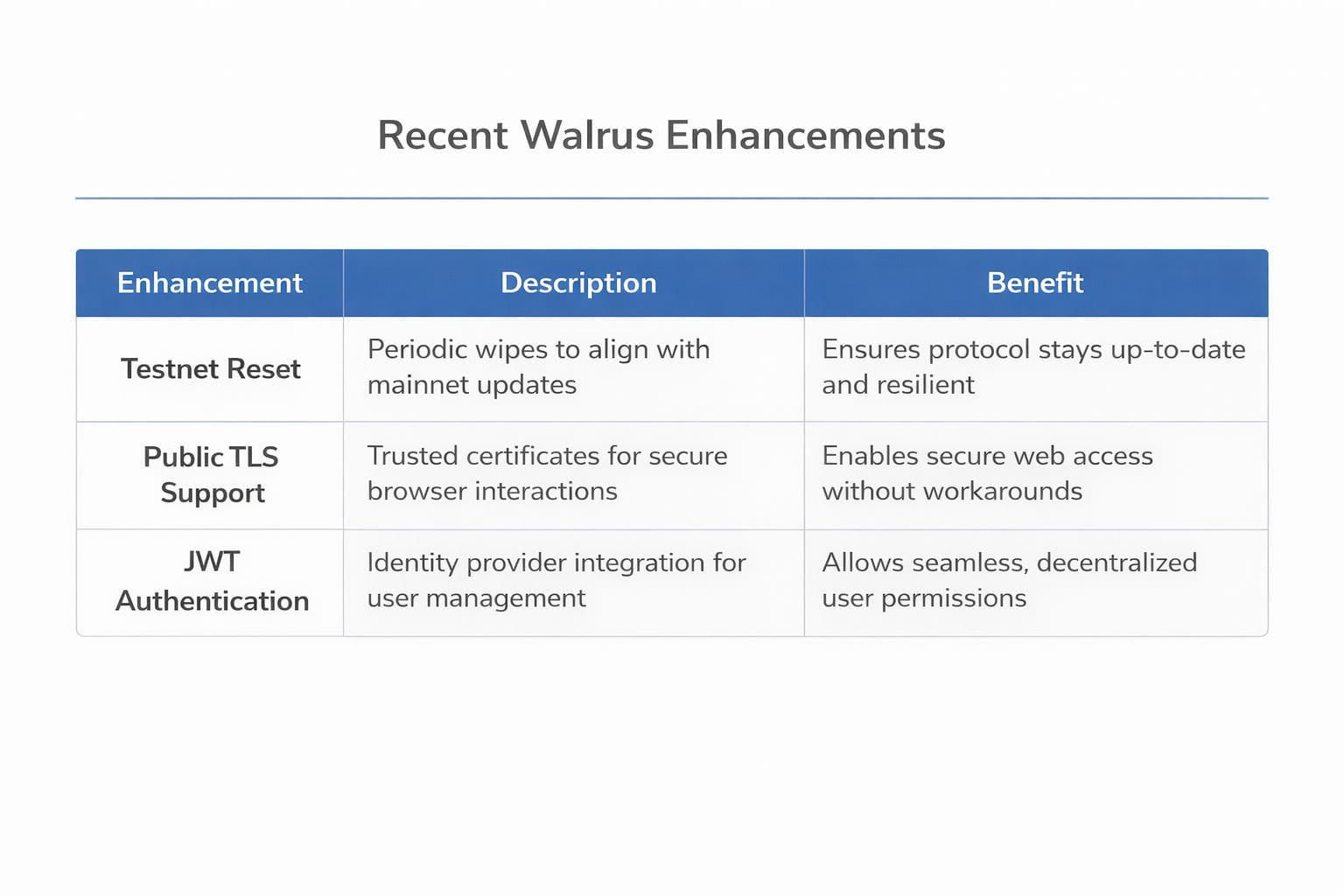
Lately, Walrus has rolled out a bunch of upgrades. Early 2026 saw a testnet reset to match mainnet, with regular wipes every few months. That lets builders try new stuff without worrying about old junk piling up. For now, testnet Walrus Sites are just for insiders—no public portals yet. Security also got a boost: storage nodes now use trusted TLS certificates from places like Let’s Encrypt, so browsers can talk to them directly without weird workarounds. Publishers also get JWT auth, which means you can plug in any identity provider and manage users easily. The whole thing stays decentralized, but it’s still friendly for developers.
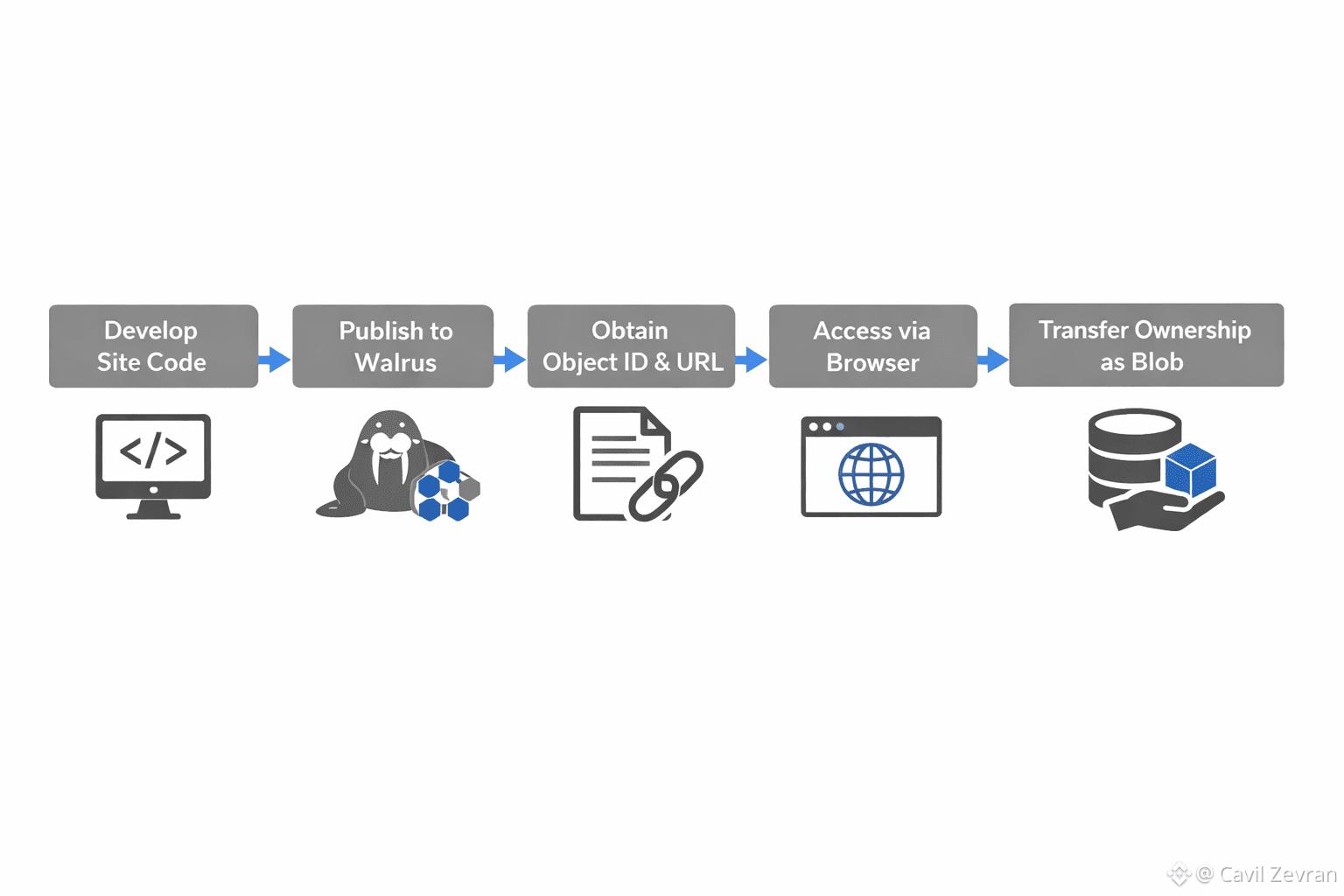
And then there’s Walrus Sites—the big feature for hosting stuff on-chain. You can use any web framework, publish your site as an on-chain object, and browse it with a regular browser (no crypto wallet needed). These sites are tough, too: resources are stored as transferable blobs, which makes them perfect for dApps on Sui, Ethereum, Solana, you name it. People are already launching things like Flatland for interactive apps, Snowreads for publishing, Walrus Staking for token stuff, and even full documentation. It’s affordable, too—costs are similar to traditional web hosting, but you get more reliability than most Web3 options. Your site stays up even if the network hiccups.
At its heart, Walrus is all about building data markets for AI. Picture AI agents with their own memory, pulling from datasets that owners can sell or license right on-chain. Storage providers stake WAL tokens to participate, and they earn rewards by proving they’re reliable. The whole setup rewards quality, not just quantity. Storage fees actually power the network, and with AI always hungry for data, demand keeps the whole thing running. Since Walrus went live on March 27, 2025, with 100+ nodes and a $140M token sale behind it, the platform’s already supporting these markets and drawing serious attention.
But Walrus isn’t just about storage—it’s aiming for a web where you can trace data, and maybe even put ads on-chain (people have started talking about that). Sponsoring projects like Unchained to protect media libraries shows Walrus has real-world value for creators who want to break free from centralized platforms. In a space full of empty promises, Walrus stands out for what it actually delivers: real, verifiable data, efficient infrastructure, and the right tools for the coming AI data explosion.