


Dusk Network starts from a simple but uncomfortable question, can finance ever work properly on blockchains where everything is visible? I’m not talking about hiding wrongdoing. I’m talking about normal financial behavior, positions, strategies, counterparties, balances. In real markets, those things are protected for a reason. They’re sensitive. They’re competitive. They’re sometimes dangerous if exposed. Dusk Network is built around the belief that public infrastructure and privacy do not have to cancel each other out — if the chain is designed for that purpose from day one.
When I look at Dusk Network, I don’t see a project chasing trends. I see a chain that is clearly focused on one sector, financial applications that need confidentiality, rules, and final settlement. They’re not trying to be everything for everyone. They’re trying to be reliable for a market that cannot afford guesswork. If privacy breaks, trust breaks. If settlement is uncertain, markets freeze. That reality shapes everything Dusk is building.
Most blockchains expose too much by default. Every transfer, every balance, every interaction is visible. That openness is powerful, but it becomes a weakness the moment serious finance enters the picture. Imagine running a trading venue where every position is public. Imagine issuing an asset where every holder is exposed. Would institutions accept that? Would users feel safe? Dusk exists because the answer is usually no.
Dusk is a layer 1 blockchain built to support "confidential smart contracts". That phrase matters. A normal smart contract is fully transparent. Anyone can inspect inputs, logic, and outputs. On Dusk, the goal is different. Contracts should still enforce rules and settle correctly, but sensitive details should not be broadcast to the world. I’m describing this in plain terms because the idea is simple even if the cryptography is complex. The chain proves correctness without revealing everything.
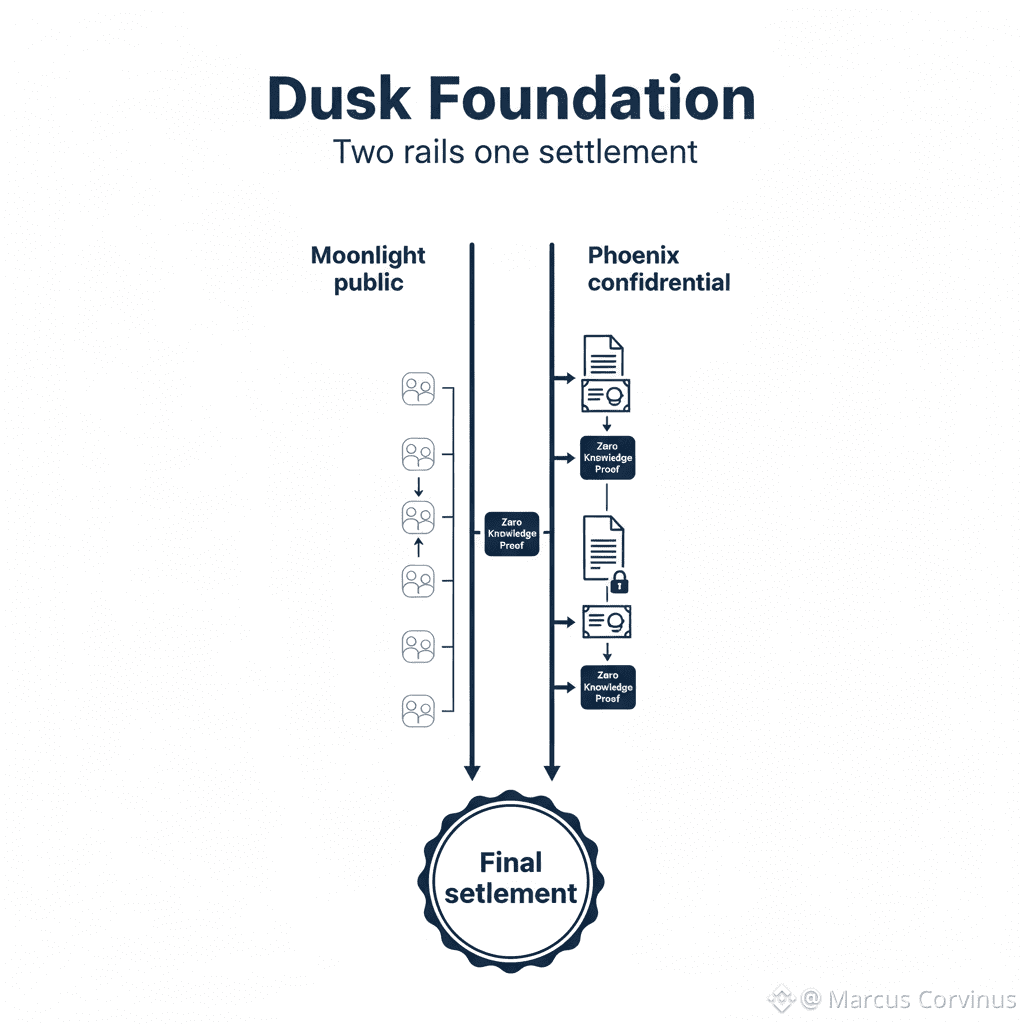
A big part of how this works is Dusk’s decision to support two transaction styles on the same network. One is public, known as "Moonlight". It works like traditional account based transfers and is useful when transparency is required. The other is private, known as "Phoenix". Phoenix uses cryptographic proofs so value can move without exposing amounts or ownership details. Why both? Because finance is not one dimensional. Sometimes visibility is required. Sometimes it is harmful. Dusk gives both options without forcing users onto separate chains.
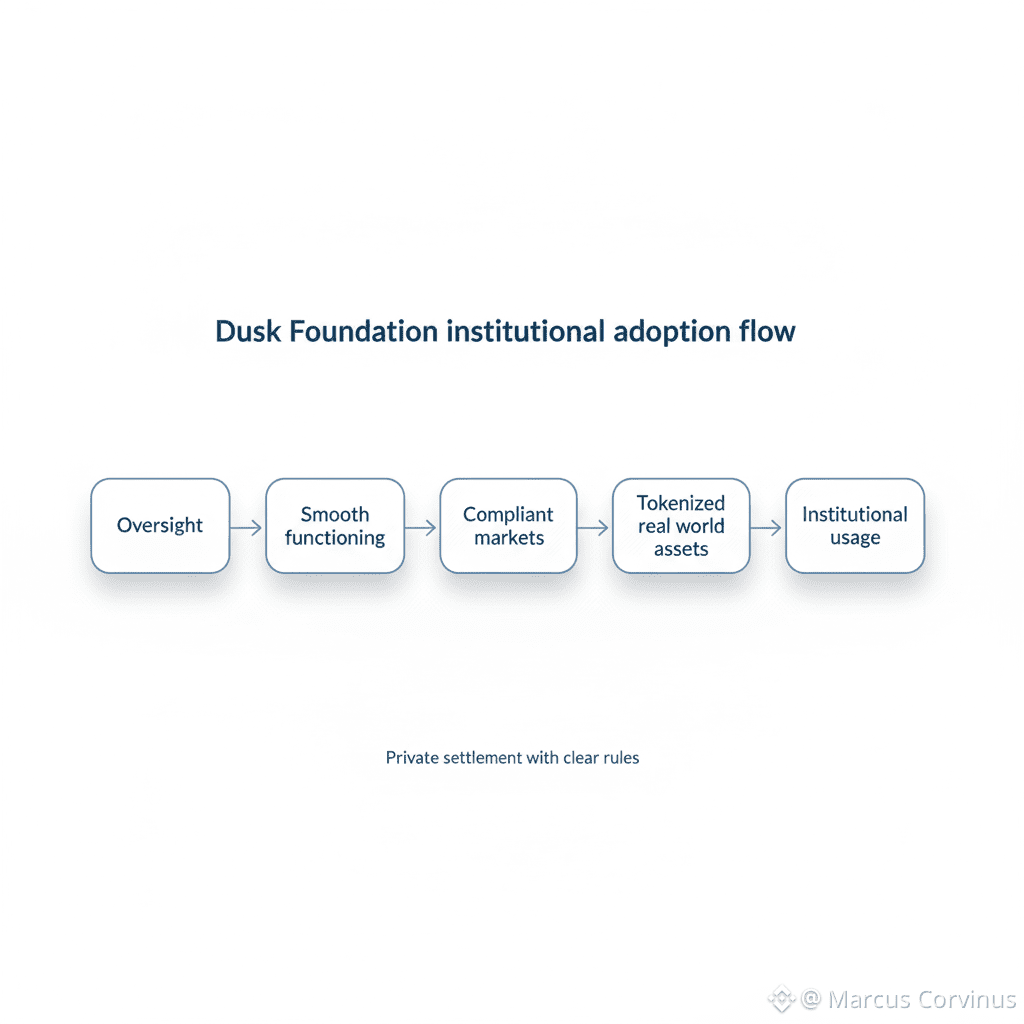
"Phoenix" is not treated like an optional privacy tool. It is part of the core transaction logic. That is important. If privacy feels bolted on, people avoid it. If it feels native, it becomes normal behavior. I’m seeing Dusk push toward privacy as the default expectation for sensitive financial activity, not as a special mode you only use if you are very careful.
Things get more interesting when we move beyond simple transfers. Financial assets often come with rules. Some assets can only be held by approved users. Some require transfer limits. Some need approval flows. Some require snapshots of ownership for reporting or governance. Many privacy systems struggle here because rules often require tracking, and tracking often hurts privacy. Dusk directly tackles this tension instead of ignoring it.
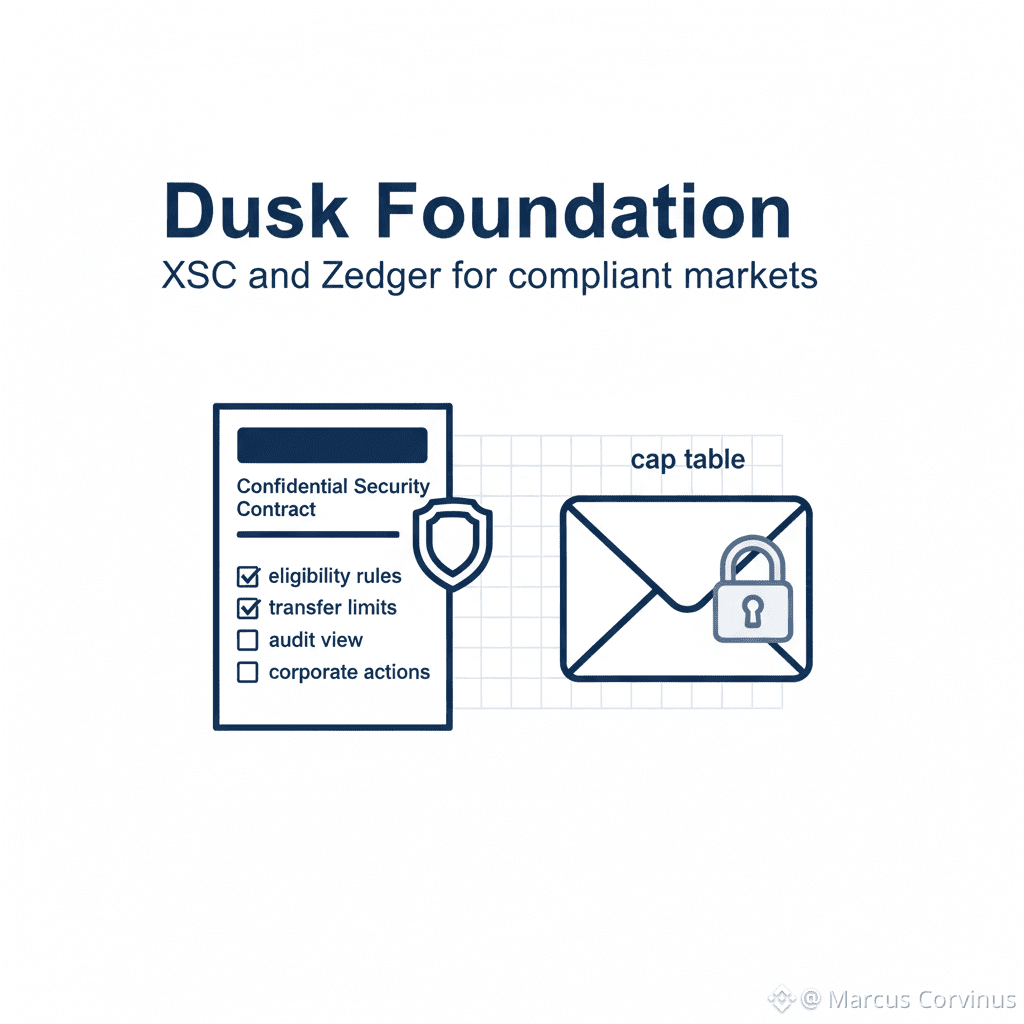
This is where "Confidential Security Contracts", often called "XSC", come into play. XSC is designed for assets that behave like regulated financial instruments. The idea is that an asset can enforce compliance rules while still protecting holder privacy. I’m pointing this out because it changes the conversation. This is not about hiding tokens. This is about issuing and managing assets that look like real securities, with confidentiality built into their behavior.
To support that, Dusk introduces "Zedger", a hybrid privacy preserving model built specifically for security tokens. Hybrid does not mean weak. It means carefully balanced. Zedger allows private ownership and transfers while still supporting the controls that regulated assets need. If an issuer must enforce eligibility, the system supports that. If a regulator needs a specific view, the system supports selective disclosure. But the public does not automatically see everything.
Ask yourself this question, should holding a compliant asset mean your position is visible to the entire internet? Most people would say no. Dusk is built around that answer. They’re trying to protect users without removing the ability to enforce rules. That balance is the hard part, and it is where many projects fail.
Identity plays a quiet but critical role here. Compliance needs identity, but identity does not have to mean public labels. Dusk includes "Citadel" as a way to support self sovereign identity with "selective disclosure". In simple words, you can prove you are allowed to do something without revealing everything about who you are. If you are eligible, you prove eligibility. You do not publish your full profile to the chain.
I’m emphasizing selective disclosure because privacy often dies through small leaks. One public label here. One permanent link there. Over time, patterns emerge. Citadel is meant to reduce that risk by keeping credentials private and using proofs instead of exposure. If finance needs verification, verification can exist without turning into surveillance.
Privacy and rules mean nothing if settlement is weak. Financial markets demand finality. Not maybe final. Not probably final. Final. Dusk is built around deterministic settlement, where once a transaction is accepted and finalized by the network, it is done. There is no long waiting period where everyone hopes nothing goes wrong. This is critical for trading, clearing, and settlement workflows.
The network uses a proof of stake system designed to reach agreement through committees and clear steps. This process is often referred to as "Succinct Attestation". I’m not going into math here. What matters is the outcome. The chain can agree on a block and lock it in with confidence. For finance, that confidence is not a luxury. It is a requirement.
"DUSK" is the token that powers this system. It is used for staking, for participation in consensus, and for paying fees inside the network. Staking ties economic incentives to correct behavior. If you help secure the network reliably, you are rewarded. If you repeatedly fail, your influence and rewards are reduced. This creates pressure toward stability, which is exactly what financial infrastructure needs.
There is also a story in how Dusk approached mainnet. Instead of rushing, they described a staged rollout that led to the first immutable block in early 2025. I’m mentioning this because process matters in finance. Predictable transitions build trust. Sudden switches break it. Dusk clearly wants to be seen as careful rather than flashy.
So what is Dusk really trying to become? Not a secret chain. Not a niche privacy toy. It is aiming to be a public settlement layer where private financial activity can safely exist. A place where assets can be issued, traded, and managed with confidentiality. A place where rules are enforced through standards like "XSC". A place where privacy is normal, not suspicious. And a place where settlement feels final enough for real markets.
The question that stays with me is simple, if public blockchains want to host serious finance, can they do it without privacy? Dusk’s entire design says no. And the more I look at how finance actually works, the harder it is to argue with that.