

Hey guys, consensus is basically the heart of any blockchain, right? It's how all the nodes agree on what's real without some boss telling them what to do. Dusk Network's Segregated Byzantine Agreement – SBA for short – feels like a smart twist on Proof-of-Stake, mixing in privacy stuff to fix a bunch of problems other chains have.
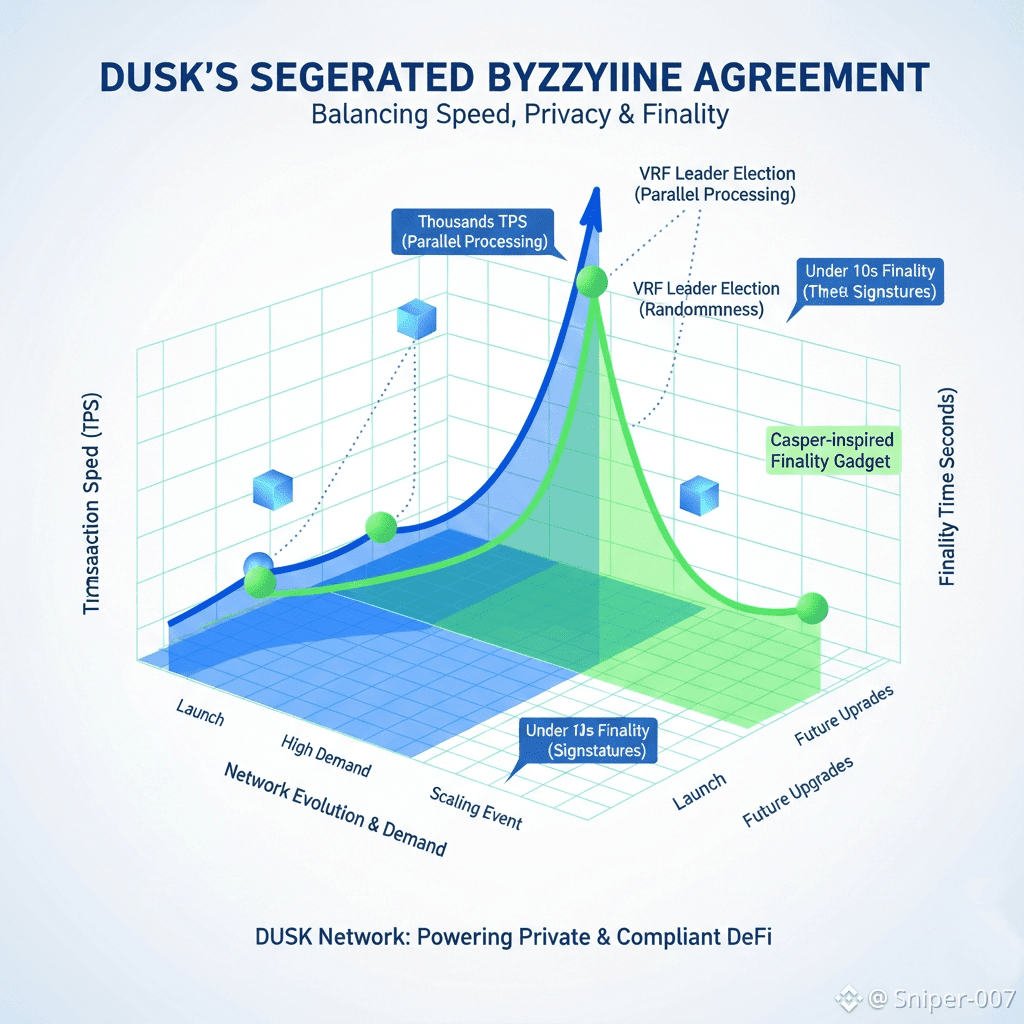
Forget energy-guzzling Proof-of-Work or those super heavy validator setups like Tendermint. SBA splits things up into clear parts to make it faster, safer, and way more scalable, especially when privacy matters. It's leader-based: they pick block proposers using a verifiable random function (VRF) linked to how much $DUSK you stake. That randomness stops predictable attacks or people gaming the system to always get picked.
The "segregated" part means different jobs for different players. One guy (the proposer) puts transactions together into a block, then validators vote in rounds using threshold signatures to keep it efficient. It draws from classic Byzantine Fault Tolerance – can handle up to a third bad nodes as long as most are honest. Kinda like an orchestra: proposer is the conductor setting the tempo, validators are the sections playing their parts, but everything comes together through crypto commitments.
In action, SBA gets finality pretty quick – inspired by Casper gadgets, most blocks finalize in under 10 seconds or so. They batch txs into epochs, and privacy stays intact with zero-knowledge commitments. So confidential data gets handled without leaking during consensus, unlike plain old Ethereum Beacon Chain where everything's out there. For scaling, it's got this parallel thing with public and private ledgers, cross-checks via succinct proofs. Tests show thousands of TPS, helped by fast gossip for spreading messages.
Compared to Algorand's Pure PoS with random committees, Dusk adds stake-weighting but fights centralization with slashing for bad behavior or being offline. They use bonding curves too – lock tokens, lose 'em if you mess up, and challengers can call you out. Makes the network self-watch, everyone kinda has skin in the game.
Downsides? It assumes somewhat synchronous networks, so DDoS or big latency can slow things. Dusk fights that with adaptive timeouts and scoring peers. Also, tying in ZKPs means proofs need verifying by everyone, which could bottleneck, but BLS aggregate signatures squash hundreds of votes into one quick check.
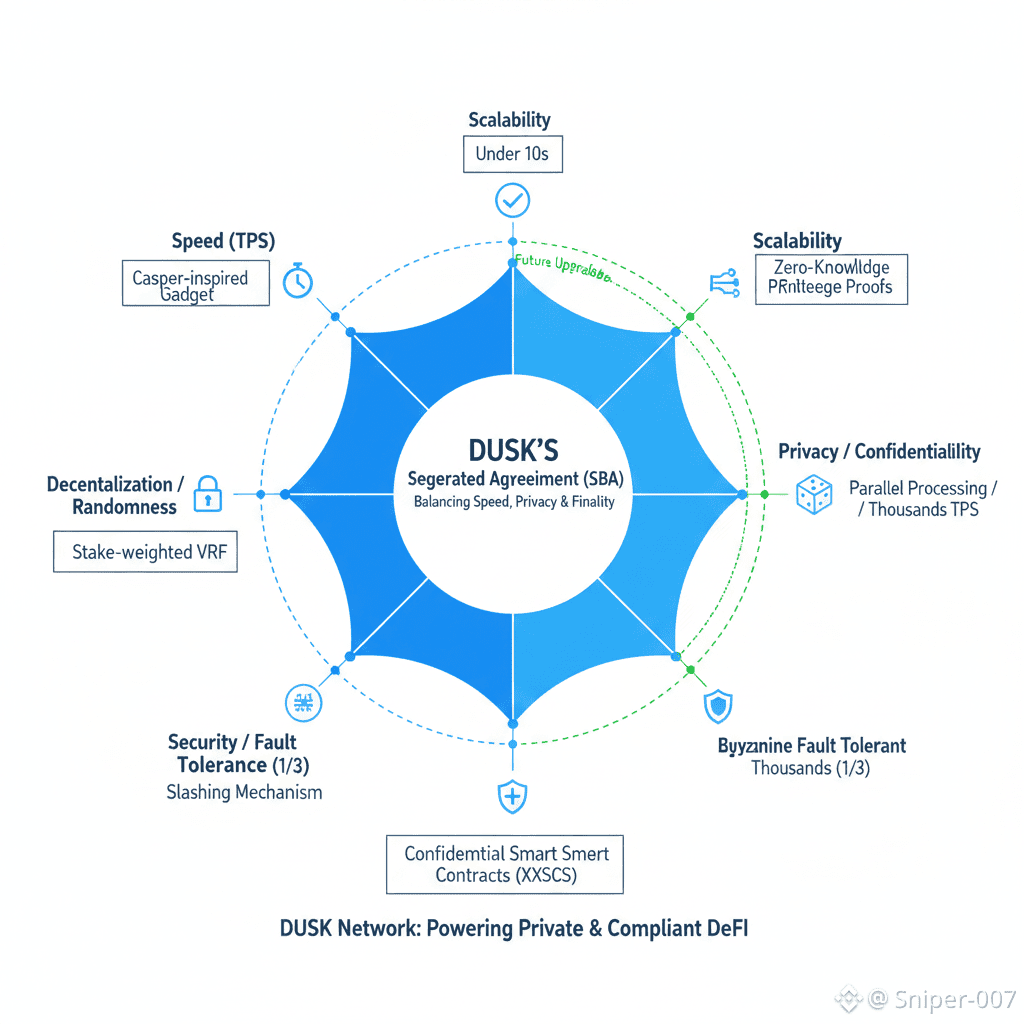
Real use: instant settlements for tokenized stocks or whatever. Proposer slips in a ZKP-verified trade, validators ok it without peeking at details, block finalizes fast. Perfect for RegDeFi where seconds cost real money. Devs love the predictability too – build oracles that feed private data safely into the mix.
Going forward, SBA's modular so upgrades like sharding could boost it horizontally. Maybe rollups to offload stuff while keeping base secure. Governance lets $DUSK holders tweak params like block times, evolve without messy forks.
Bottom line, Dusk's SBA isn't chasing insane TPS by sacrificing everything else. It's a balanced setup where privacy and solid agreement actually fit together, making it great for real enterprise and regulated stuff.
What do you think? Staking on Dusk yet or got questions on SBA?