
Let’s be honest for a moment.
Web3 has incredible technology, but real adoption is still struggling. Not because people hate blockchain, but because it is confusing, expensive, and unpredictable. Fees spike out of nowhere. Transactions get stuck. Regular users don’t want to calculate gas prices just to use an app.
This is exactly the problem Vanar is trying to fix.
Vanar is a Layer-1 blockchain built with one clear mission: make blockchain feel like a normal application. That means fast transactions, smooth experience, and most importantly, fees that stay predictable. No surprises. No sudden spikes when the market heats up.
On most chains, when the token price rises, transaction fees become painful. What once cost cents suddenly costs dollars. Vanar takes a different approach. Instead of letting fees float with the market, it targets a stable dollar value for transactions. Most operations are designed to stay around a fraction of a cent. This is massive for gaming, micro-payments, and consumer apps where consistent pricing is critical.
Speed is another big advantage.
Vanar confirms transactions in about three seconds. That is fast enough for real-time applications, games, and interactive platforms. On top of that, it is EVM-compatible, meaning developers can use familiar Ethereum tools, wallets, and smart contracts. No need to learn a new system. Builders can migrate easily.
But Vanar is not just another fast chain.
It positions itself as an AI-native blockchain. The base layer handles transactions, but above it sit intelligent layers designed to work with data and AI systems.
The first layer is Neutron. Think of it as a smart memory system. It takes unstructured data like documents, images, or messages and converts them into structured units called Seeds. These Seeds can live off-chain for speed, but they can also be anchored on-chain for proof, ownership, and auditing when needed.
Then comes Kayon.
Kayon acts as the reasoning layer. It allows users and applications to interact with stored data using natural language. Instead of writing complex queries, you can simply ask questions. This opens the door for AI-powered apps that can analyze and use blockchain-stored data in a human-friendly way.
In simple terms, Vanar is building more than a payment network.
It is creating a place where data can be stored, understood, and used by AI systems.
Now let’s talk about its history.
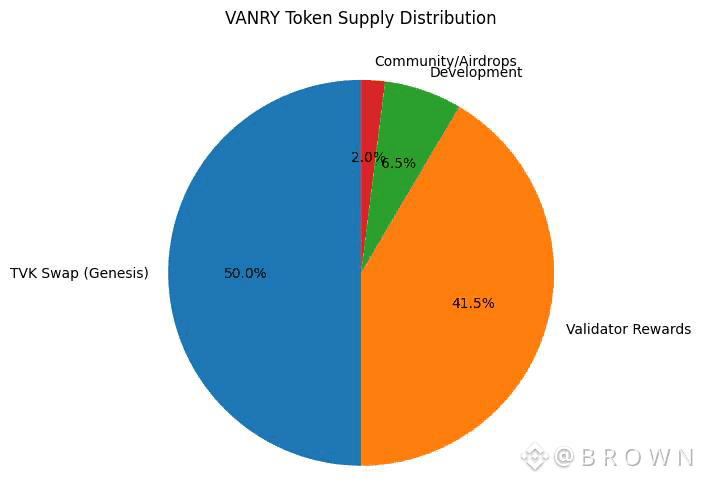
Vanar was originally known as Virtua with the TVK token. The team rebranded and introduced VANRY, swapping TVK to VANRY at a 1:1 ratio. Rebrands mean nothing without real development, but Vanar has been actively building infrastructure and expanding its ecosystem since then.
The VANRY token sits at the center of everything.
It is used for transaction fees, staking, network security, and smart contracts. The total supply is capped at around 2.4 billion tokens, with new tokens distributed as block rewards over time. Understanding emissions and token allocation is important for long-term holders, as it affects supply dynamics.
From a user perspective, Vanar feels familiar.
It has its own chain ID, RPC endpoints, and block explorer. Anyone who has used MetaMask or EVM chains can interact with it easily. You can track transactions, wallets, and network activity just like on Ethereum or BNB Chain.
Security-wise, Vanar uses a system called Proof of Reputation.
Validators are not chosen purely by stake or hardware power. Trust, credibility, and performance also play a role. This model raises important questions about decentralization, validator distribution, and governance. These are the same questions we should ask of any Layer-1 chain.
Of course, no project is risk-free.
Competition among Layer-1 blockchains is brutal, especially in gaming and entertainment. Fixed-fee models rely heavily on accurate price data and strong governance. And while the AI layers sound exciting, real adoption will be the true test. Technology only matters if developers actually build on it.
Still, Vanar’s vision stands out.
It is not just chasing speed.
It is not just copying Ethereum.
It is trying to create a blockchain that people can actually use every day — with predictable costs and AI-powered capabilities.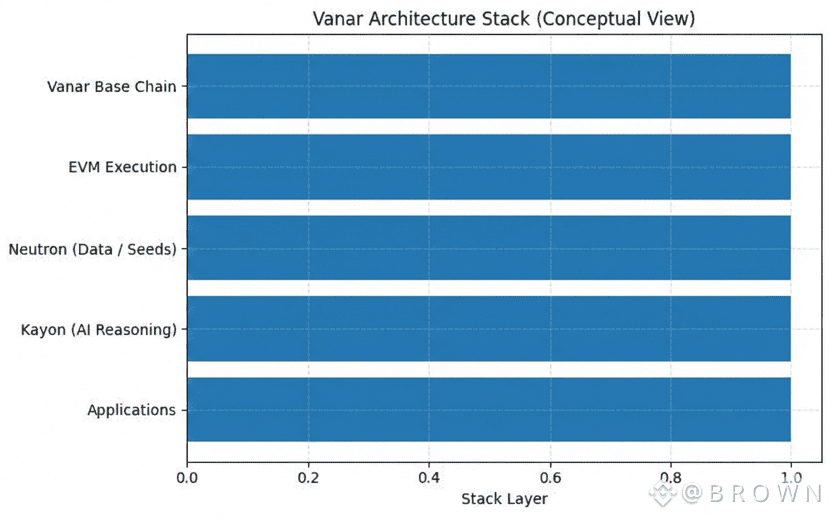
If Web3 is going to reach the next billion users, chains like Vanar will play a key role.
Not loud.
Not flashy.
But practical.
And that is what real adoption looks like.