


Decentralized storage has existed in crypto for years, yet one uncomfortable truth remains: most systems still rely on assumptions rather than verification. We often assume that data stored across nodes will remain accessible, but history has shown that assumptions are fragile. As blockchains move from experimentation to real economic infrastructure, this gap becomes impossible to ignore. This is where Proof of Availability (PoA) emerges as a missing but critical layer.
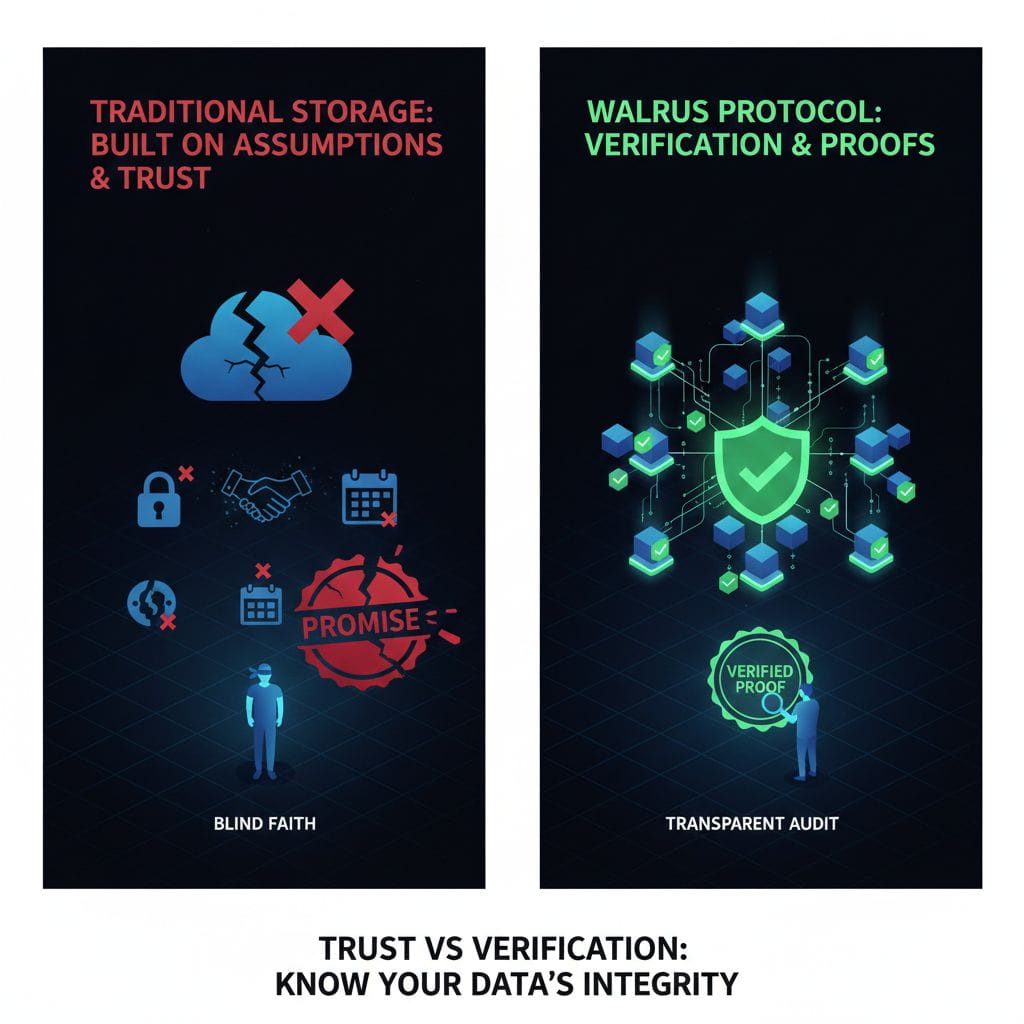
At a fundamental level, storage is not about saving files. It is about guaranteeing future access. In traditional cloud systems, that guarantee comes from contracts, legal accountability, and centralized monitoring. In decentralized systems, none of those tools exist in a reliable way. You cannot sue a global set of anonymous nodes, nor can you blindly trust uptime dashboards. Without cryptographic guarantees, decentralized storage risks becoming an illusion of decentralization rather than a functional replacement.
Proof of Availability changes this dynamic by introducing verifiable accountability. Instead of trusting that nodes are behaving correctly, the system continuously verifies that stored data is actually available. This shifts storage from a trust-based model to a proof-based one, aligning it with the core philosophy of blockchain technology itself.
Walrus integrates Proof of Availability as a first-class design principle rather than an afterthought. In the Walrus system, data availability is not a promise made once at upload — it is a condition that must be continuously satisfied. Nodes are required to demonstrate, through cryptographic proofs, that they still possess the required data fragments. Failure to do so is observable, measurable, and enforceable at the protocol level.
This has profound implications. In systems without PoA, a storage provider can appear reliable until the moment it fails. By the time users realize data is missing, the damage is already done. With Proof of Availability, failure becomes detectable early and objectively. The system does not need to “trust” nodes — it verifies them.
From an investor and infrastructure perspective, this matters because availability is directly tied to value. DeFi protocols rely on historical data, AI models depend on massive datasets, and NFTs depend on permanent metadata. If availability cannot be proven, then none of these assets are truly secure. Walrus positions Proof of Availability as the missing security layer that turns decentralized storage into a dependable economic primitive.
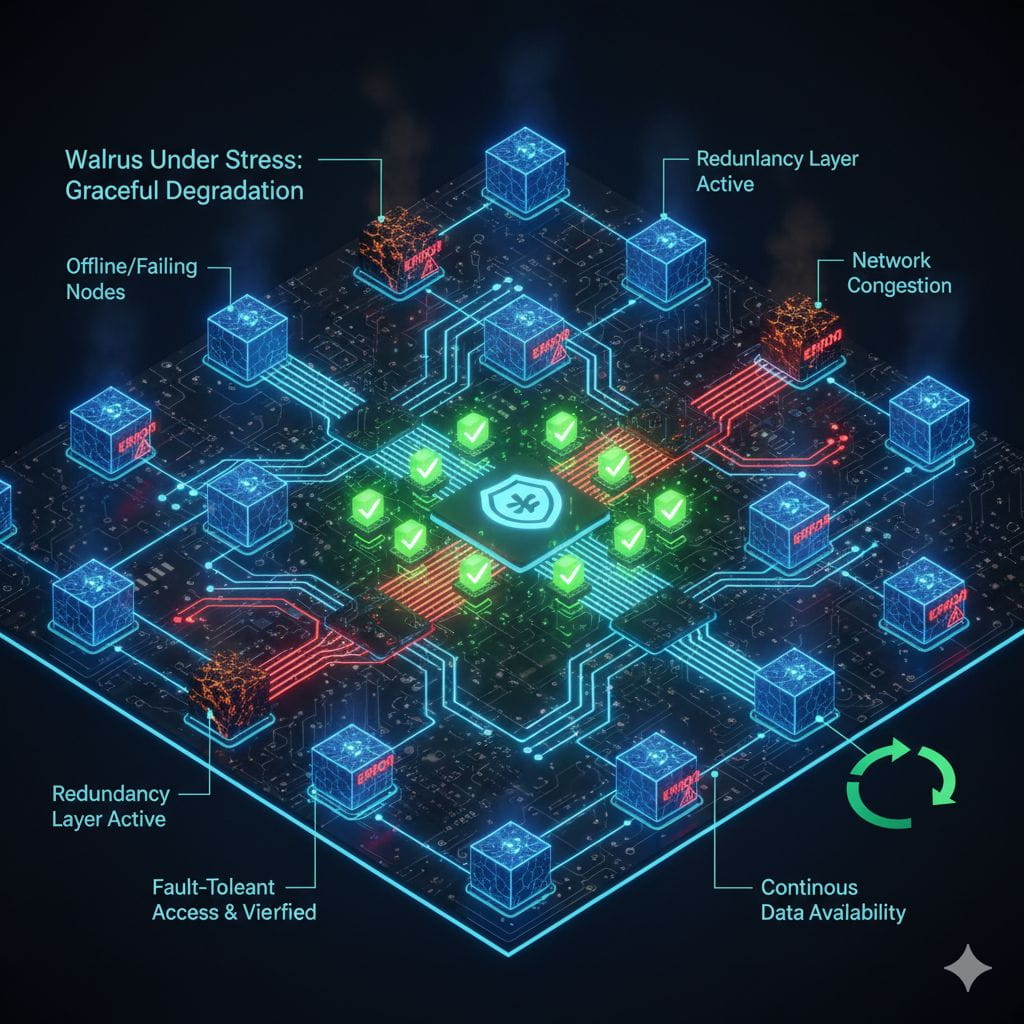
In the long run, Proof of Availability could redefine how markets price storage. Instead of paying for capacity alone, applications may pay for verified availability guarantees. This creates room for real competition, performance-based incentives, and data markets where reliability is provable, not assumed. Walrus is not just storing data — it is redefining what it means for data to exist in a decentralized world.
