

— The Real Pain of Storing Big Stuff in Crypto
Honestly, if you’ve ever tried building anything serious on blockchain, you know the headache: tokens and logic are fine, but the moment you need to store a video, a big dataset, or even decent NFT media, it all goes sideways. On-chain is way too expensive, IPFS pinning feels like crossing your fingers and hoping, centralized clouds kill the whole decentralization point.
@Walrus 🦭/acc (running on Sui) is one of the few things I’ve seen that actually tackles this head-on. It’s not another generic “decentralized storage” project—it's off-chain heavy lifting with on-chain smarts so data becomes programmable, verifiable, and cheap enough to use for real things.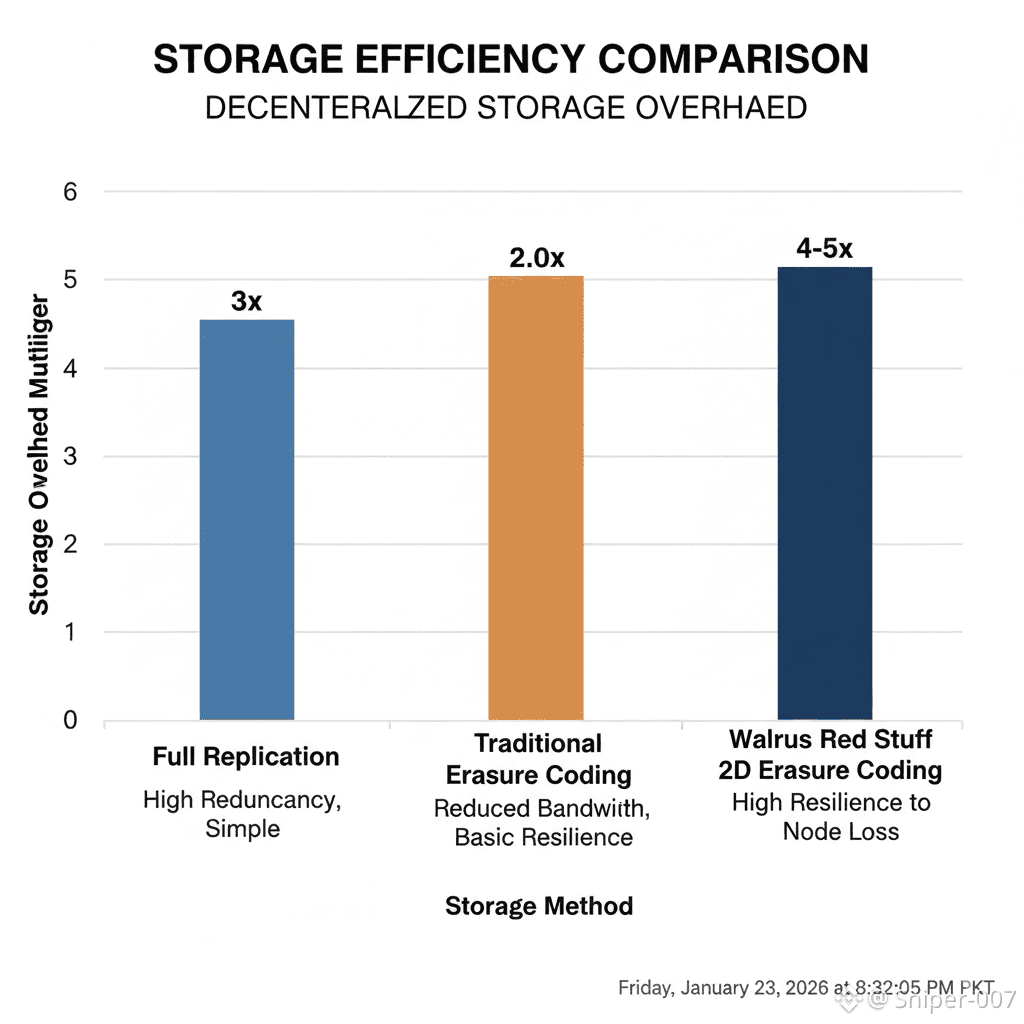
Core Architecture — Decentralized Blob Storage Without the Waste
The core of Walrus is its blob storage system. A blob is just any large chunk of binary data—images, videos, AI training sets, website files, whatever. You don’t cram it directly on Sui (that would be suicide on gas). Instead, Walrus uses Red Stuff, this clever 2D erasure coding algorithm. It turns your file into a matrix: primary slivers one way, secondary ones crossing for redundancy overlap. Those slivers get scattered across a bunch of independent storage nodes.
This is where it gets smart—overhead stays low, around 4–5× replication instead of the insane 10–20× you see in full-copy systems. You can lose a ton of nodes (Byzantine-tolerant up to roughly 2/3 in bad cases) and still rebuild the blob fast. Nodes self-heal by pulling just the missing pieces from others—no redownloading the entire file. It’s efficient, tough against failures, and doesn’t burn bandwidth or money like older approaches.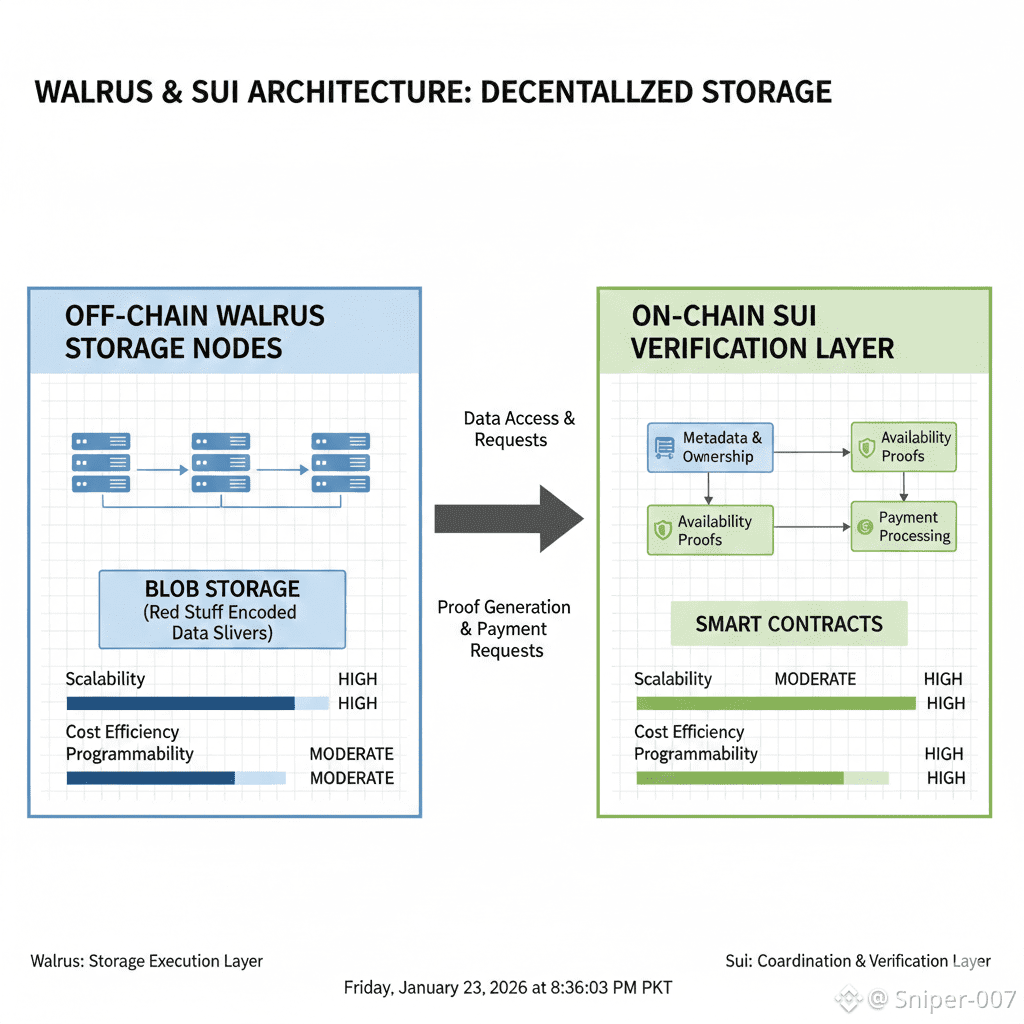
Sui as the Coordination Brain
Walrus doesn’t try to be its own full blockchain—that would be redundant. It leans hard on Sui for the smart stuff: metadata, ownership details, availability proofs, and payments all live as Sui objects. Every blob gets linked to an on-chain object that tracks availability windows, who owns it, expiry rules, etc. These objects behave like any other Sui resource—they can be split, merged, transferred.
That means smart contracts can reference blobs directly: check if the data’s still there, extend storage time, add token-gated access, set auto-delete conditions, trigger actions. It’s the programmable part—storage stops being some dumb external service and becomes part of your app’s logic.
Proofs of Availability & Incentives — Turning Promises Into Proof
Nodes have to keep proving they’re holding their slivers. They get random async challenges, sign proofs, those get bundled into certificates recorded on Sui. Anyone (light clients, smart contracts) can verify the blob exists without ever pulling the full file—pure trustless checks. No “trust me” from a central pinner.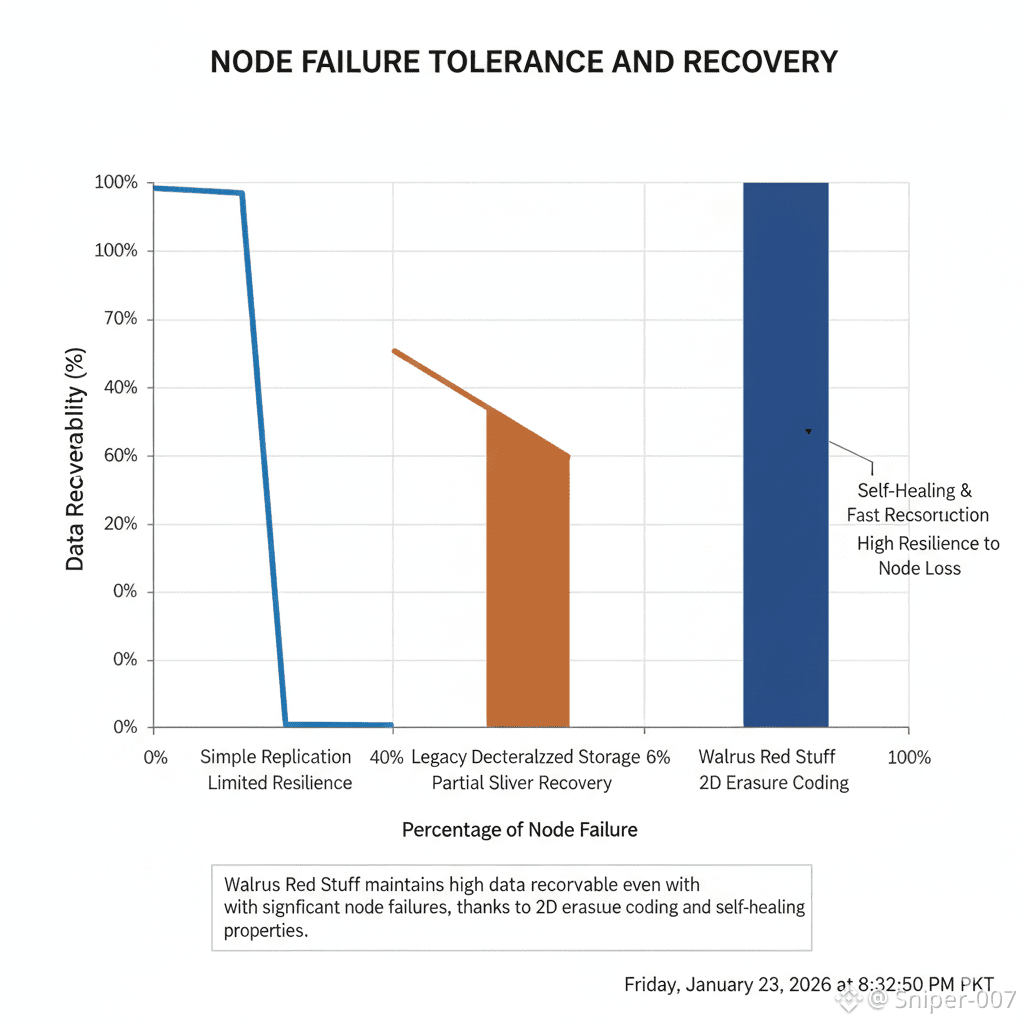
The incentives are dPoS (delegated proof-of-stake) with WAL. Users pay WAL upfront for storage; that money gets distributed gradually to nodes and delegators over time. Nodes stake WAL, join storage committees per epoch, earn rewards for uptime and proofs. Slack off? Governance can slash or penalize. Heavy community allocation (airdrops, subsidies) + fee burns as usage grows. It keeps everyone aligned: reliable storage = more demand = better rewards.
Programmable Storage — The Real Game-Changer
This is what makes Walrus feel different. Because blobs are Sui objects, developers can write real logic around data. Auto-expire files, token-gate access, create marketplaces where storage is traded, tie data to NFTs for provenance. Availability proofs on-chain mean dApps can make decisions based on whether data’s still live. Storage becomes composable—not static off-chain junk.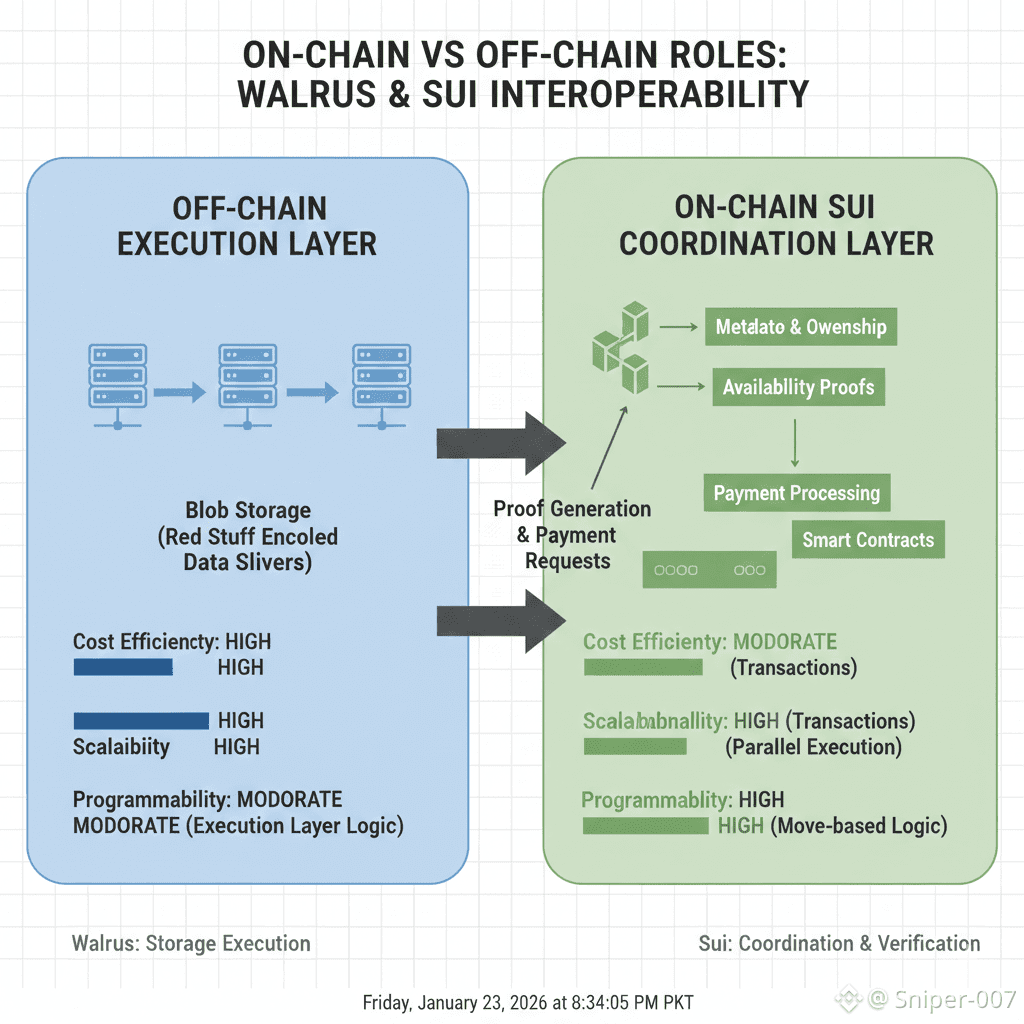
Conclusion — Composable and Resilient Storage
#walrus bridges the gap between decentralized storage and programmable blockchain. Off-chain blobs for scale and cost, on-chain proofs/metadata for trust and composability, Sui integration for native logic. For NFT media, AI datasets, decentralized websites, L2 data availability—it feels like a practical layer that could become default on Sui. Not revolutionary hype, just solid engineering solving a real pain point.