The cryptocurrency world chases theoretical use cases while ignoring a trillion-dollar opportunity: real-world assets. VANRY's strategic focus on RWA tokenization bridges traditional finance and blockchain, recognizing that mainstream adoption cannot come from crypto-native applications alone.
Traditional assets represent over 900 trillion dollars globally, yet less than 0.1% exists on blockchain. Real estate, commodities, art, and securities remain trapped in legacy systems plagued by inefficiency. VANRY identified this as blockchain's perfect entry point to demonstrate undeniable value to mainstream users.
Unlike DeFi protocols offering speculative yields, real-world asset tokenization delivers what traditional markets need: fractional ownership, 24/7 trading, instant settlement, and programmable compliance. These are concrete improvements, not promises.
VANRY's AI-native infrastructure uniquely handles RWA complexity. Traditional blockchains struggle with regulatory frameworks and KYC requirements. VANRY's intelligent scaling and flexible architecture solve these challenges at the protocol level.
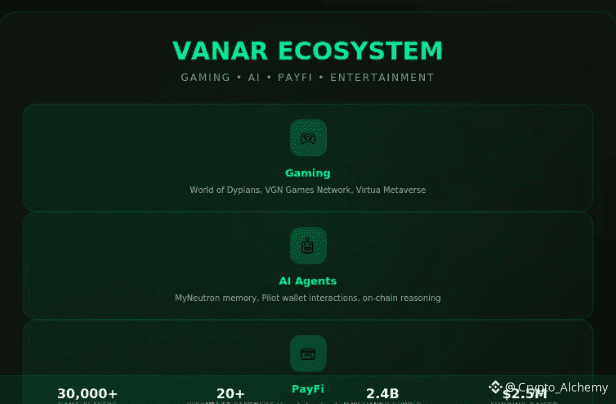
Virtua Metaverse and VGN games network created the perfect foundation. These platforms onboarded millions who understand digital ownership through in-game assets. The leap from owning game items to fractional real estate becomes small when infrastructure handles complexity invisibly.
Brand partnerships provide another advantage. Entertainment companies trust VANRY for digital collectibles and loyalty programs. Expanding to tokenized merchandise rights becomes natural progression.
VANRY's AI-enhanced validation adapts to regulations in real time, automatically adjusting transfer restrictions based on token metadata. This transforms tokenization into a superior system for managing real-world assets. Predictable gas fees through machine learning matter when institutional clients face unpredictable costs elsewhere.
Ethereum discussed RWA tokenization for years with minimal adoption. Networks designed for permissionless DeFi cannot accommodate permissioned assets. VANRY built flexibility allowing compliant tokenization to coexist with open applications, positioning itself as the bridge between traditional and decentralized finance.
Each tokenized asset creates network effects. A tokenized property brings managers, tenants, and investors onto the platform. These ecosystems grow organically.
VANRY's token economy benefits from RWA activity. Every tokenized asset requires VANRY for transactions, every compliance check consumes resources. Unlike speculative DeFi, RWA tokenization creates sustainable economic activity tied to real value.
VANRY's commitment believes blockchain enhances traditional systems rather than replacing them. This aligns with onboarding three billion users from real estate investors, art collectors, and businesses needing efficient tracking.
By choosing RWA tokenization while maintaining gaming foundations, VANRY creates multiple adoption pathways where digital-native users and traditional finance participants create value together. VANRY built the infrastructure making real-world asset adoption inevitable.