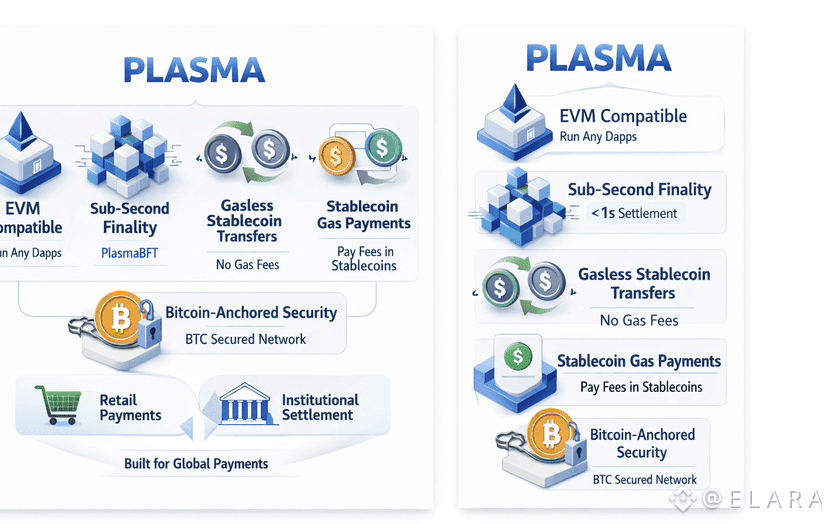
Plasma steps into 2026 at a point where foundations are no longer the focus and execution takes center stage. Instead of big launch moments, the year is shaping up around refinement, expansion, and real world usage. I am paying close attention to how the network is choosing patience over noise, using tools like Plasma One, staking delegation, and Bitcoin liquidity to reinforce its role as dependable infrastructure for stablecoin movement. The story here feels less about speculation and more about proving that payment focused blockchains can scale calmly under pressure.
Plasma One Becoming a Daily Financial Tool
Plasma One is easily the most visible part of the ecosystem for everyday users. What started as a neobank concept has moved toward real regional expansion, with plans to scale across Southeast Asia and the Middle East during early 2026. These regions already depend heavily on remittances and digital payments, which makes them a natural fit for a stablecoin based system.
The experience stays simple on purpose. People deposit USDT, earn yields sourced from integrated protocols, and spend through debit cards that settle instantly into local currency. I like how this removes the need to understand wallets, bridges, or gas. It feels closer to online banking, but with better yield mechanics under the hood.
Cashback incentives funded through protocol activity create a feedback loop. More spending increases volume, which stabilizes yields and attracts deeper liquidity. If usage targets are met, Plasma One stops being a side product and becomes the main onboarding engine for the entire network.
Bringing Bitcoin Into the Stablecoin Flow
Another major focus for 2026 is the native Bitcoin bridge that introduces pBTC into the Plasma environment. Instead of relying on custodial wrapping, this bridge uses decentralized verification so Bitcoin holders can stay aligned with the security model they trust.
From my perspective, this move is strategic. Bitcoin remains the deepest pool of liquidity in crypto, and connecting it directly to stablecoin rails unlocks new financial behaviors. Users can combine BTC exposure with USDT based payments, savings, or lending without fragmenting assets across risky bridges.
Developers gain flexibility too. pBTC can be used as collateral, paired in liquidity markets, or integrated into consumer products like Plasma One. This creates a neutral environment where Bitcoin and stablecoins coexist instead of competing.
Delegation Unlocking Broader Participation
Staking delegation arrives as a key structural upgrade in 2026. Instead of requiring technical setup, users and institutions can delegate XPL to validators and earn yields while helping secure the network. I see this as an important counterweight to token unlock pressure because it encourages holders to keep assets productive rather than liquid.
The design favors long term alignment. Validators are penalized for downtime, delegators retain voting rights, and emissions adjust based on participation. This spreads power more evenly and strengthens the chain during periods of heavy usage.
As stablecoin volume grows, staking rewards combine emissions with fee capture. That combination turns XPL into something closer to infrastructure capital rather than a speculative asset.
Multichain Connectivity Without Complexity
Early 2026 also brings deeper integration with intent based systems that allow cross network swaps without manual bridging. Plasma users can define outcomes instead of steps, such as converting stablecoins into other assets across chains in one action.
I find this important because it hides fragmentation from the user. Liquidity moves where it is needed without forcing people to think about which chain does what. Plasma positions itself as the settlement layer underneath these flows, especially for stablecoins.
Fiat access improves alongside this with smoother on ramps and off ramps. Together, these pieces make the network feel less isolated and more embedded in the wider financial stack.
Consensus Improvements for Real Commerce
On the technical side, consensus upgrades continue to target speed and reliability. Optimizations aim for extremely fast finality while maintaining compatibility with existing tools. This matters for use cases like retail payments, gaming purchases, and machine driven transactions where delays are unacceptable.
I see these upgrades as preparation for volume rather than experiments. When systems work quietly under stress, they earn trust from developers and businesses alike.
Managing Pressure While Executing
Token unlocks and regulatory uncertainty remain challenges throughout the year. Instead of reacting defensively, Plasma seems to be answering with execution. User growth through Plasma One, capital inflow through pBTC, and supply locking through delegation all help absorb pressure naturally.
The network does not appear rushed. Backers and partners give it room to grow methodically, and early metrics suggest resilience even during market pullbacks.
A Year Defined by Proof Rather Than Promises
To me, 2026 looks like the year Plasma stops explaining itself and starts demonstrating value at scale. Each piece supports the others. Consumer access brings volume, Bitcoin brings capital, delegation brings security, and connectivity brings reach.
This kind of infrastructure rarely gets attention until it becomes essential. As stablecoins continue moving into everyday commerce, it raises a simple question. When digital payments feel effortless and invisible, how much of that experience will quietly depend on rails like Plasma running underneath?