

Vanar is not the kind of project that grabs attention at first glance. When I first looked into it the price did not stand out and there was no loud narrative pulling people in. What caught my eye instead was something much quieter. It was how the network behaved when other markets became chaotic. While activity elsewhere spiked and collapsed Vanar just kept moving at the same steady pace. In my experience that usually means one thing. The capital using it is not emotional. It is patient capital that values stability over excitement.
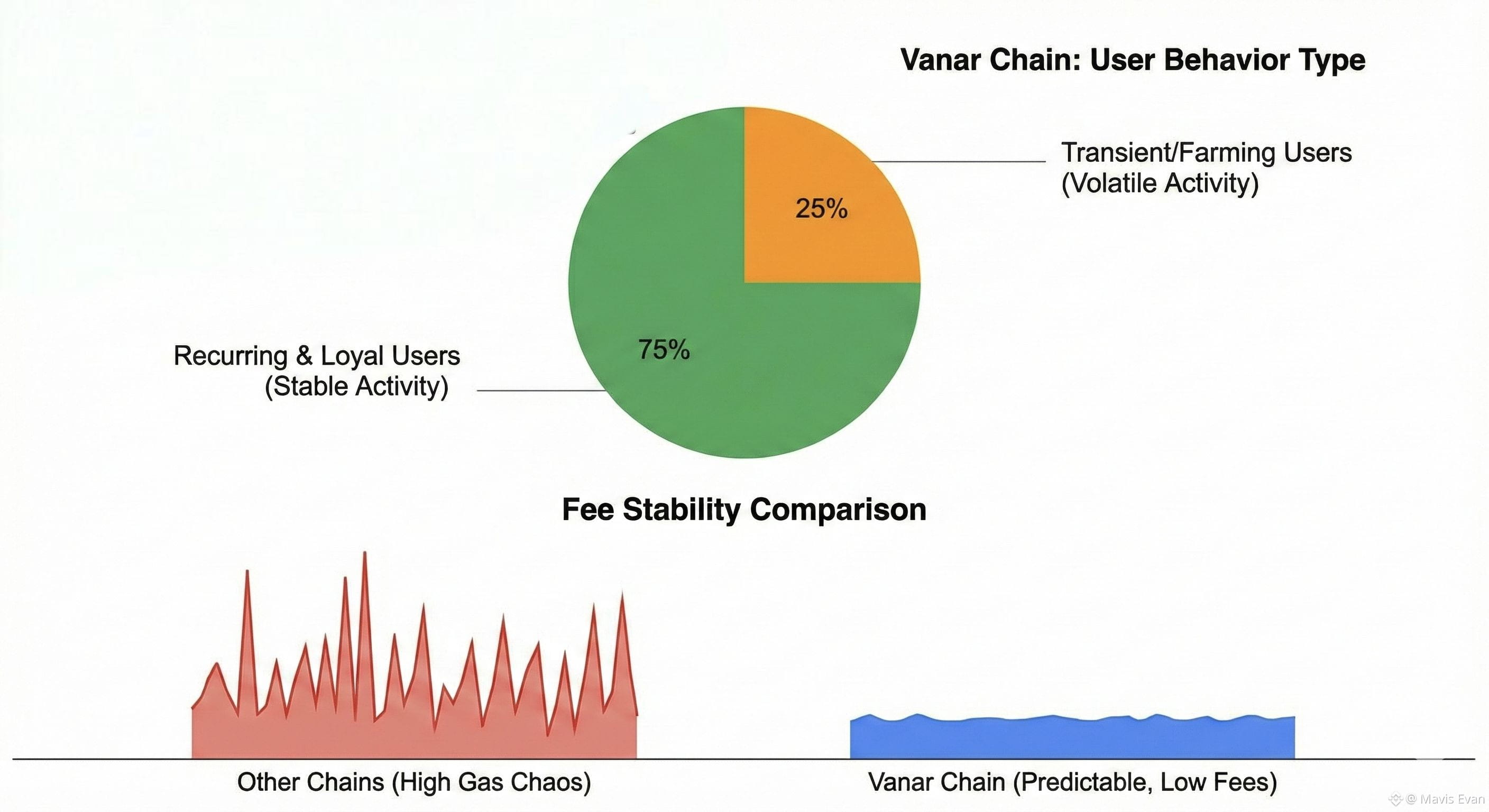
As I spent more time researching Vanar I began to understand why this behavior shows up on chain. One of the first design choices that matters is predictable fees. At first this sounds boring and boring rarely sells in crypto. But when you think like a builder or an operator it changes everything. When fees stay fixed developers can plan. They do not have to redesign contracts every time the market heats up. They do not have to worry that a working application will suddenly become too expensive to use. Over time this creates a different environment. People stop treating the chain like a casino and start treating it like a workspace.
The wallets tell the same story. On Vanar the same addresses keep interacting again and again over long periods. They are not jumping in and out chasing momentum. They are using the network consistently. In my knowledge this kind of behavior usually appears when people depend on a system rather than speculate on it. Fees become a known operating cost just like hosting or bandwidth. That shift may seem small but it completely changes how an ecosystem grows.
When Vanar moved from its earlier identity to its current form it felt less like a rebrand and more like a realization. Many fee models work fine when applications are small experiments. But once real usage arrives unpredictability becomes a problem. Vanar chose cost certainty instead of chasing peak throughput headlines. That choice makes developers more comfortable keeping logic and data on chain. When builders feel safe they stop over optimizing and start building things meant to last.
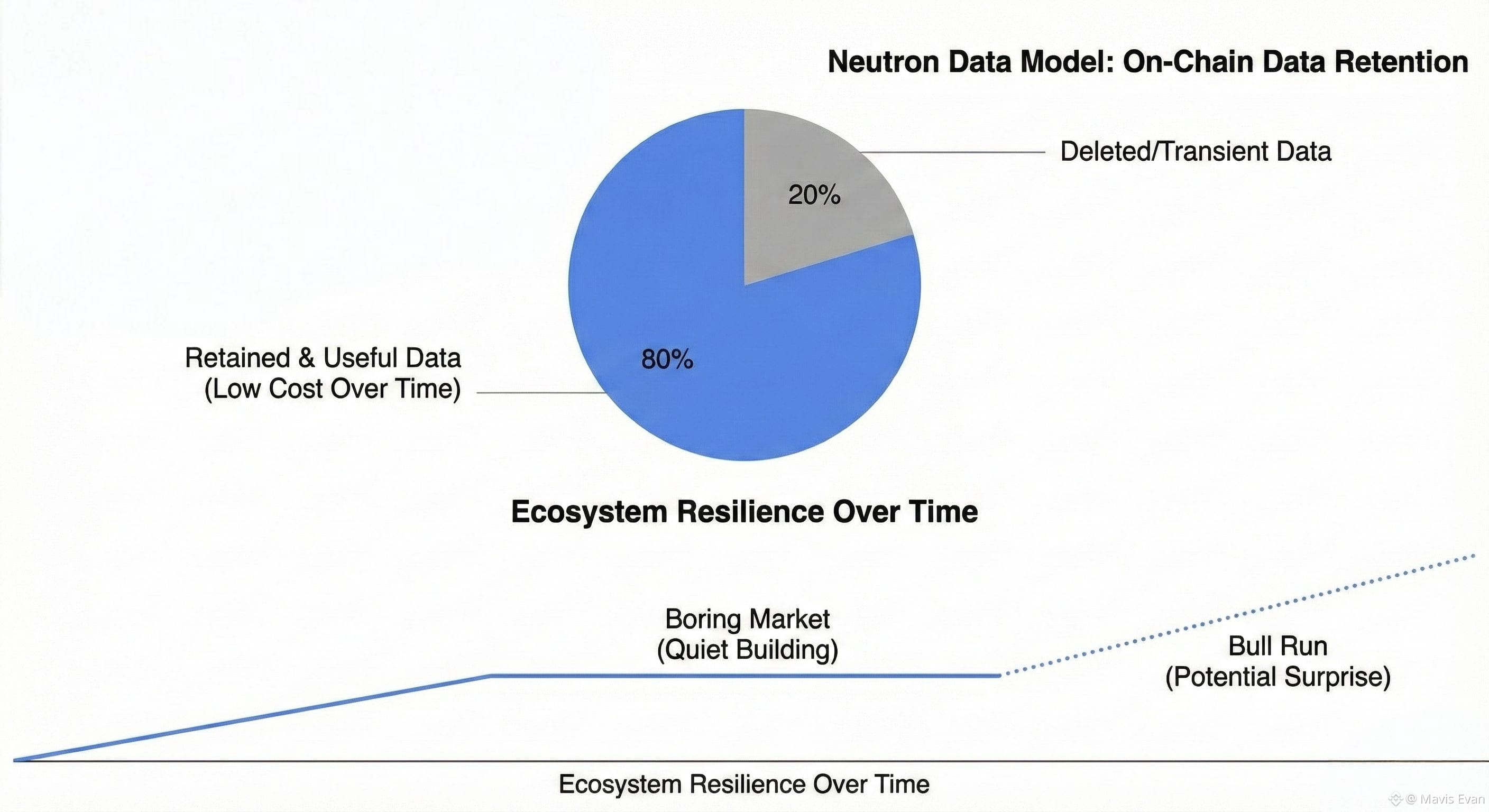
This safety shows up in the applications themselves. Developers on Vanar store more state and run heavier logic without fear. They trust that tomorrow will look like today in terms of costs and performance. Over time this leads to deeper applications rather than shallow ones. Systems grow roots. Users return not because of incentives but because the app continues to work as expected. That is how quiet ecosystems expand.
Validator behavior is also shaped by these choices. On many chains validators are pushed toward short term extraction because the environment is unpredictable. On Vanar the incentives push operators toward reliability and uptime. From what I have observed this attracts infrastructure minded participants rather than hobbyists. The result is smoother performance and fewer surprises when markets are under stress. Users may not consciously notice this but they feel it when transactions do not fail and applications do not freeze.
One part of Vanar that stood out to me during my research is how it approaches data through Neutron. Many projects talk about artificial intelligence but focus only on marketing language. Here the focus is practical. The idea is not to store less data but to store smarter data by prioritizing meaning over raw size. This makes it cheaper to keep useful information on chain for longer periods. Applications do not need to constantly clean up state. When state persists users persist and liquidity tends to follow.
From a capital perspective this creates a very different pattern. Vanar is not built to attract fast money. There are no oversized rewards pulling people in only to push them out later. Liquidity is smaller but it is steadier. During periods of stress it does not disappear overnight. I looked closely at wallet behavior and saw repeated interactions by the same participants over time. That is rare and it usually signals real usage rather than speculative churn.
Another important aspect is how Vanar handles compute. By allowing computation to be distributed across validators the network keeps more logic on chain. When logic moves off chain information leaks and strategies get copied. Keeping more on chain reduces that leakage. This makes hostile behavior harder and gives builders more confidence that their systems will not be immediately exploited. Traders may not talk about this openly but it matters more than many admit.
The infrastructure choices also matter. Partnerships focused on stable and renewable backed environments reduce operational stress for validators. When markets slow down weaker networks lose operators. Strong networks remain steady. This kind of quiet resilience is what keeps serious users around when excitement fades.
What keeps me watching Vanar is not anticipation of sudden growth. It is the consistency. The system rewards patience. Developers build slower but stronger. Validators stay longer. Capital does not rush in but it also does not rush out. In a market obsessed with speed this is rare.
In my view Vanar is one of those projects that is easy to overlook until you realize something important has been happening the whole time. The capital was never gone. It was simply parked quietly working while the rest of the market chased noise.
