

Imagine the moment when a blockchain stops being just a place to record transactions and becomes a living brain for decentralized applications—one that remembers, reasons, and stores real data forever. That’s the vision Vanar Chain is chasing, and today that vision is turning into real technology.
In early 2026, Vanar Chain didn’t just talk about AI or “blockchain + AI.” It launched an AI‑native infrastructure that developers can actually use today, including a Kayon intelligence engine and a Neutron storage layer. These aren’t marketing buzzwords anymore—these are working systems that solve real problems blockchain developers and users face in the real world.
Why On‑Chain AI and Permanent Data Matter
In most blockchains, storing important data—like documents, media files, or AI knowledge—is hard. Chains usually only store tiny pointers or references, and the actual data lives on centralized servers like AWS or decentralized networks like IPFS. But that creates risks: if those servers go down, your important data disappears or becomes unavailable.
Vanar Chain’s Neutron layer changes this. Instead of just storing a link to a file, Neutron uses AI to compress whole files into tiny “Neutron Seeds” that live directly on the blockchain ledger. In some demos, a 25 MB video was shrunk into a tiny on‑chain seed and then reconstructed later in seconds. That’s a breakthrough—now the data and its meaning can live permanently on chain, not as a reference.
This matters because it solves a big problem in Web3: data permanence and verifiability without external dependencies. When you store something with Neutron, you don’t have to worry about a cloud outage or a hosting provider disappearing. That’s real ownership.
The Kayon Intelligence Engine: Not Just Storage, But Reasoning
Storing data is one thing; understanding it is another. That’s where Kayon comes in.
Kayon is Vanar’s on‑chain AI reasoning layer. Think of it as a smart assistant that can read what’s in Neutron seeds, understand patterns, and answer questions or run analytics in real time. It’s like combining a database with a reasoning engine built directly into the blockchain protocol itself.
Rather than sending data off‑chain for AI analysis, developers can write decentralized apps (dApps) that access real‑time insights, predictions, or context directly from the blockchain. This opens doors to automated compliance checks, smarter DeFi contracts that adjust parameters based on real data, or AI‑driven user experiences that adapt instantly to on‑chain activity.
For example, imagine a lending dApp that can review a borrower’s history, instantly calculate risk using real stored data, and adjust interest rates automatically—without any human intervention or off‑chain oracle. That’s the kind of problem Vanar Chain aims to solve.
A New Kind of Token Economy: Real Usage, Real Revenue
Most blockchain tokens today rise and fall because traders bet on them. But Vanar is building something different: a token that earns value from real, measurable usage through AI tools.
This starts with myNeutron, Vanar’s product for creating and using AI memory and knowledge on chain. In late 2025, the team launched monetization tools and subscription features for myNeutron. That means users can pay with cards or $VANRY to unlock big memory storage, advanced AI assistants, PDF and image ingestion, and more.
Then comes the clever economics: every time someone pays for a myNeutron subscription, that revenue gets converted into $VANRY, and a portion of it is burned permanently. A portion goes into community rewards, staking rewards, and into the ecosystem treasury. This creates a demand‑and‑burn loop directly tied to real product usage, not just speculation.
In simpler terms:
A user subscribes to an AI service.
Their subscription creates demand for the VANRY token.
Some of those tokens are burned forever.
Some go to stakers and the treasury to fund growth.
This “flywheel economy” means as more people actually use the network—rather than just trade the token—the value engine gets stronger. That’s how a real business ecosystem should work, and Vanar is one of the few blockchain projects trying this model right now. 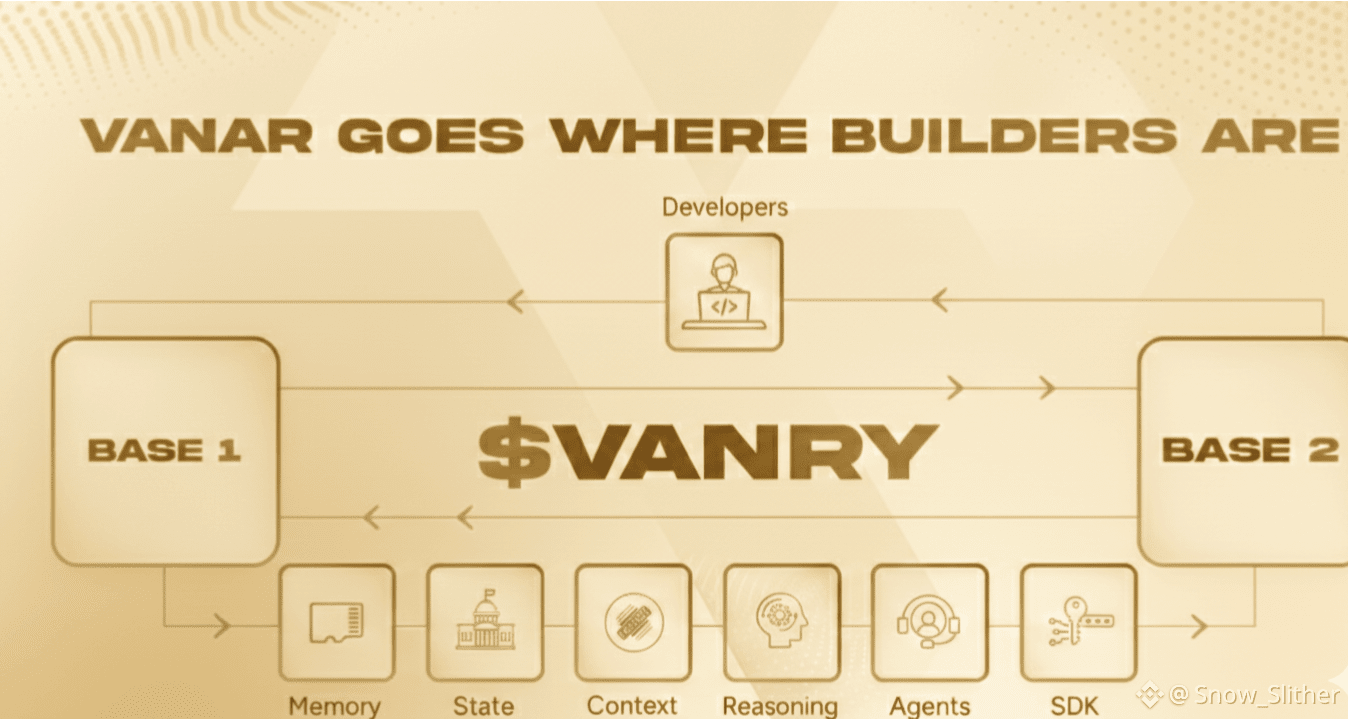 Solving Real Problems Beyond Theory
One way to judge if a blockchain project is mature is if it goes beyond whitepaper promises and actually fixes everyday problems.
Let’s be honest: centralized cloud providers like AWS occasionally fail. Big firms have learned this the hard way—when AWS goes down, users can’t access NFTs, financial records, or critical files. That’s not theoretical; it’s happened.
Vanar’s Neutron technology attacks this head‑on by making data both permanent and verifiable on the blockchain. In real use, this means:
A contract document or legal file stored on chain can’t disappear.
A training dataset for an AI model isn’t lost if someone shuts down their server.
A researcher’s collected data stays forever, linked and queryable.
And because Neutron’s seeds are indexed and enriched with AI semantic embeddings, apps can search and use this data intelligently, not just store it like a brick in a wall.
That fixes a problem the broader blockchain ecosystem has struggled with for years: blockchains can record transactions, but they haven’t been great at storing and understanding real data—until now.
2026 Roadmap: What’s Next
In early 2026, Vanar Chain made its AI stack operational, but the story is just beginning. The official roadmap shows three big focuses:
Neutron Expansion — Cross‑Chain AI Data Storage
In Q1 2026, Vanar plans to expand Neutron beyond just its own chain. This means other blockchains could use Neutron’s compression and storage layer, benefiting from the same permanent, AI‑ready data capabilities. That’s a potential game‑changer because it helps solve data reliability across the entire multi‑chain world.
Instead of forcing developers to choose one chain, Neutron could become a universal data layer compatible with many ecosystems.
Kayon Mainnet Launch — Decentralized Intelligence
By mid‑2026, the Kayon engine is expected to go from testnet to full mainnet. This means developers can start building applications that rely on on‑chain AI reasoning at scale. It’s one thing to store data; it’s another to think with it.
If successful, this will be one of the first truly decentralized AI computing layers accessible by smart contracts.
Global Developer Programs and Ecosystem Growth
Vanar also plans developer programs, hackathons, and grants to attract builders worldwide. Real adoption doesn’t happen with technology alone—it needs people building real products that ordinary users want.
Bringing in developers focused on gaming, real‑world assets, finance, and enterprise apps will be critical in proving this technology really solves real world problems, not just speculative ideas.
What It Means for the Future
Vanar Chain’s journey shows a pattern that’s rare in the blockchain space: a real push toward utility, data permanence, AI reasoning, and usage‑driven value. At its core:
AI isn’t an add‑on—it’s built into how the chain stores and uses data.
Token demand comes from real subscriptions, not just trading.
Data stored on chain actually stays there, even if cloud providers fail.
Developers can build smarter apps, not just cheaper ones.
For anyone learning blockchain today, Vanar Chain offers an example of where the technology might be headed: not just decentralized money, but decentralized intelligence and knowledge that everyone can trust.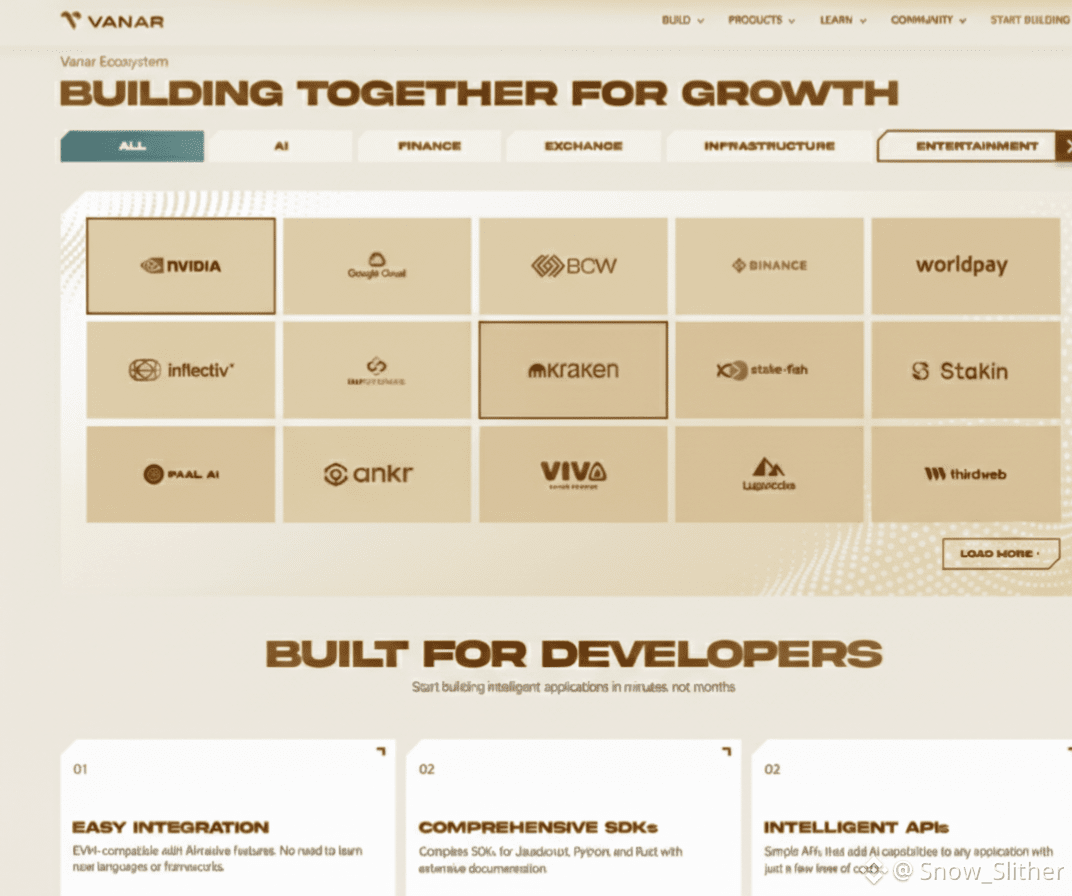
Final Thought
The biggest lesson from Vanar’s 2025–2026 journey is clear: the future of blockchain isn’t just about transactions—it’s about data that remembers, logic that thinks, and value that’s tied to real human use.
Will broader developers embrace AI‑native on‑chain reasoning? Will other chains adopt Neutron’s storage layer? Those questions will define the next chapter of blockchain evolution.
But one thing is certain—Vanar Chain is building pieces of that future right now.