
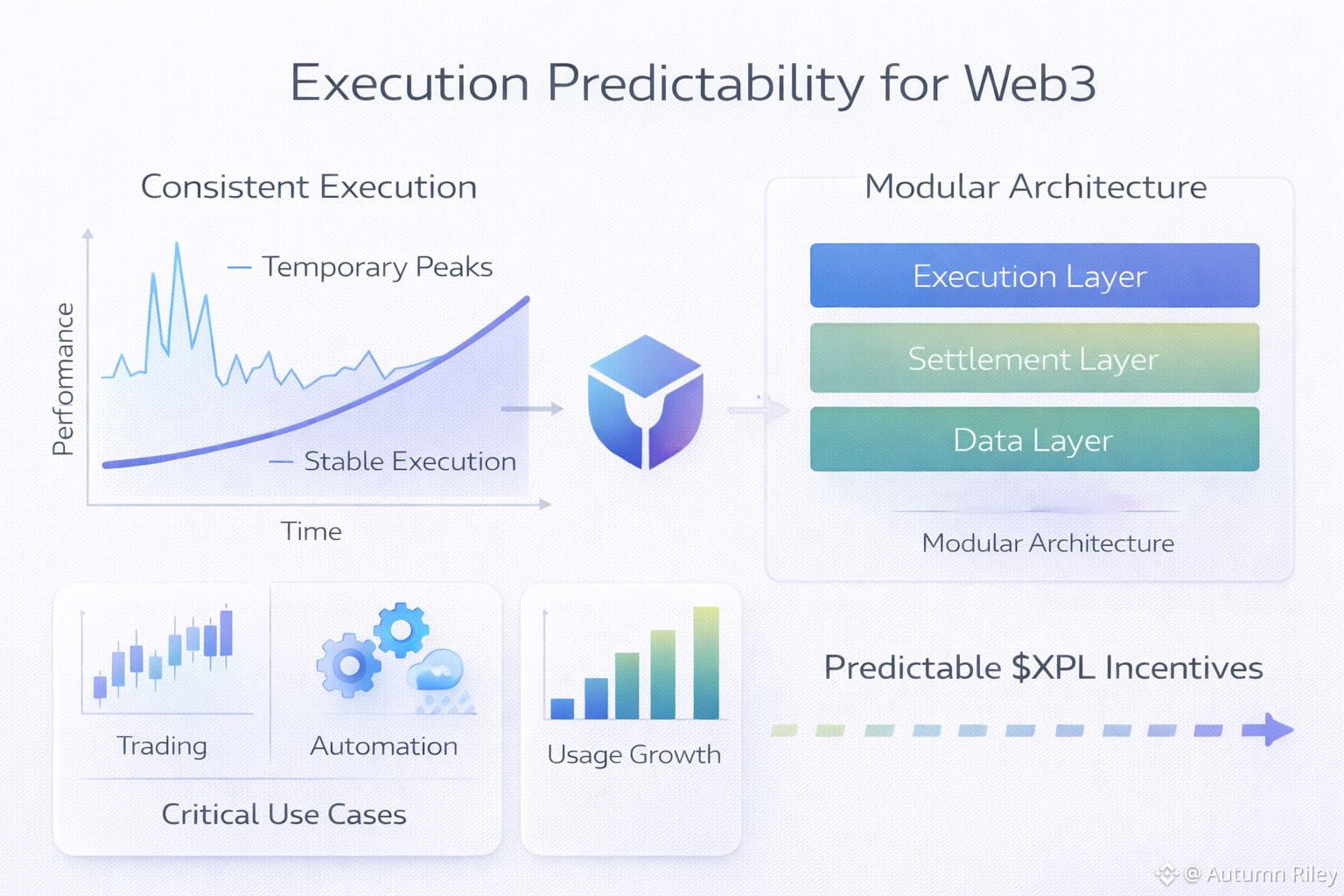
In crypto, speed often gets the spotlight—but predictability is what real systems depend on. Applications handling capital, automation, and user activity don’t just need fast execution; they need consistent outcomes. This is where Plasma takes a different approach.
Rather than optimizing for occasional peak throughput, @Plasma is designed to deliver predictable execution across varying network conditions. This means transaction behavior remains reliable even as demand fluctuates, reducing uncertainty for builders and users.
Plasma’s modular design plays a key role in this predictability. By isolating execution from settlement and data availability, the network prevents congestion in one layer from impacting the entire system. This structure allows developers to plan around known performance characteristics instead of guessing how the network will behave under load.
Economic design reinforces this model. $XPL is aligned with real network activity, not artificial volume. As usage increases, incentives remain connected to measurable participation, encouraging sustainable growth rather than short-term spikes.
For applications like trading infrastructure, on-chain automation, and payment flows, predictability is not a luxury—it’s a requirement. Plasma is built to support these environments by prioritizing execution clarity over headline numbers.
As Web3 infrastructure matures, networks will be judged less by how fast they can go once—and more by how reliably they perform every day. In that shift, #Plasma stands out as infrastructure designed for systems that must work consistently, not occasionally.