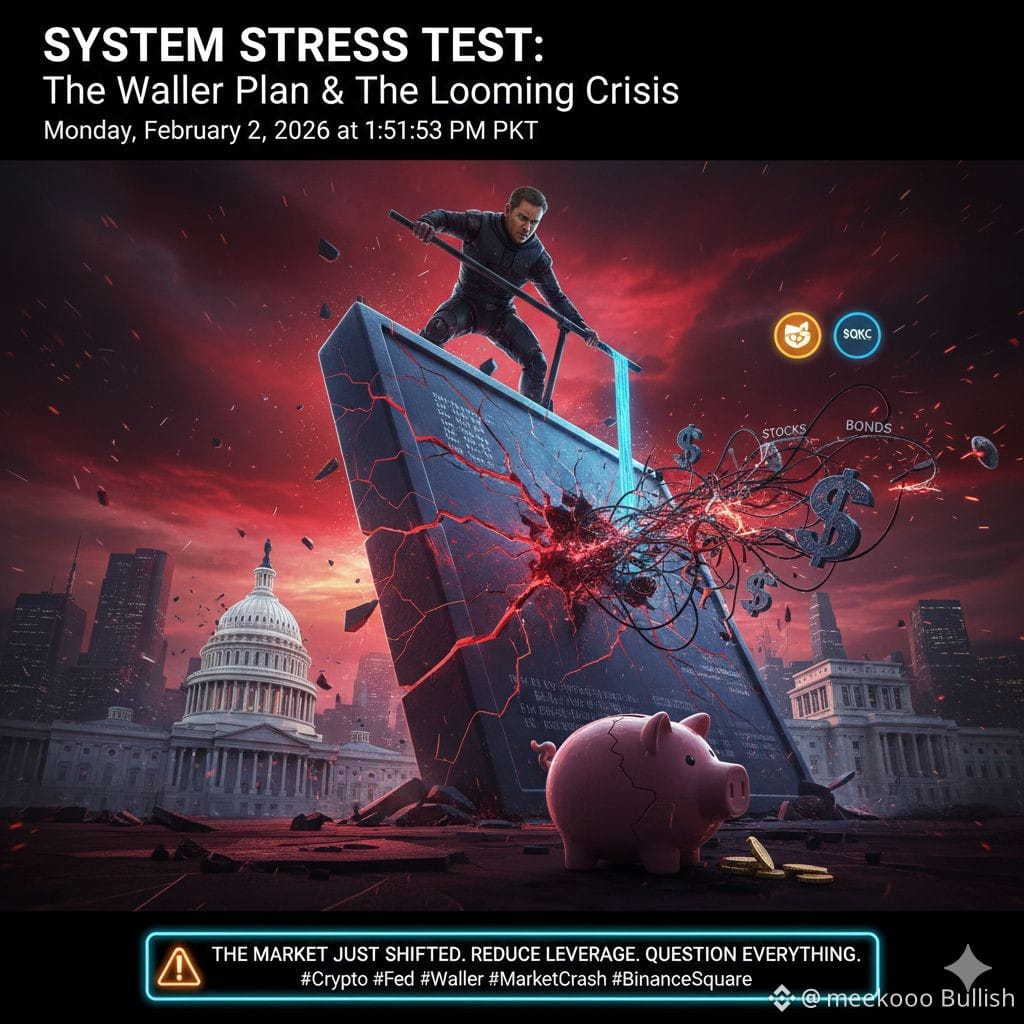
🔥 Wake up — the market just shifted, and most are acting like nothing changed.
If the Federal Reserve really passes the baton to Christopher Waller, we’re not looking at a minor policy tweak. We’re staring at a full-scale stress test—the kind that exposes weak foundations slowly, brutally, and inevitably.
Waller’s plan looks clean on paper:
AI boosts productivity → productivity cools inflation → inflation allows aggressive balance sheet reduction → trillions quietly drained as maturing assets aren’t rolled over → eventual rate cuts create a “soft landing.”
Elegant? On the surface, yes. But reality rarely follows a straight line.
Why this matters:
Large-scale balance sheet reduction doesn’t happen in a vacuum. Pulling liquidity at that scale drives real interest rates higher, pressuring U.S. Treasuries first. Bonds wobble. Yields spike. Risk spreads widen. Confidence falters.
Simultaneously, rate cuts weaken the dollar—structurally, not gradually. When bonds sell off while the currency softens, equities don’t escape unscathed. Stocks, bonds, and the dollar can all bleed together—a scenario most portfolios aren’t built to survive.
Powell always moved cautiously. Not due to indecision, but because he understood the system’s fragility. One wrong push, and feedback loops spiral. Liquidity dries up. Volatility feeds itself. Markets lose trust in the roadmap.
Waller’s assumption: AI productivity gains arrive smoothly, evenly, and fast enough to offset monetary tightening. If that slips, even slightly, the “perfect roadmap” turns into a dead end. And when policymakers reverse mid-course, the real damage isn’t price drops—it’s credibility loss.
🚨 Questions every investor should ask:
Which assets break first if liquidity tightens sharply?
Where is leverage hiding?
What do you hold that only works in a “perfect” scenario?
Keep an eye on these understanding these dynamics could make the difference between surviving the storm or getting caught off guard.