
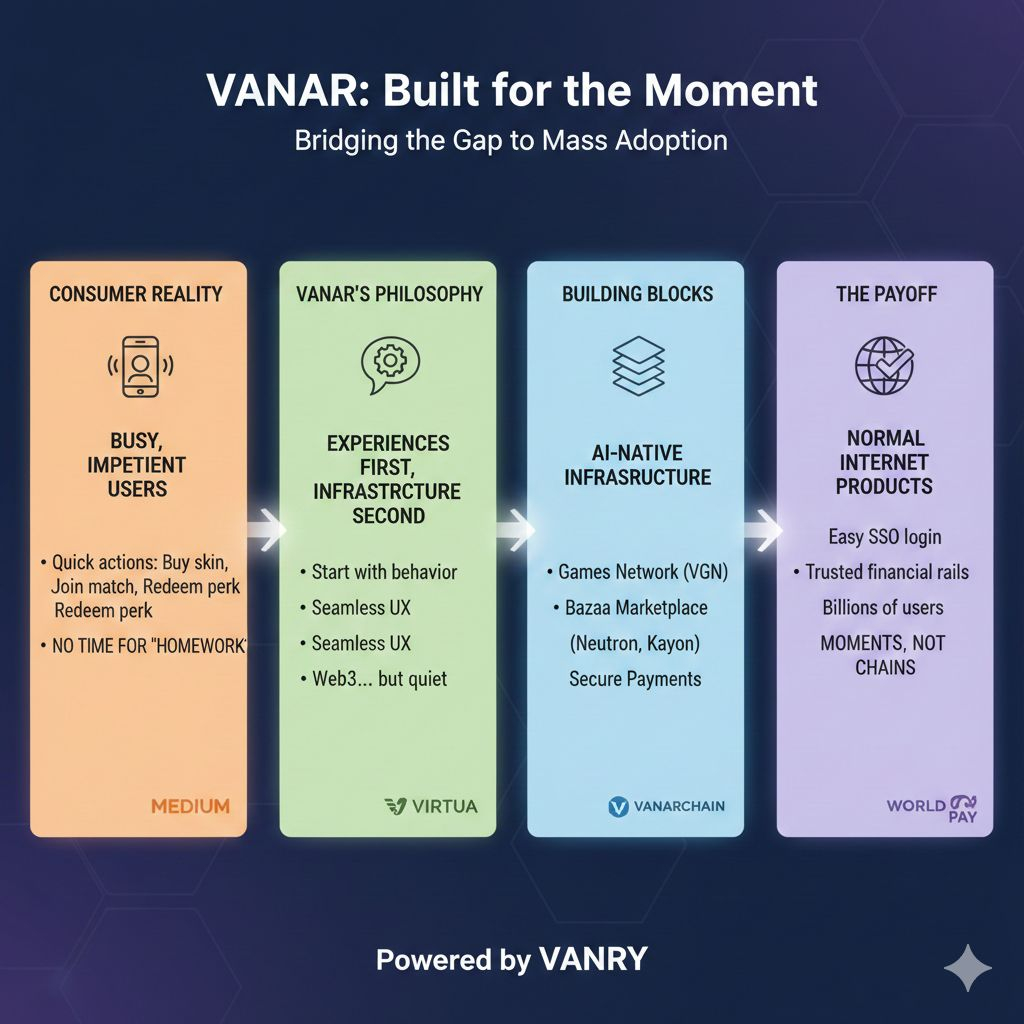
 Vanar is one of the few L1 narratives that reads better when you stop treating it like “a chain” and start treating it like a consumer product strategy with blockchain underneath.
In practice, real-world adoption doesn’t happen because a network is technically impressive. It happens when the experience is familiar, fast, and low-friction—especially in places where mainstream behavior already exists: games, entertainment, brand drops, marketplaces. That’s exactly where Vanar keeps placing its weight. The team’s background and messaging lean into those verticals on purpose, because the next wave of users won’t arrive through complicated crypto rituals; they’ll arrive because something feels fun, useful, or socially relevant, and the blockchain part stays quietly out of the way.
Gaming is a clean example of the mindset. If a player needs a tutorial just to start playing, you already lost. Vanar’s VGN framing points toward Web2-style onboarding logic—familiar entry points, smoother flows, and chain mechanics showing up only when they actually add value. It’s a blunt truth, but it’s also the adoption truth.
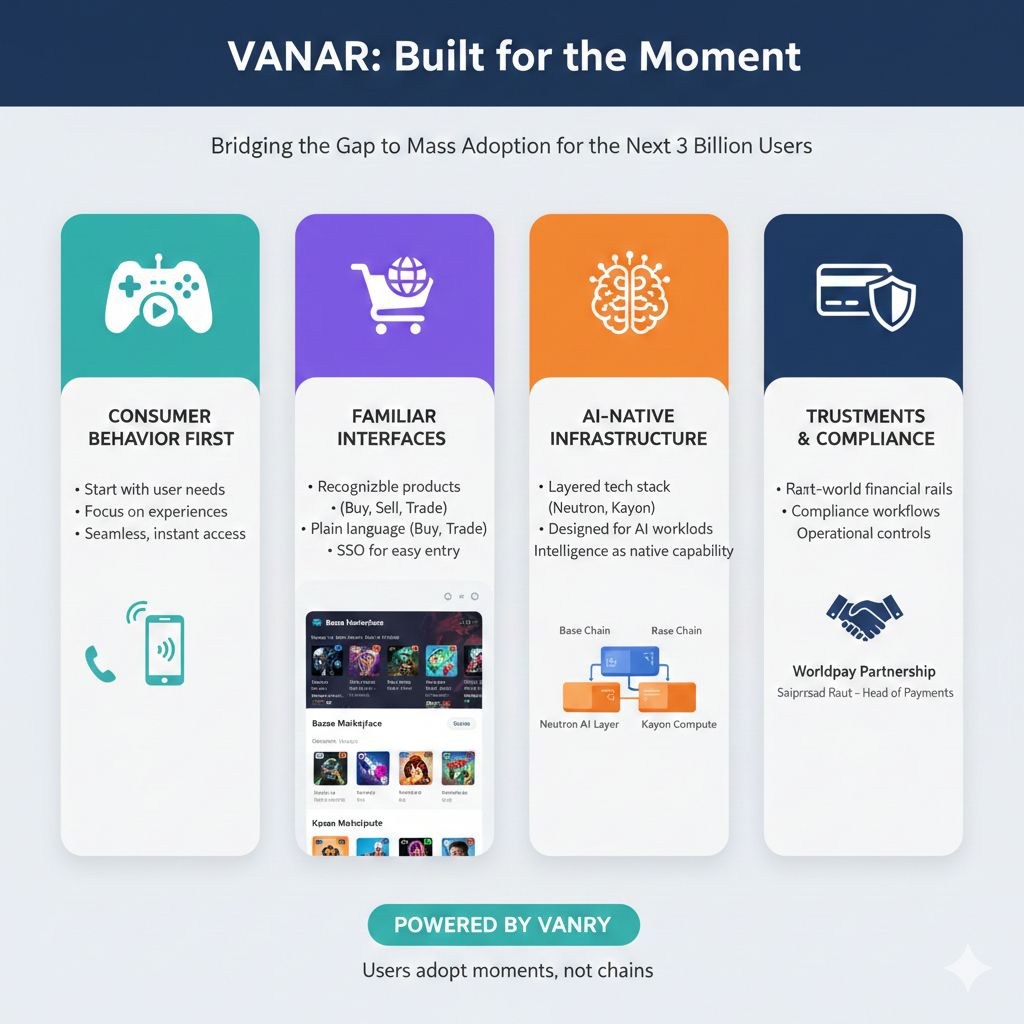 Virtua’s connection to Vanar makes the same argument in a more visual, consumer-shaped way. A marketplace like Bazaa isn’t “infrastructure” to most users; it’s browse, buy, trade, show off. Virtua publicly positions Bazaa as a fully decentralized marketplace built on Vanar, aimed at trading NFTs with real utility across games and metaverse experiences. That matters because it places on-chain activity inside behavior people already understand.
Where Vanar gets more distinctive is that it doesn’t only talk about onboarding. It also talks about what happens after onboarding—when products generate lots of content, context, files, conversation history, and AI interactions, and the ecosystem needs a way to store and reuse meaning without turning everything into a pile of broken links.
That’s where Neutron sits. Vanar describes Neutron as a semantic compression layer that rewrites files and conversations into compact, queryable “Seeds” that can be stored on-chain while staying verifiable. One micro-specific detail that jumps out: Vanar itself claims a compression example of 25MB down to 50KB, and repeatedly frames the approach around extreme reduction while keeping usefulness.
The 2025 angle is that they didn’t keep it purely theoretical. Their own Neutron materials point to “Coming Q4 2025” integrations like Slack-linked memory, pushing the idea that portable memory should live inside tools people already use rather than living only inside crypto-native apps.
MyNeutron is basically the consumer-facing doorway into that bet: keep your context portable across AI tools instead of rebuilding everything every time you switch platforms. Vanar positions it as cross-assistant memory, with the option to anchor that memory on Vanar for permanence. Press coverage around October 2025 frames MyNeutron as a decentralized AI memory layer built around those “Seeds” as verifiable knowledge capsules meant to carry context between models.
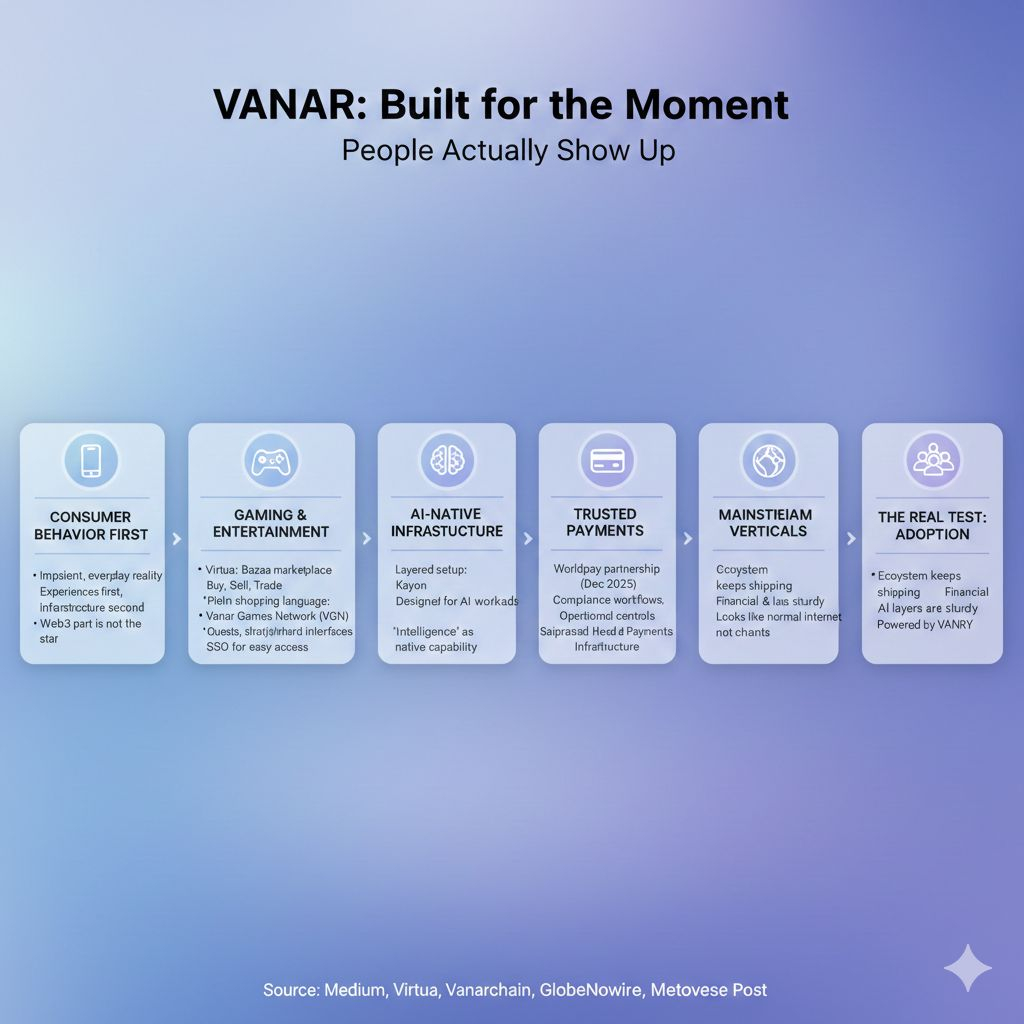 And yes, it’s still a blockchain with a token, and that still matters. Vanar’s docs describe VANRY as tied to network participation and governance, and also as the native gas token used to pay transaction fees on Vanar Chain.
One imperfect sentence, because humans write like this: and that’s why it doesn’t feel like a typical L1 pitch.
If Vanar succeeds, the win won’t be “people love blockchains.” The win is people using games, marketplaces, brand experiences, and AI-driven tools where the chain is simply the quiet system of record—reliable, fast enough to disappear, and integrated where mainstream users already real world.
