For the longest time, I approached most public blockchains with a kind of quiet indifference. I've seen too many projects launch with flashy rebranded whitepapers, promise the world, then quietly extend roadmaps year after year while shifting narratives to whatever trend was hot at the moment. When I first glanced at Vanar Chain, it didn't stand out. The name felt ordinary, the socials weren't exploding with hype, and $VANRY was trading in the low cents currently around $0.006. Honestly, I scrolled past it more than once.
Then I forced myself to dig deeper, not because of price action or community noise, but because something about the positioning kept nagging at me. What I found wasn't another layer-1 chasing the flavor of the month. It was a chain trying to solve real, structural problems in how content and AI assets live on-chain.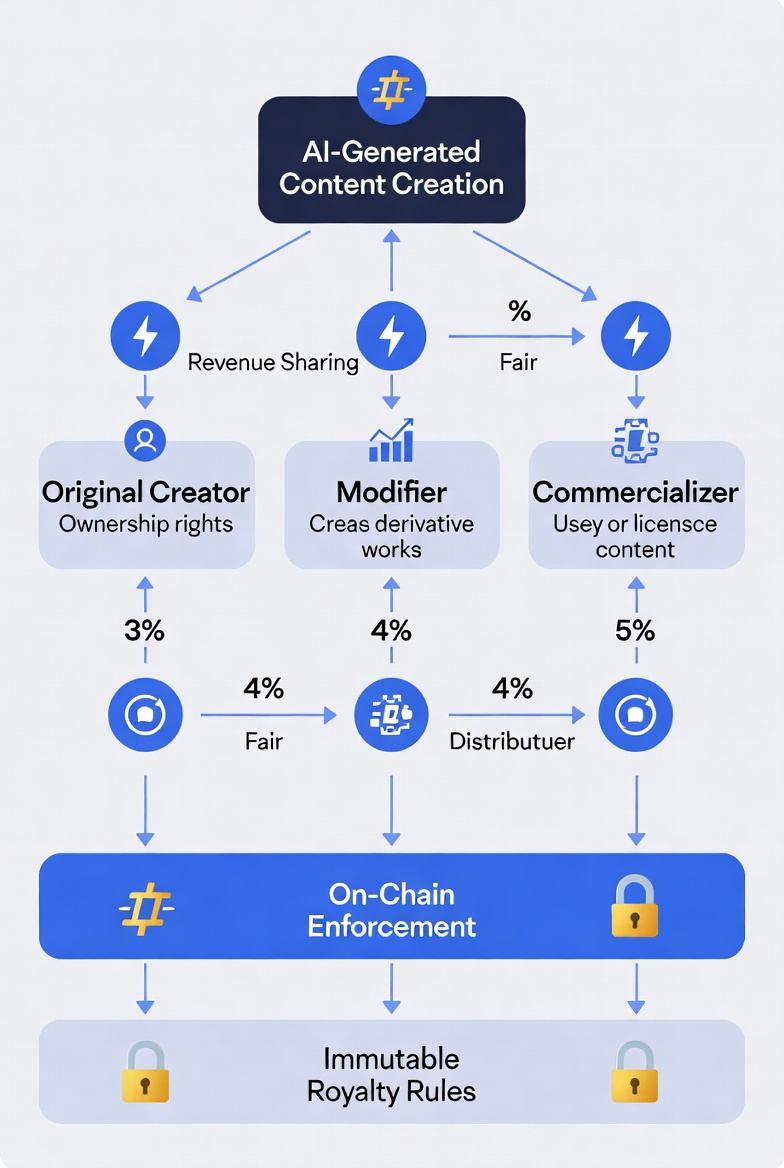
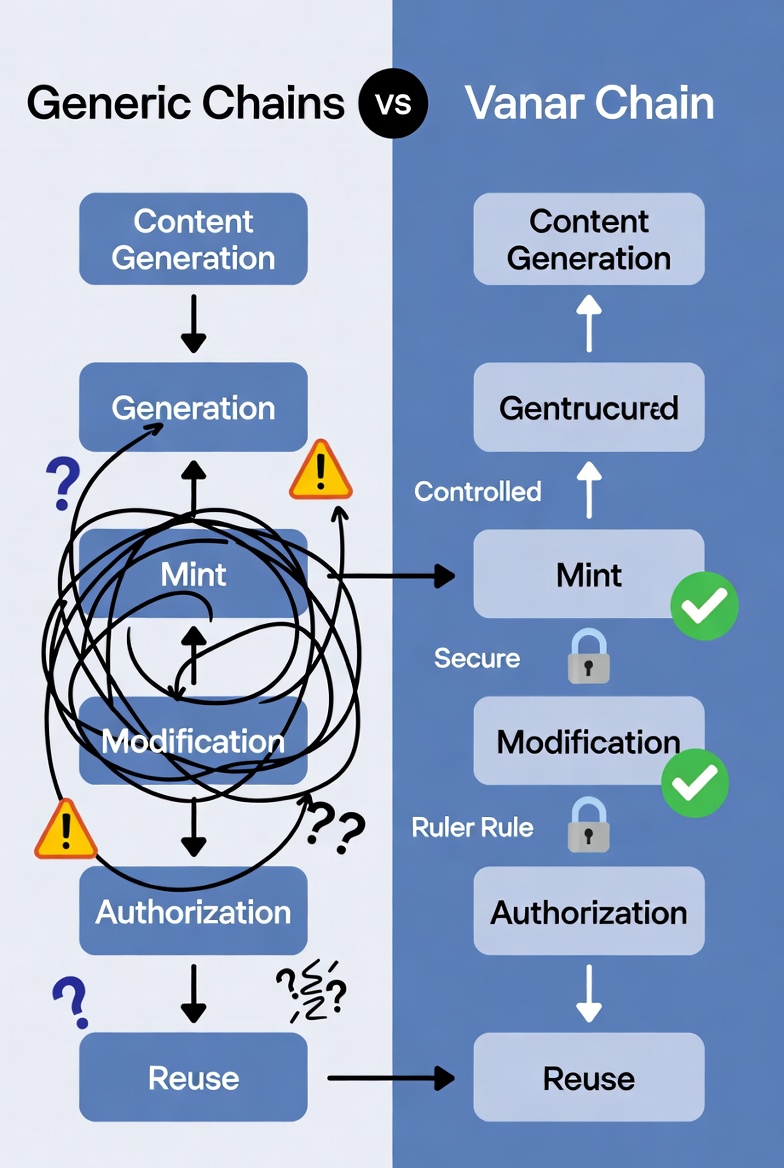
Most chains treat AI-generated or user-created content too simplistically: generate something, mint it on-chain, sell it or stake it for yield. That's the end of the story in their minds. But real-world content doesn't stop at creation. Assets get modified, combined into new works, authorized for derivative use, called repeatedly in applications, and commercialized across contexts. Without clear, enforceable rules baked into the protocol level, this turns into inevitable chaos disputes over provenance, fragmented ownership, broken revenue flows, and a house-of-cards ecosystem that collapses the moment someone wants to build seriously on top.
What sets @Vanarchain apart is that it doesn't wait for applications to figure this out messily. It pre-builds foundational on-chain rules for content and AI assets as ongoing, callable, composable objects. Lifecycle management isn't an afterthought or a smart-contract hack; it's infrastructure. That alone makes the logic feel more durable than the usual "AI on blockchain = profit" pitch.
On the technical side, Vanar optimizes for ultra-low latency and high concurrency exactly what content-heavy experiences, games, and virtual worlds demand. No one wants 1-second delays or frame stutters killing immersion. This isn't parameter-count hype or recycled buzzwords; it's actual infrastructure thinking for the kinds of applications that will actually onboard mainstream users.
Then there's the thorny issue of rights and ownership for AI-generated content. Who truly owns what the model outputs? If someone modifies it, is that a new derivative work? How do revenue shares flow fairly across layers of creation? Most chains punt these questions to off-chain agreements or hope apps solve them. Vanar embeds practical mechanisms on-chain to prevent the whole thing from becoming unsustainable.
I appreciate that Vanar avoids chasing short-term trends, hype cycles, or emotional retail waves. The approach is deliberately slower quietly building rules, capabilities, and moat while the market's attention is elsewhere. In crypto, "slow" often gets misread as stagnation, but here it feels strategic. Advantages compound when real scenarios mature: persistent builders doing the unsexy but necessary work tend to emerge stronger when the dust settles.
Of course, realism is important. The ecosystem is still developing apps need real validation, user adoption takes time, and market patience is notoriously short. This isn't the play for pure speculators looking for quick flips. But for those who value clear positioning and long-term direction over emotion-tethered volatility, the logic of a purpose-built content/AI chain holds up better than many alternatives.
In the end, value isn't in daily price swings it's in whether the foundational direction makes sense when the next wave of content chainization arrives. For me, Vanar Chain is starting to look like one of the few projects pointing in a defensible direction.
What do you think?
Do you believe on-chain rules for dynamic, evolving AI/content assets are the missing piece most chains ignore?
Is patient, foundational building still viable in 2026, or has the market permanently shifted to fast hype wins?
How important is low-latency infrastructure really for the next generation of on-chain experiences?
Would you rather bet on a chain solving ownership chaos upfront, or one letting apps experiment freely (and fail messily)?