
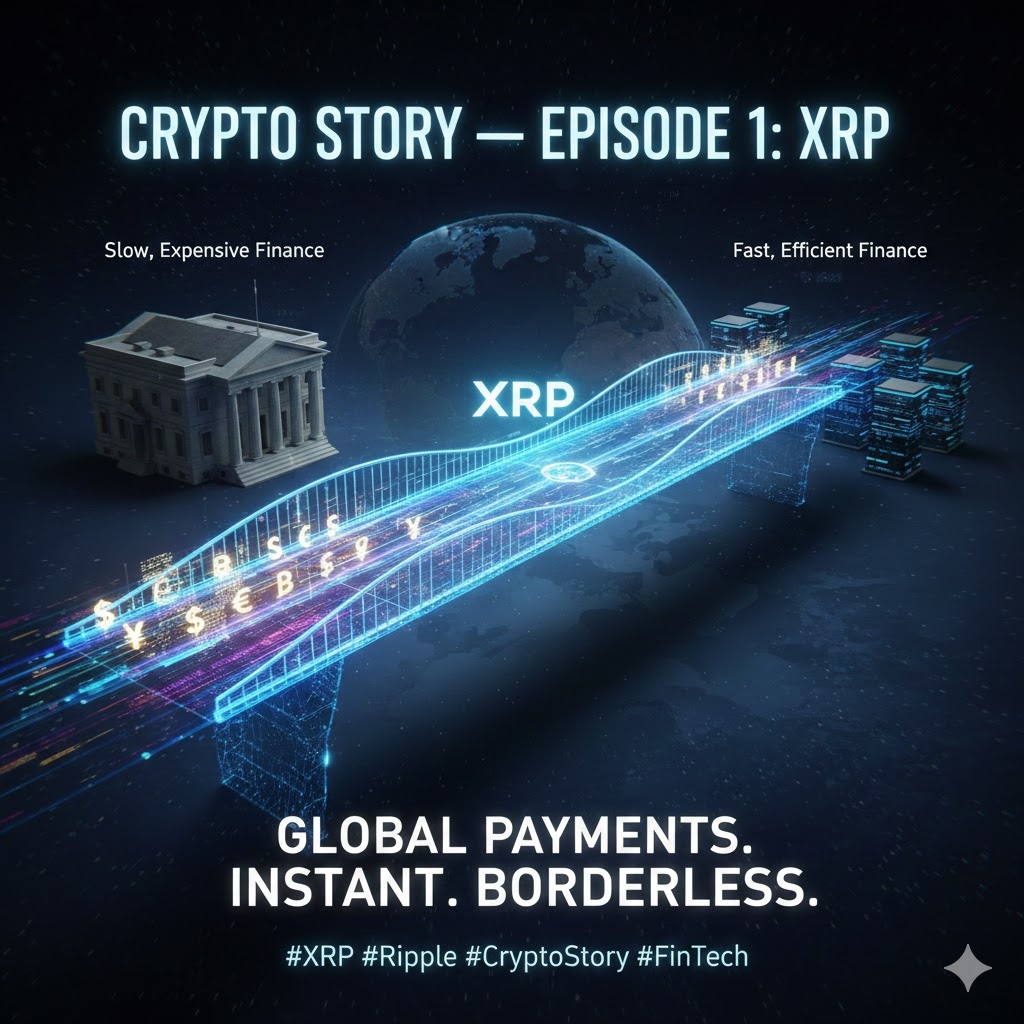
 In the world of cryptocurrency, some projects go beyond mere price fluctuations and aim to overhaul the entire global financial system. XRP is one of them. It isn't just another digital asset; it is a sophisticated system specifically engineered to make cross-border payments faster, cheaper, and more efficient.
What is XRP?
XRP is the native digital asset of the XRP Ledger (XRPL). This ledger is an open-source, distributed, and automated system powered by a network of independent servers worldwide. Its primary mission is to act as a bridge between different currencies, allowing money to move across borders seamlessly in a matter of seconds.
Solving the Banking Problem
Traditional banking systems make international transfers expensive, slow, and complex. XRP was introduced to solve this exact friction. By acting as a "Bridge Currency," it connects two different fiat currencies or financial systems, allowing for near-instant liquidity.
Unmatched Speed and Scalability
One of the standout features of the XRP Ledger is its settlement speed. While traditional systems can take days, XRP transactions settle in just 3 to 5 seconds. Furthermore, the network is highly scalable, capable of handling thousands of transactions per second—making it fit for global enterprise use.
Beyond Just a Currency
The XRP Ledger is versatile. It can represent various assets, including:
Fiat Currencies (USD, EUR, etc.)
Commodities (like Gold)
Other Digital Assets
It even features a built-in Decentralized Exchange (DEX), allowing users to trade directly on the ledger without needing a middleman.
Sustainability and Supply
Eco-Friendly: Unlike Bitcoin, XRP does not rely on "Proof of Work" (mining). This makes it incredibly energy-efficient and sustainable.
Fixed Supply: The total supply of XRP was capped at 100 billion at its inception. No more can be created.
Deflationary Mechanism: A tiny fraction of XRP is "burned" (destroyed) as a fee for every transaction, slowly reducing the total supply over time.
Conclusion
The foundation of the XRP story is built on speed, low cost, and global reach. It is a system designed not just for speculation, but for the future of global finance.