
There’s a quiet kind of heartbreak in the digital world that most people don’t talk about.
It’s the heartbreak of building something in a game for years, only to watch it vanish when the servers shut down. The heartbreak of buying digital art or collectibles and realizing you don’t truly own them. The frustration of hearing about Web3 and blockchain, feeling curious — even excited — but stepping back because it feels too complicated, too risky, too technical.
For many, the future of the internet has felt like an exclusive club with an unspoken rule: if you don’t understand wallets, gas fees, and seed phrases, you don’t belong.
Vanar Chain was built as a response to that quiet exclusion.
Not as a loud revolution. Not as a speculative casino. But as an invitation.
An invitation to the next three billion people who will come online — not as traders, but as players, creators, collectors, fans, and dreamers.
The team behind Vanar didn’t come from abstract theory alone. They come from entertainment, gaming, and global brand ecosystems — industries where emotion matters more than code. They understand something many blockchains forget: technology succeeds when it feels natural. When it disappears behind experience.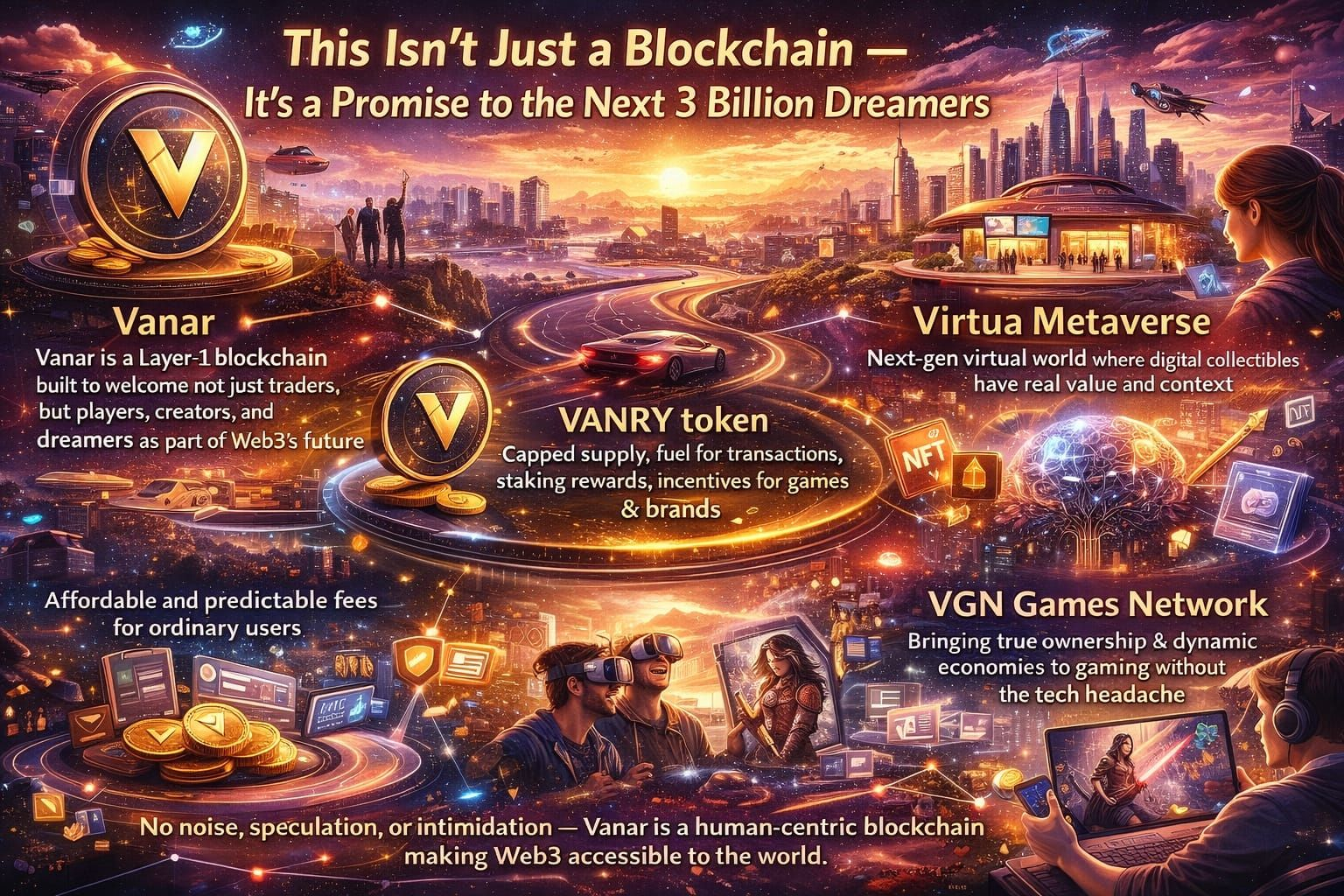
And that philosophy shapes everything.
At its heart, Vanar is powered by the VANRY token. But VANRY isn’t presented as a lottery ticket. It’s fuel. It pays for transactions. It secures the network through staking. It supports governance. It keeps the engine running. Its supply is capped, its economics structured to encourage long-term sustainability instead of short-term frenzy. That may not sound dramatic, but in a space fueled by hype cycles, sustainability is radical.
Because what ordinary users want isn’t volatility. They want predictability. They want trust. They want to know that when they click “buy,” “play,” or “collect,” they aren’t stepping into chaos.
And then there’s Virtua Metaverse.
Virtua isn’t just a digital marketplace. It feels like an attempt to give digital ownership emotional weight again. Inside it, licensed brands, immersive environments, NFTs, and interactive content coexist. But the deeper story isn’t about NFTs. It’s about belonging. It’s about owning something in a virtual space that feels like it has context — like it lives somewhere, not just in a wallet.
When someone buys a digital collectible there, it isn’t just a token ID. It’s a memory. A statement. A piece of identity.
And perhaps the most powerful expression of Vanar’s vision is VGN games network.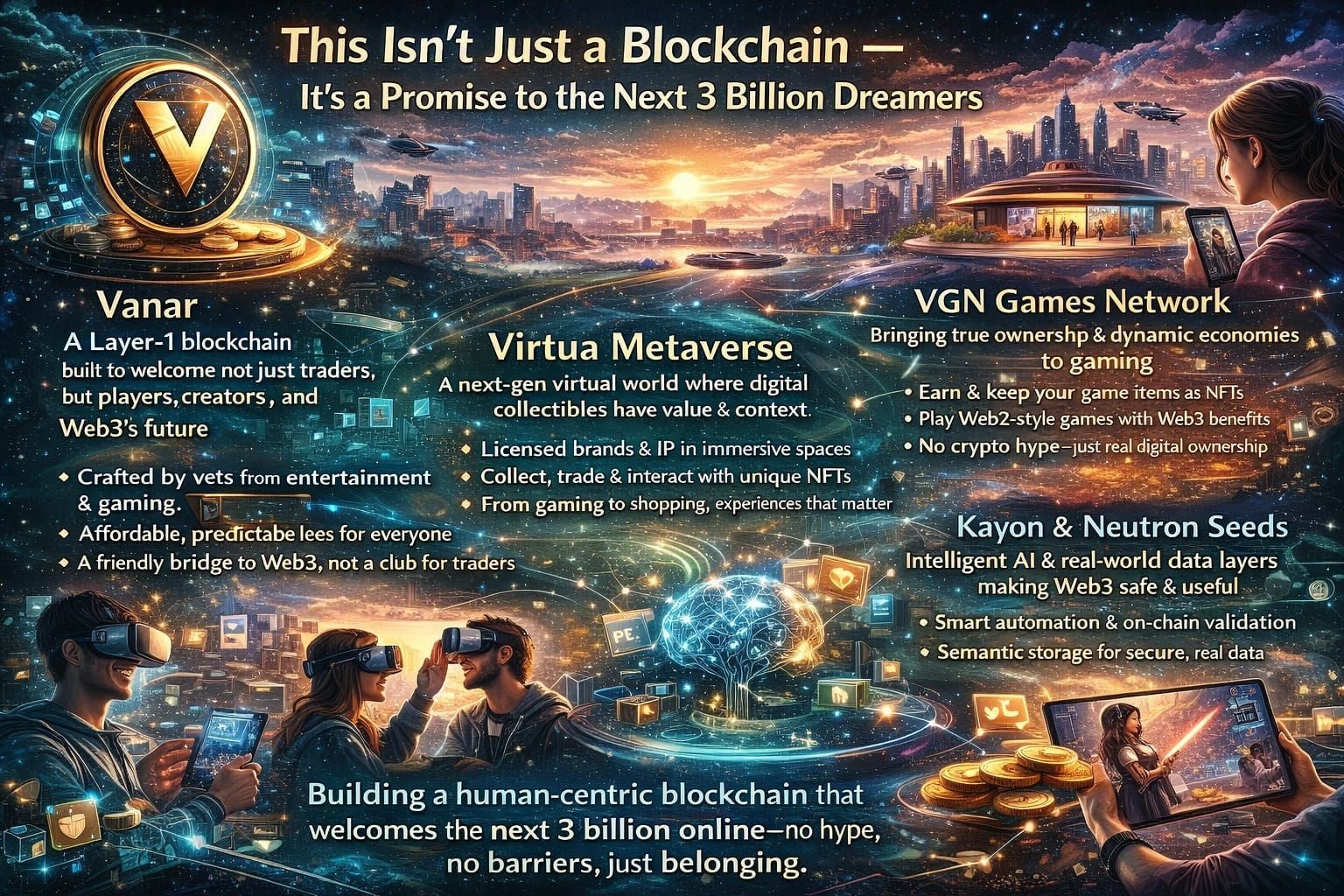
For years, gamers have poured time, money, and emotion into digital worlds they never truly owned. Skins, weapons, characters — all technically rented from centralized servers. If a publisher shuts down a game, those assets disappear. Entire histories vanish overnight.
VGN challenges that reality.
Imagine earning something rare in a game — a skin, a character, a piece of gear — and knowing it is verifiably yours. Not locked inside one ecosystem. Not dependent on one company’s survival. Anchored to a blockchain designed to preserve ownership.
That shift changes more than economics. It changes how achievement feels.
Ownership transforms digital effort into something lasting. It tells players: your time matters.
Underneath the surface, Vanar integrates AI-aware frameworks and structured data layers that allow real-world information, legal verification, and intelligent automation to live on-chain. That might sound technical, but its purpose is deeply human. It means brands can build responsibly. It means compliance can be automated. It means experiences can adapt in real time.
It means Web3 doesn’t have to feel reckless.
The vision of onboarding the next three billion users isn’t about chasing numbers. It’s about accessibility. About creating infrastructure where someone who has never heard of “Layer-1” can participate without fear.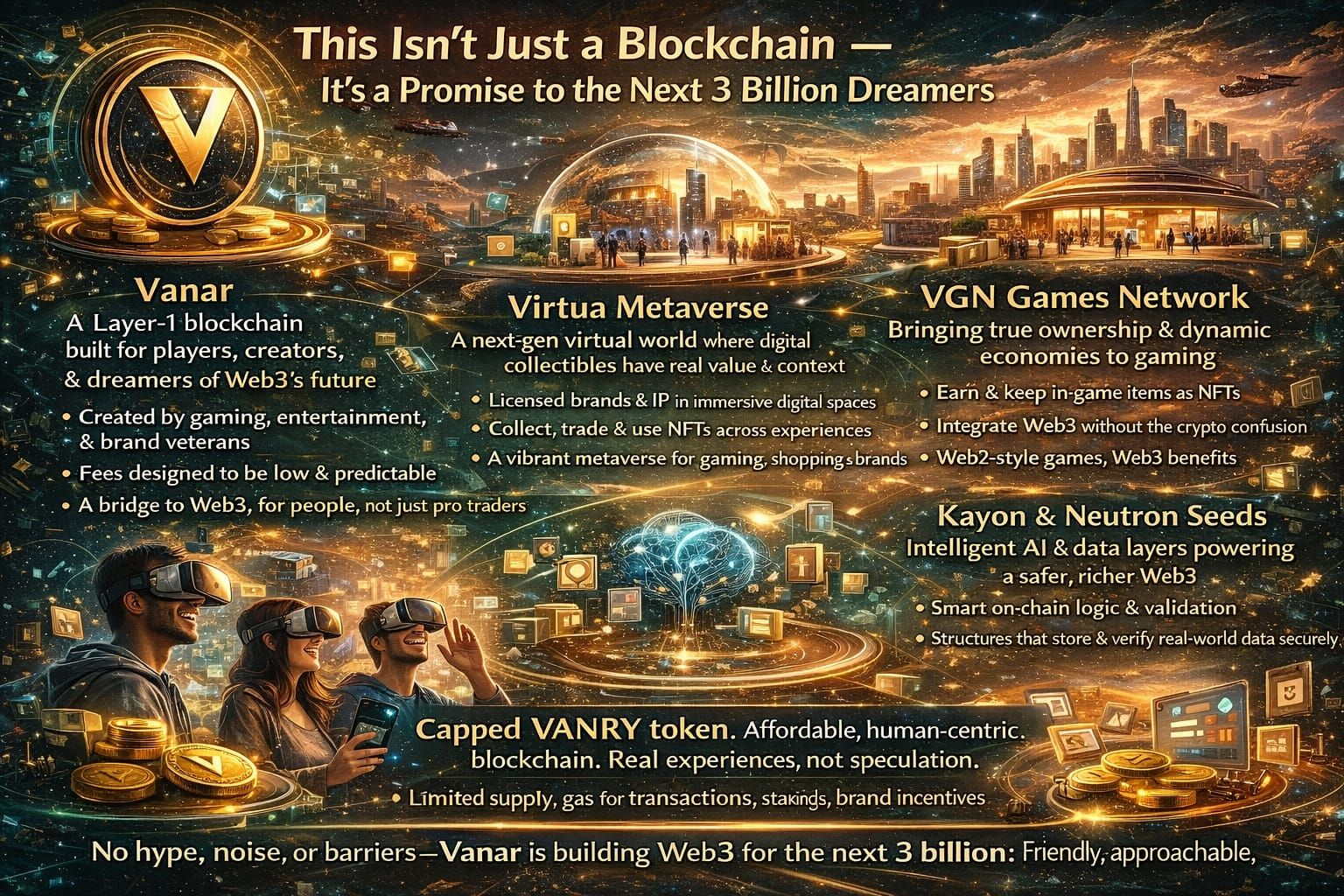
Think about a small gaming studio wanting to experiment with blockchain but terrified of scaring away players. Think about an artist in a developing country looking for fair monetization without middlemen. Think about a brand wanting to reward loyal fans digitally without navigating technological chaos.
Vanar is positioning itself as the bridge for those people.
But bridges are fragile things. They require balance — between decentralization and usability, innovation and stability, ambition and restraint. The crypto industry has seen too many projects promise utopia and deliver turbulence. The real test for Vanar won’t be headlines or token price spikes. It will be quiet adoption.
A game launch that feels seamless. A digital collectible that moves effortlessly between experiences. Transaction fees so small they don’t cause hesitation. Users who don’t even realize they’re interacting with blockchain.
That’s the dream.
Not noise. Not speculation. Just integration.
And maybe that’s why this story feels different. In a landscape obsessed with disruption, Vanar speaks the language of continuity. It doesn’t demand that the world change overnight. It asks to evolve the world gently.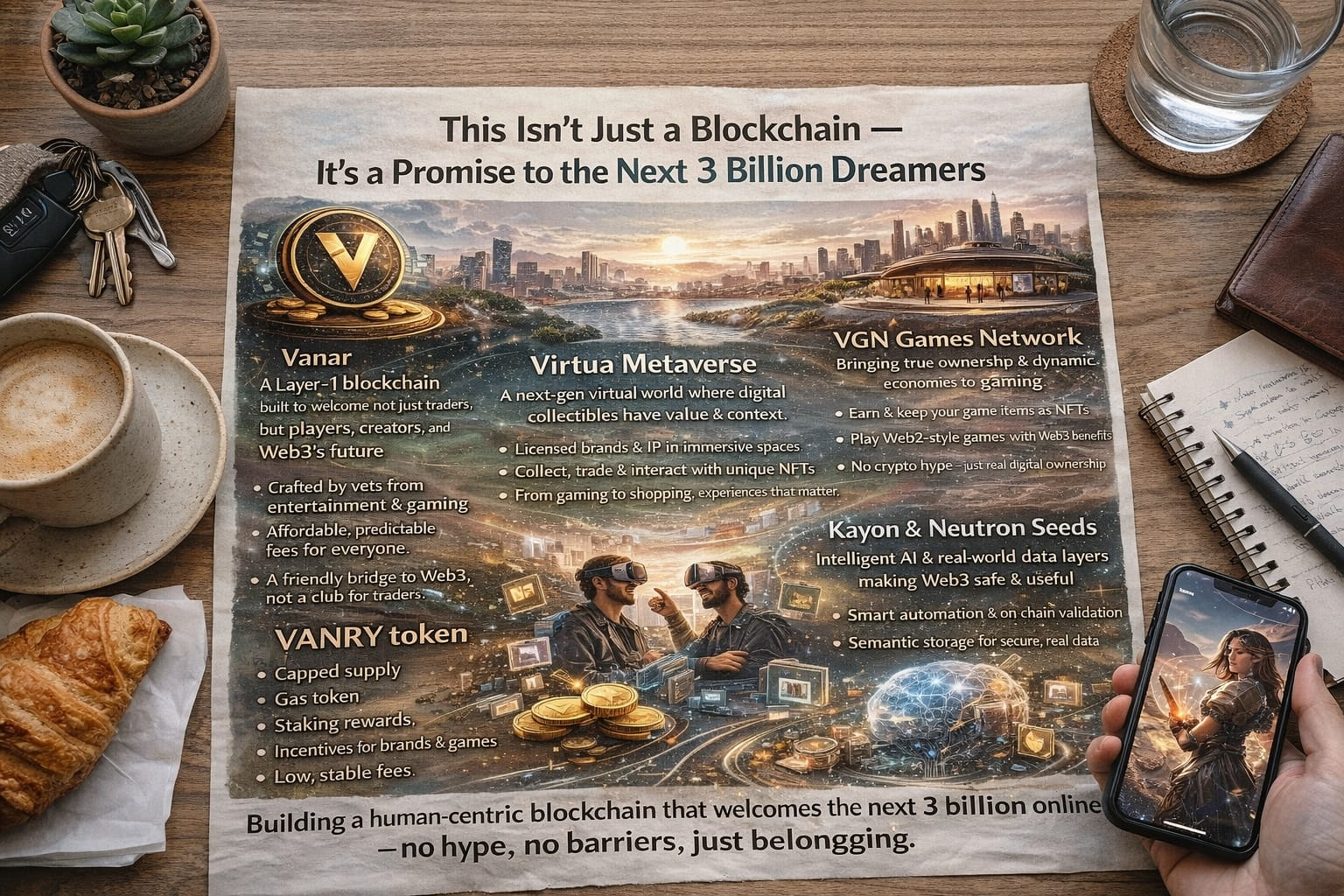
The internet’s next chapter won’t be written only by developers or investors. It will be written by players logging in after school. By creators testing new forms of expression. By brands searching for authentic digital connection. By everyday people who want ownership without complexity.
If Vanar succeeds, it won’t just be another Layer-1 blockchain competing for dominance. It will be something quieter and more profound.
It will be the moment when Web3 stops feeling intimidating.
The moment when digital ownership stops feeling temporary.
The moment when billions of people realize they were always meant to be part of this future.
And sometimes, the most powerful revolutions don’t roar.
They welcome you in.
