
I’ve seen enough Layer 1 pitches to recognize the pattern almost instantly.
Big TPS numbers at the top.
“Enterprise-ready” somewhere in the middle.
A token chart at the end that’s supposed to seal the deal.
Vanar caught my attention for a different reason.
It doesn’t feel like the team is trying to win the loudest performance contest. It feels more like they’re asking a quieter — and honestly more important — question:
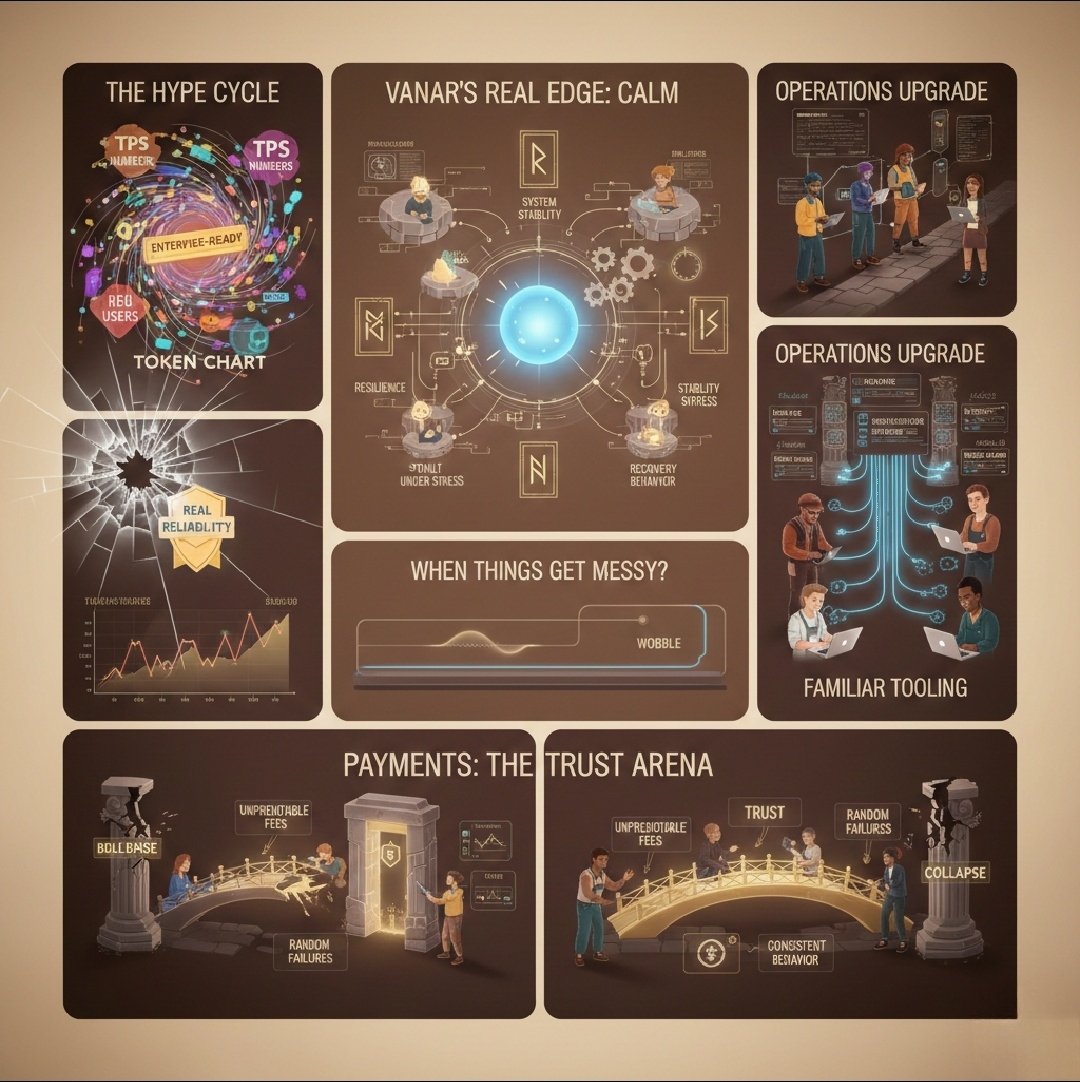
What actually happens when things get messy?
Because real adoption never happens in perfect conditions.
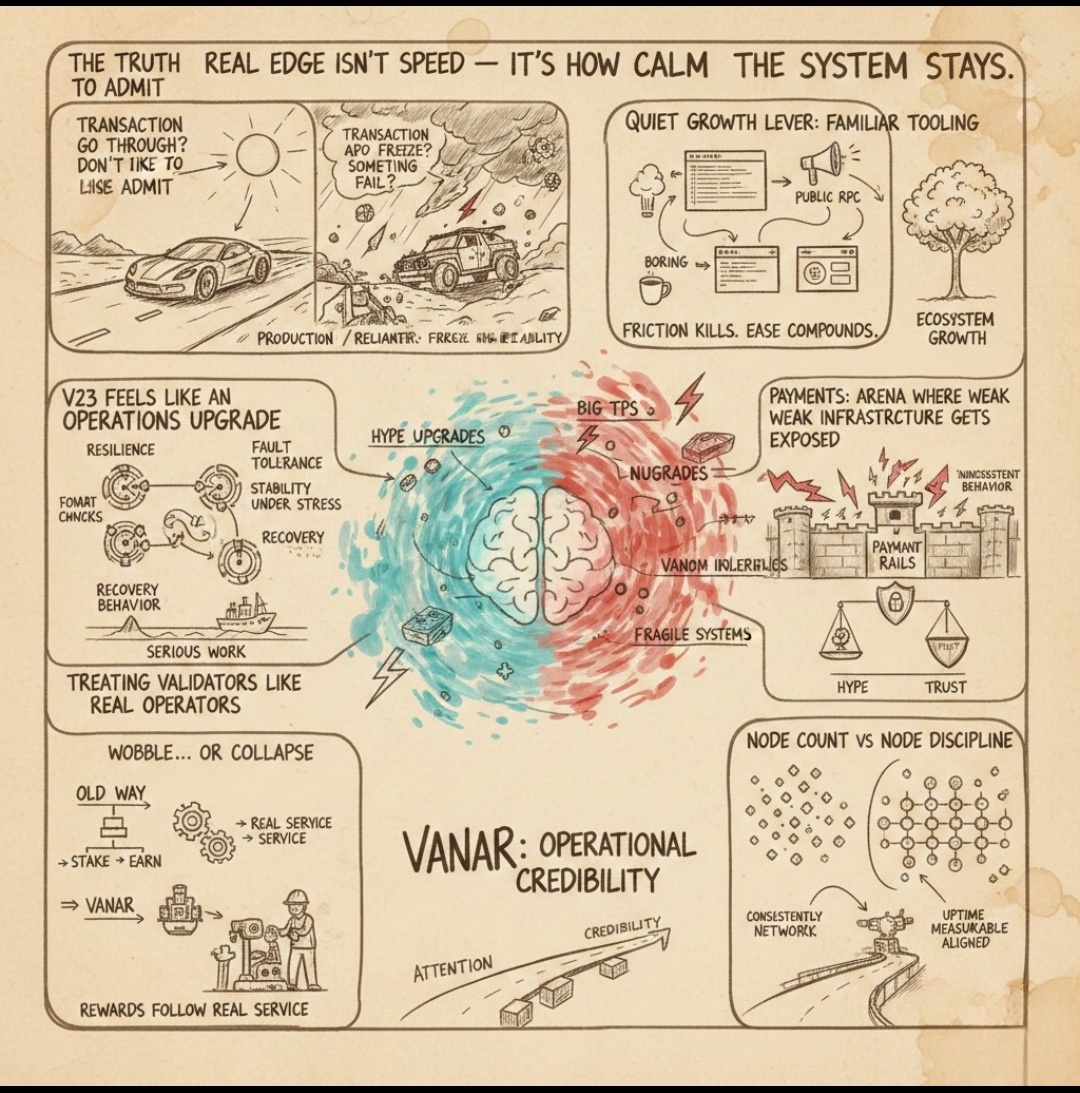
The Truth Most Chains Don’t Like to Admit
Here’s something builders learn the hard way:
Speed looks great in calm markets.
Reliability is what matters in production.
When real users show up, nobody is watching TPS dashboards. They’re noticing something much simpler:
Did the transaction go through?
Did the app freeze?
Did something fail at the worst moment?
One bad surprise can undo months of trust.
That’s why I keep coming back to this idea:
Reliability isn’t just a feature. It is the product.
And Vanar, at least from its recent direction, seems to understand that better than most.
V23 Feels Like an Operations Upgrade — Not a Hype Upgrade
What stood out to me about the V23 narrative is the tone.
It wasn’t the usual “we’re faster than everyone” messaging. The focus leaned much more toward:
resilience
fault tolerance
stability under stress
recovery behavior
To the average crypto crowd, that might sound boring.
To anyone who has shipped real systems, that’s exactly where the serious work lives.
Because the reality is simple:
Live systems always break at some point.
Networks hiccup.
Nodes go offline.
Traffic spikes arrive at the worst possible time.
Humans misconfigure things.
The question is never if something fails.
The real question is:
> Does the system wobble… or does it collapse?
Vanar appears to be designing for the wobble, not the perfect demo.
Treating Validators Like Real Operators
Another subtle but important shift I’m noticing is how Vanar seems to think about validators.
Many networks still treat validation like a participation game:
Join.
Stake.
Earn.
Repeat.
But in production environments, participation alone doesn’t mean much. What matters is whether your infrastructure is actually reliable and reachable.
If a node is frequently offline or unreachable, should it really be rewarded the same as one that’s consistently serving the network?
Vanar’s push toward things like reachability checks points to a more grounded philosophy:
Rewards should follow real service, not just presence.
That mindset feels much closer to an SRE playbook than typical crypto incentive design — and that’s honestly refreshing.
The Quiet Growth Lever: Familiar Tooling
Sometimes the strongest signals are the least flashy.
One way I personally judge whether a chain is serious about adoption is very simple:
I look at the onboarding experience.
Developers today don’t want new rituals. They don’t want to fight the tooling. They want things to work the way they expect.
Vanar showing up with:
public RPC and WebSocket endpoints
standard chain configuration
clean explorer access
compatibility with familiar dev flows
…might not sound revolutionary, but it removes friction. And friction is what silently kills ecosystems.
Growth in this space often looks like this:
One developer tries it because setup is easy.
Another copies the config.
A small team ships something experimental.
Then the network quietly becomes part of the normal toolkit.
It’s not loud. But it compounds.

Payments: The Arena Where Weak Infrastructure Gets Exposed
If there is one environment that punishes fragile systems quickly, it’s payments.
Payments don’t tolerate:
unpredictable fees
random failures
long recovery times
inconsistent behavior under load
That’s why Vanar leaning toward real payment rails is more serious than it might look on the surface.
Because the moment you step into that world, expectations change completely.
You’re no longer competing on hype.
You’re competing on trust.
And trust in payments is brutally hard to earn.
Node Count vs Node Discipline
A lot of projects love to highlight big validator numbers.
Personally, I care much less about how many nodes exist and much more about how many are actually doing their job properly.
Healthy networks aren’t built on vibes. They’re built on standards.
What matters is:
Are nodes consistently reachable?
Is uptime measurable?
Are rewards aligned with real contribution?
Does the network stay stable when stressed?
Vanar’s recent direction suggests it’s at least asking these questions seriously — and that already puts it in a smaller group than many people realize.
What I’ll Be Watching Next
If Vanar continues down this path, the real tests ahead are pretty clear to me:
First, whether the network stays calm as real usage grows. Stability at low pressure is easy. High-pressure behavior is where reputations are made.
Second, whether validator quality controls actually tighten over time instead of remaining loose talking points.
Third, whether payment-grade reliability shows up in real-world usage, not just partnership headlines.
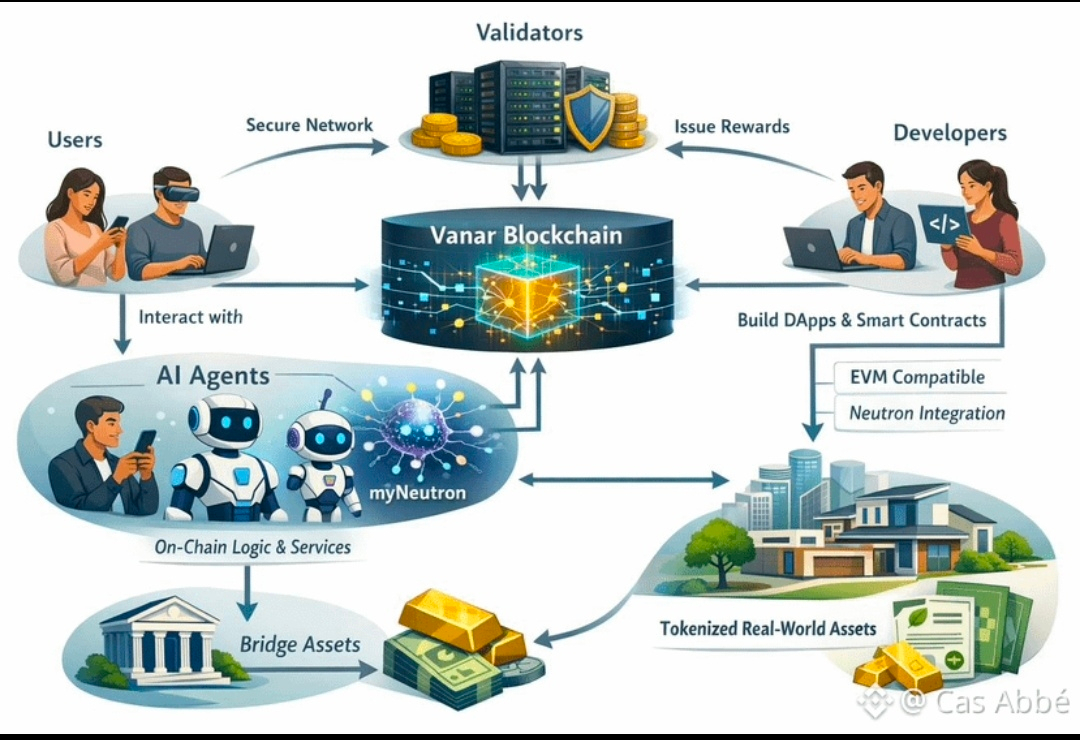
And finally, whether the developer experience stays simple even as the stack becomes more ambitious with AI and data layers.
Because complexity is another silent killer.
My Honest Take
Vanar doesn’t currently feel like it’s trying to win a popularity contest.
It feels like a team that understands something many in crypto still underestimate:
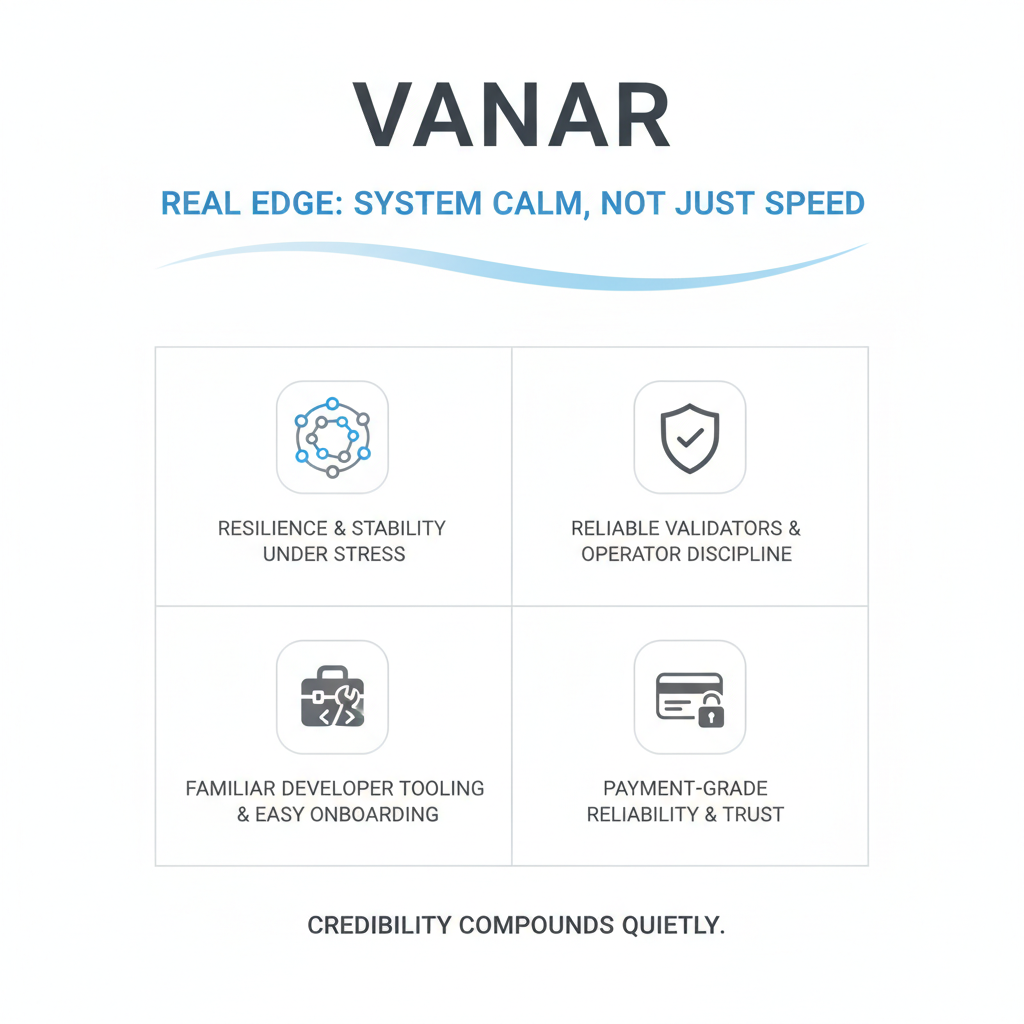
Confidence is built quietly, through consistent system behavior.
Most chains chase attention.
Vanar, at least from the outside, appears to be chasing operational credibility.
And in the long run, credibility compounds much more slowly — but much more powerfully.
Final Thought
The chains that last won’t be the ones that looked the fastest in perfect conditions — they’ll be the ones builders trusted to keep working when things got unpredictable.
Vanar’s biggest bet right now isn’t hype — it’s the discipline of building infrastructure people don’t have to worry about.