
I’ve watched a lot of “AI + blockchain” stories over the past few years.
Most of them sounded impressive at first… but when you looked closer, nothing really changed. The chain worked the same. The token worked the same. AI was mostly just a label to attract attention.
Vanar feels like it’s trying to do something more practical.
Not just: “Let’s add AI.”
But: “How do we make intelligence something people actually use every day?”
That shift — if it works — is where things get interesting.
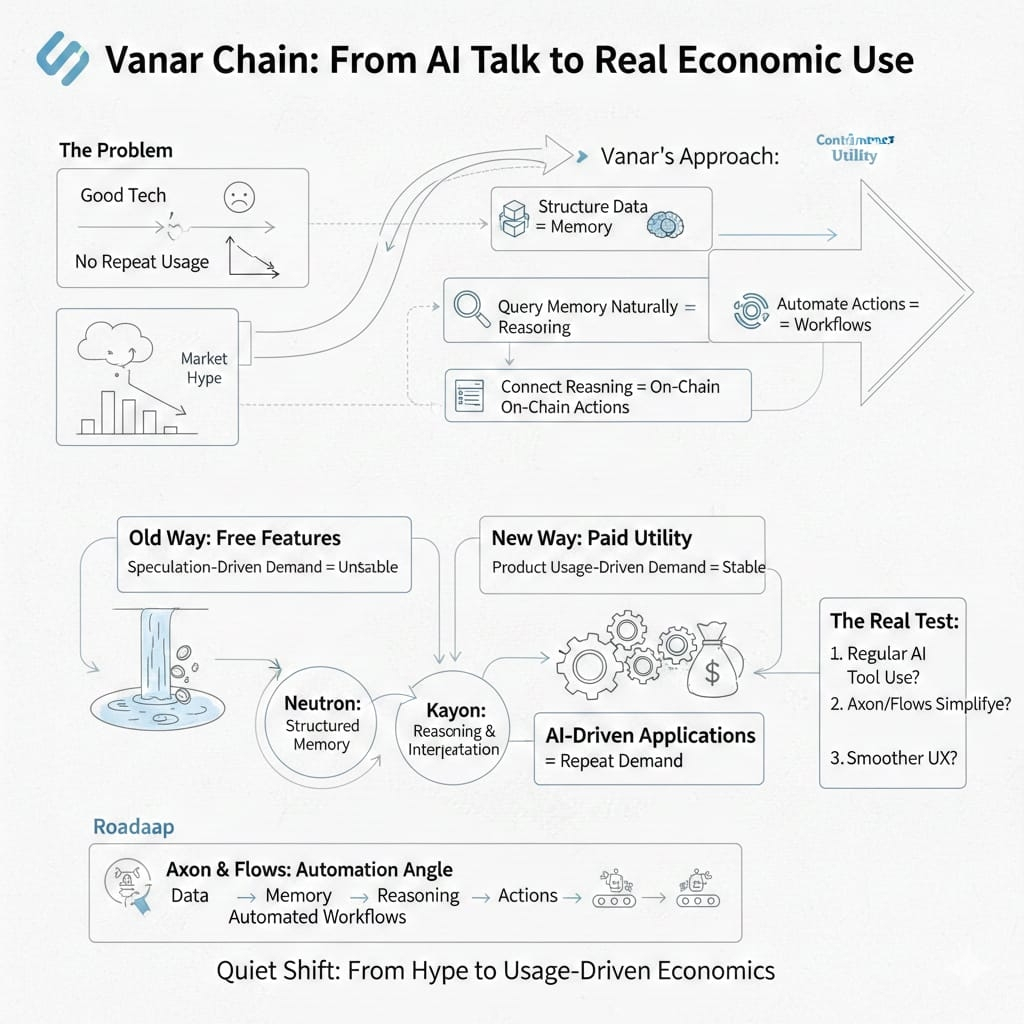
The Real Problem Most Chains Still Have
Here’s the uncomfortable truth.
Blockchains don’t survive just because the tech is good.
They survive when users keep coming back.
Repeat usage is what creates real demand.
Many projects built powerful infrastructure but never created a reason for people to keep using it regularly. Everything depended on market hype, and we all know how that usually ends.
What I notice about Vanar is that the team seems very focused on building continuous utility, not one-time excitement.
Where Vanar’s Approach Feels Different
Instead of treating AI like a shiny add-on, Vanar is trying to build it deeper into the stack.
The way I see it, their direction is roughly:
structure data so it actually behaves like memory
make that memory queryable in a natural way
connect reasoning to real on-chain actions
eventually automate parts of the workflow
If you step back, that’s not just an AI feature set.
That’s an attempt to make blockchains think and act, not just store and transfer.
The Quiet but Important Shift: From Free Features to Paid Utility
This is the part that really caught my attention.
Crypto historically loves the word “free.”
Free transactions.
Free tools.
Free access.
But sustainable systems in the real world rarely work that way.
What Vanar seems to be moving toward is closer to a software-style economy, where advanced intelligence features become services people actually pay for when they need them.
Why this matters:
When token demand comes from real product usage, it tends to be more stable than demand driven purely by speculation.
Of course, execution is everything. But direction-wise, this is a much more grounded path than relying only on narrative cycles.
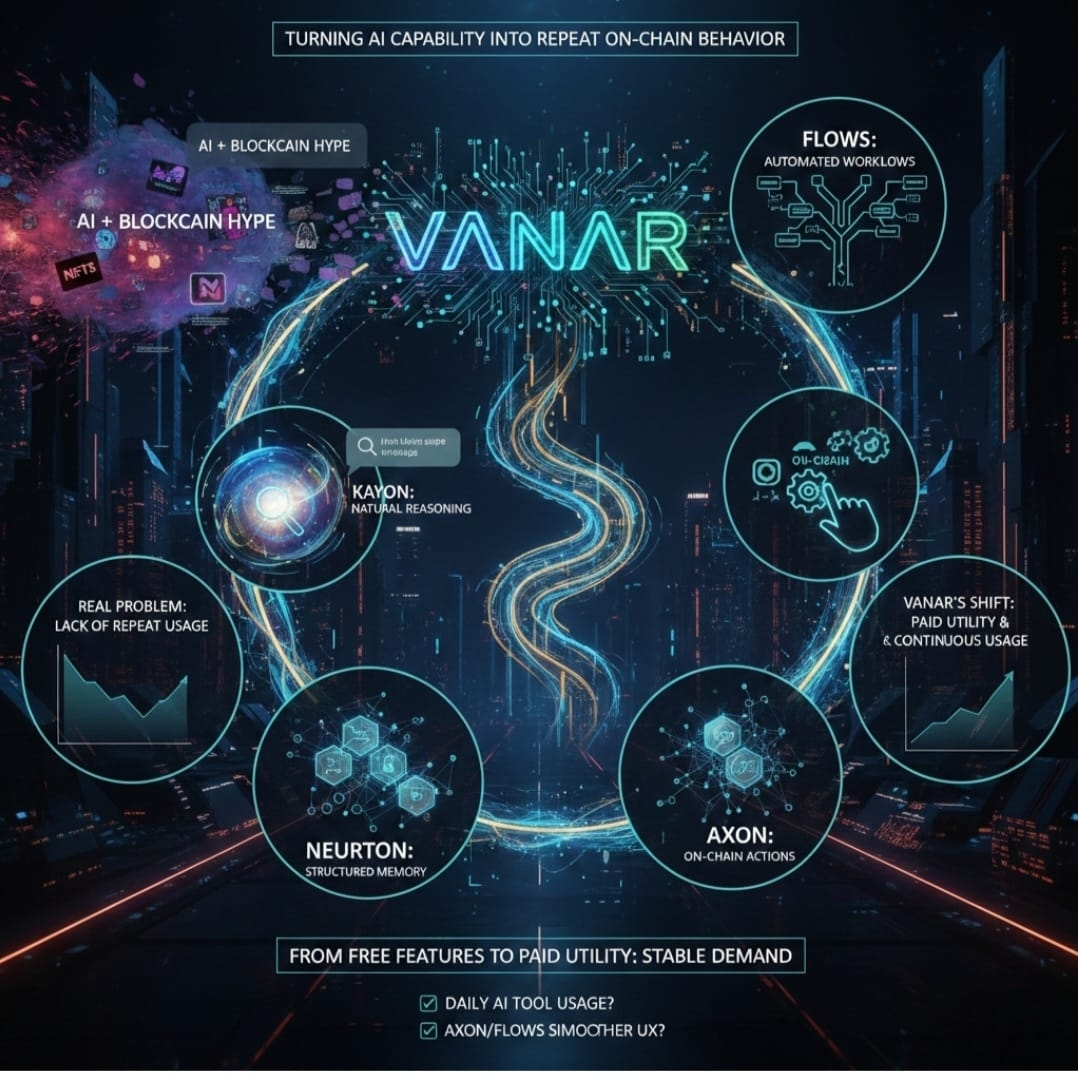
Neutron and Kayon: Memory and Reasoning Start to Form a Loop
Looking at their stack, you can see the logic forming.
Neutron is positioned around turning raw data into something more structured and reusable — almost like giving the chain a form of memory.
Kayon then sits closer to the reasoning side, where that stored context can actually be queried and interpreted in a more natural way.
If — and this is still an important if — developers start building products that rely on this loop daily, then Vanar is no longer just infrastructure.
It becomes part of the operating layer for AI-driven applications.
And that’s where repeat demand can begin to form.
Axon and Flows: The Automation Angle to Watch
What really signals the bigger ambition is what’s coming next.
With Axon and Flows on the roadmap, the direction seems pretty clear: Vanar is not stopping at intelligence. It’s moving toward automation.
If these pieces come together well, the long-term vision looks something like:
data becomes structured memory
memory feeds reasoning
reasoning triggers actions
actions become automated workflows
That’s a much bigger goal than just “faster transactions.”
But it’s also where execution risk increases. Roadmaps are easy. Smooth delivery is the hard part.
Market Reality vs Technical Vision
Right now, the market still treats $VANRY like most mid-cap tokens — it moves with broader crypto sentiment, liquidity cycles, and attention shifts.
That’s normal.
Technology usually builds first.
Economic behavior follows later — if the product actually sticks.
The real test for Vanar is simple:
Can they convert technical capability into daily user behavior?
Because without that bridge, even strong infrastructure can stay underused.
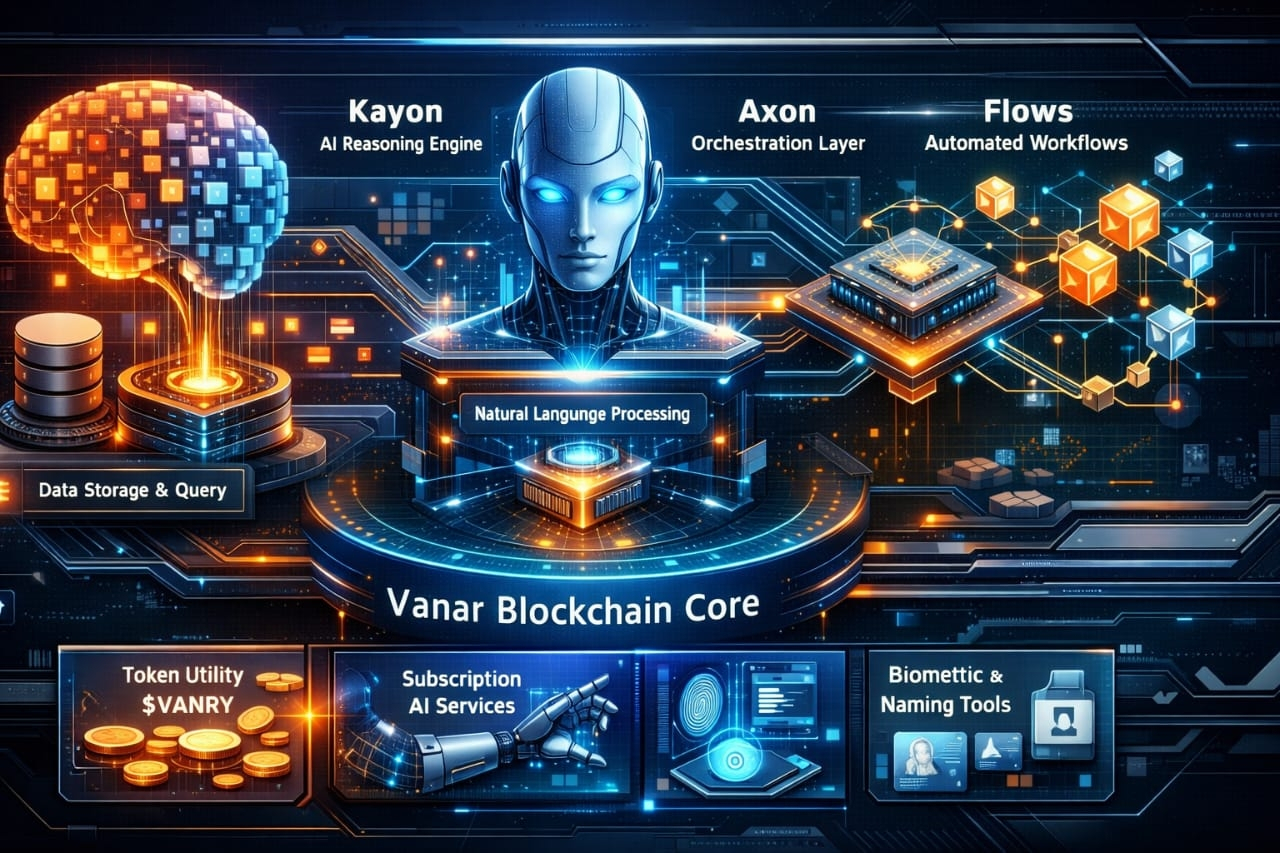
Why This Story Matters (At Least to Me)
I’ve seen too many crypto waves built on pure narrative.
NFT hype.
Metaverse hype.
Countless “next big thing” moments.
Very few of them created a clean, repeatable economic loop.
What makes Vanar worth watching — not blindly believing, but watching — is that the team appears to understand one key reality:
Tokens can’t live on speculation forever.
Eventually, they need to plug into real usage.
The shift toward monetized intelligence, subscription-style utility, and workflow automation suggests they are at least aiming in that direction.
What I’m Personally Watching Next
If someone asked me what actually matters from here, I’d keep it simple.
First:
Do people genuinely start using the AI tools regularly?
Second:
When Axon and Flows arrive, do they simplify building… or complicate it?
Third:
Does the user experience become smoother than typical Web3 apps?
If those three pieces improve together, Vanar could quietly grow into something meaningful.
If not, it risks becoming another technically impressive system that never fully converts into real demand.
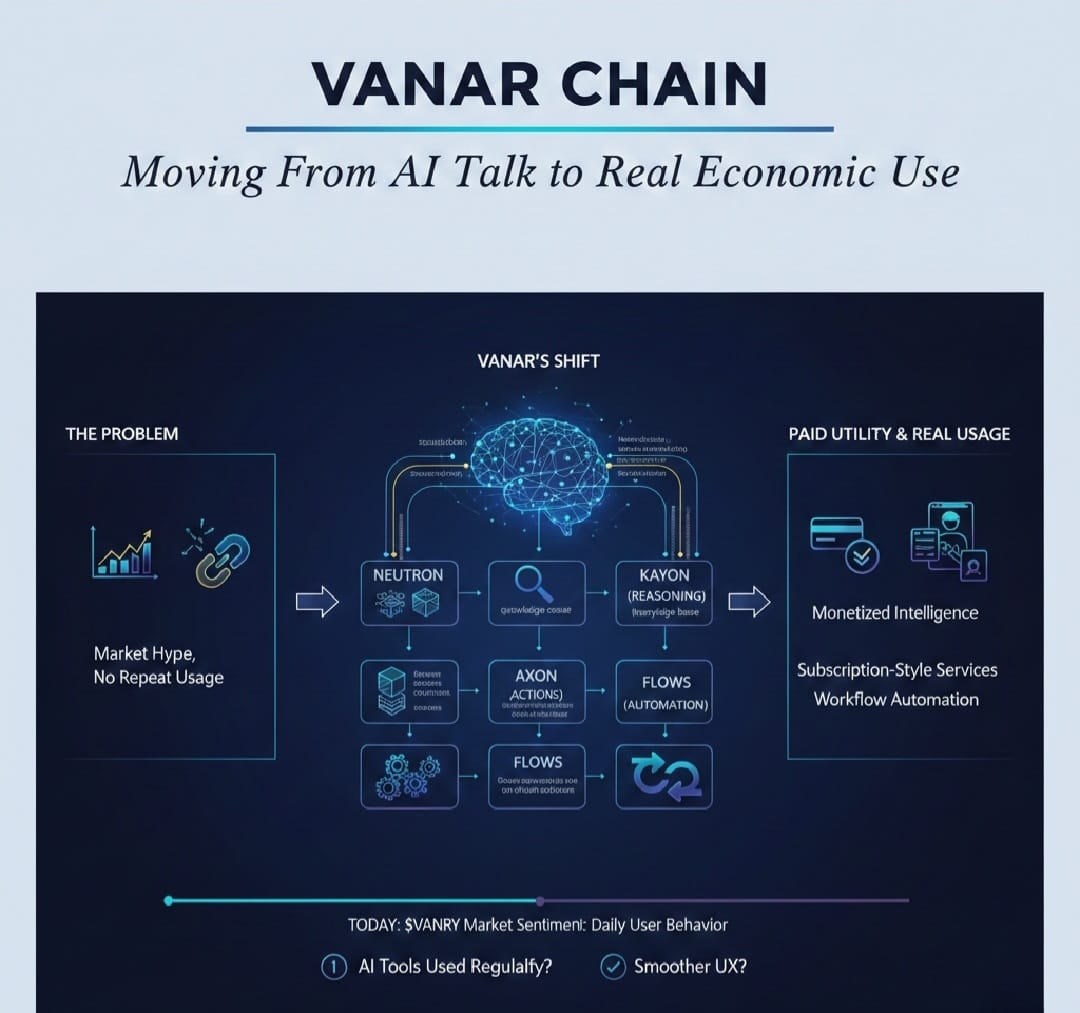
Final Thought
Vanar is not the loudest project in the room right now.
But sometimes the more important shifts are the quiet ones — especially when a team is trying to move from token hype toward usage-driven economics.
Whether they fully succeed is still an open question.
But the direction — turning AI capability into repeat on-chain behavior — is one of the more serious experiments happening in Web3 today.
And that alone makes it worth paying attention to.