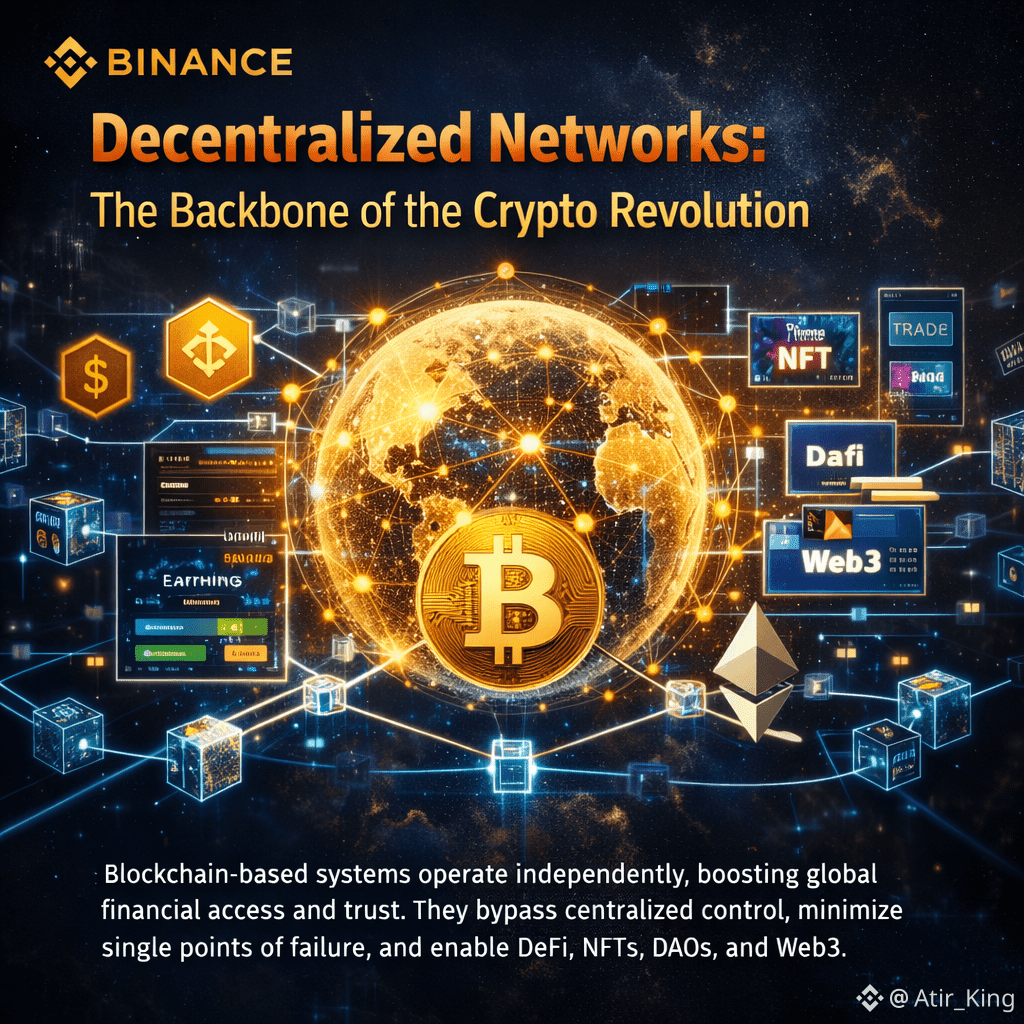
Decentralized networks are redefining how value, data, and trust move across the internet. Unlike traditional centralized systems—where control sits with governments, banks, or corporations—decentralized networks distribute power across thousands of independent nodes. No single authority can shut them down, censor transactions, or alter records unilaterally.
At the core of decentralization is blockchain technology. Transactions are verified through consensus mechanisms, ensuring transparency, security, and immutability. This structure reduces reliance on intermediaries, lowers costs, and minimizes systemic risk caused by single points of failure.
Decentralized networks also enable permissionless innovation. Anyone can build, transact, or participate without approval, unlocking global financial access through #DeFi, #NFTs, #DAOs, and #Web3 applications. In regions facing currency instability or capital controls, decentralized systems offer an alternative financial layer beyond political influence.
As global uncertainty rises, decentralized networks are no longer just a tech experiment—they are becoming critical infrastructure for a more open, resilient, and trust-minimized digital economy.