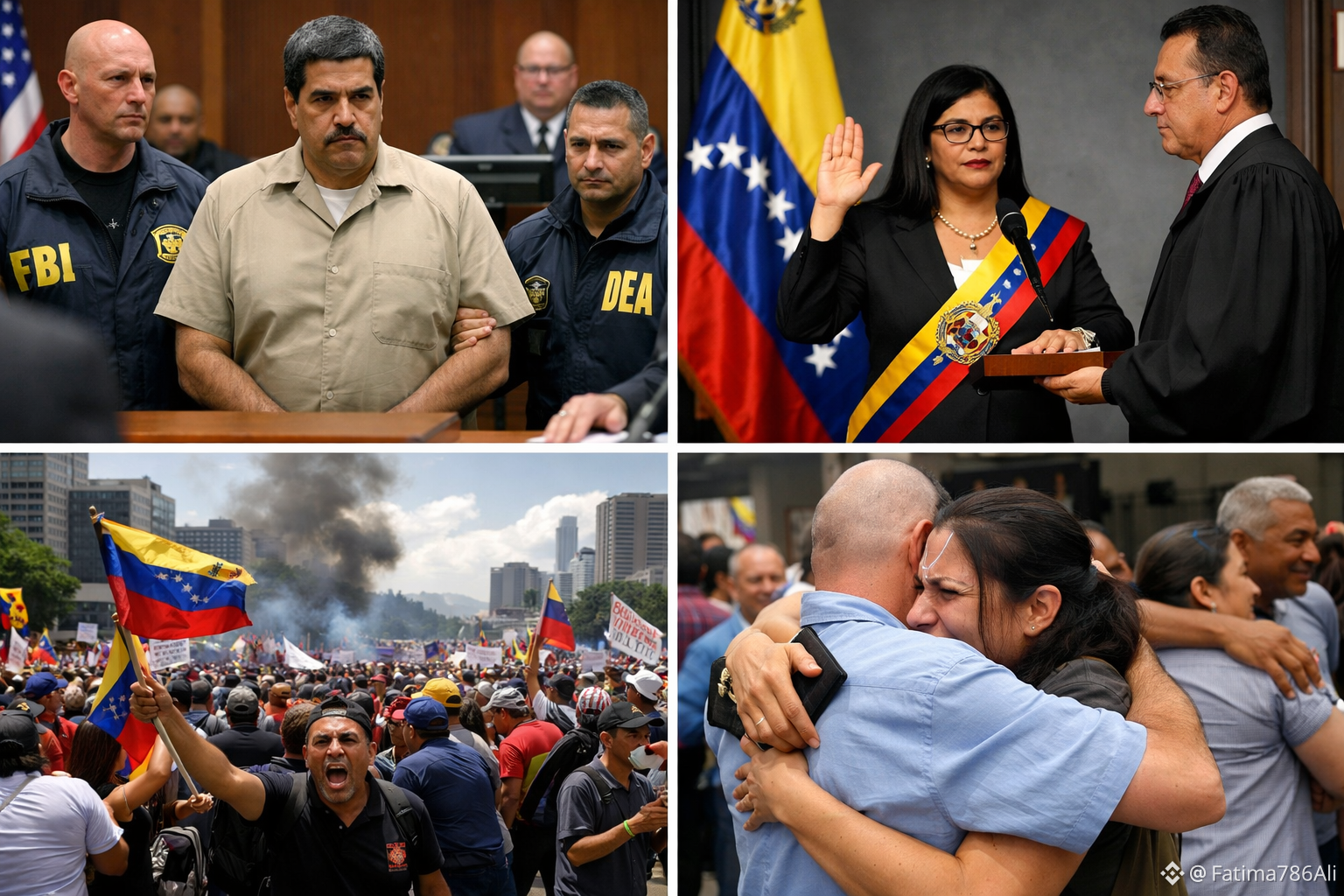
🛑 What Happened?
In a major international escalation on January 3, 2026, U.S. forces conducted a large-scale military and law enforcement operation in Venezuela, capturing President Nicolás Maduro and his wife Cilia Flores and transporting them to New York to face U.S. federal charges. �
Wikipedia
Maduro has pleaded not guilty to narcotics and weapons charges and insists he was “kidnapped” by the U.S., calling the removal illegal and a violation of Venezuelan sovereignty. �
BanglaPress24
The Venezuelan government and interim leaders describe the operation as a kidnapping and violation of international law, while the U.S. defends it as a lawful action to enforce indictments and combat drug trafficking. �
Anadolu Ajansı +1
🏛️ Who's in Charge Now?
After Maduro’s capture:
Vice President Delcy Rodríguez was sworn in as Interim President by Venezuela’s Supreme Tribunal of Justice and confirmed by key political factions. �
Shiite News Network
The interim leadership has condemned the U.S. action and called for international support. �
Anadolu Ajansı
Venezuela has begun releasing a small number of political prisoners, a gesture that may be aimed at reducing tensions. �
AP News
🌐 Why It Happened
U.S. Objective (According to Washington):
Target long-standing U.S. criminal indictments against Maduro for narcotics, weapons, and organized crime charges. �
Wikipedia
Pressure political change and stabilize Venezuela after years of economic crisis and alleged corruption.
Venezuela’s View:
The interim government and allies call the operation an illegal abduction aimed at controlling Venezuela’s oil and energy resources and influencing domestic politics. �
Anadolu Ajansı
International Reactions:
Some countries condemn the operation as a violation of sovereignty, while others caution against escalation. �
Jamaica Observer
📉 What Could Happen Next
🧠 Political Outlook
Diplomatic Negotiations: Venezuela and the U.S. are engaging in talks to re-establish diplomatic ties, potentially reopening the U.S. embassy in Caracas. �
AP News
Internal Division: There are deep divisions inside Venezuela some hopeful for political reform, others fearing a “new dictatorship” under Rodríguez. �
The Guardian
International Law Debate: Experts and international bodies are questioning the legality and long-term consequences of a foreign military force capturing a sovereign head of state.
💥 Economic Impact
Venezuela’s economy is in turmoil currency values have plunged and inflation fears are rising. �
Financial Times
The country remains dependent on oil revenue and faces years of investment needed to rebuild infrastructure.
📈 Impact on Cryptocurrency Markets
The political shockwaves have already rippled into global markets:
🔹 Crypto Rally
Markets reacted strongly:
Bitcoin surged above $93,000 amid the news, with cryptocurrencies gaining as traditional markets and oil prices shifted. �
Vanguard News
Traders saw crypto assets as a safe haven or speculative play in times of geopolitical stress.
🔹 Why Crypto Was Affected
Investor Uncertainty: Political instability and economic stress drive traders into alternative assets like Bitcoin and Ethereum.
Venezuela’s History with Crypto: Venezuela previously attempted a state-backed digital currency (Petro) and used stablecoins in trade; heightened volatility may renew interest in decentralized finance. �
🧠 Summary
Maduro’s capture marks an unprecedented U.S. operation against a sitting head of state.
Political power is in flux inside Venezuela as the interim government asserts control.
The move has intensified economic instability and prompted market reactions, including a surge in cryptocurrencies.
The situation continues to evolve with legal, diplomatic, and economic consequences still unfolding.