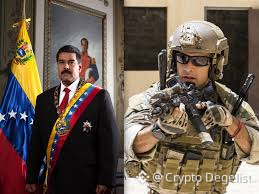
In the wake of the stunning U.S. operation that captured Venezuelan President Nicolás Maduro, global attention is fixed on the world's largest oil reserves. Yet, beneath the geopolitical drama lies a more tantalizing mystery for the crypto world: a potential "shadow reserve" of $BTC worth tens of billions, accumulated by a nation locked out of the global financial system. This hidden hoist doesn't just represent wealth; it's a live-fire test of crypto's role in a fragmented world and a potential catalyst for the next market move.
From Geopolitical Shock to Diplomatic Thaw
The landscape shifted rapidly. Following the military action, the U.S. and Venezuela's new interim government under Delcy Rodríguez have initiated an "exploratory process" to re-establish formal diplomatic ties, severed since 2019. This unexpected diplomatic opening coincides with hard-nosed economic strategy: President Trump announced a plan for U.S. oil companies to invest $100 billion to rebuild Venezuela's crippled energy infrastructure, aiming to unlock vast reserves and exert control over global oil flows.
The immediate market read was clear. Analysts like BitMEX founder Arthur Hayes argued that flooding the market with Venezuelan crude could lower global energy prices. This, in turn, could allow for more aggressive economic stimulus without stoking inflation—a macroeconomic environment historically favorable for risk assets like Bitcoin. Following the events, Bitcoin's price surged nearly 5%, adding credence to this thesis.
The "Shadow Reserve": Fact, Fiction, or Geopolitical Weapon?
The most explosive crypto narrative centers on Venezuela's rumored Bitcoin treasury. Isolated by severe U.S. sanctions, the Maduro regime is believed to have turned to cryptocurrencies as a financial lifeboat. Reports suggest a systematic accumulation beginning around 2018, converting proceeds from gold sales and, later, requiring oil payments in stablecoins like USDT, which were then swapped for Bitcoin.
The estimated size of this stash is where speculation runs wild. Some intelligence reports suggest a value between $56 billion and $67 billion, which would place Venezuela among the largest Bitcoin holders globally. Other analyses, based on limited on-chain data, estimate a more conservative 240 $BTC (worth roughly $22 million). The truth is likely complex and obscured; experts suggest any holdings are probably spread across thousands of wallets controlled by various regime officials, making them nearly impossible to track conclusively.
Three Paths for the Crypto Treasure: Seizure, Reserve, or Fire Sale
The fate of these assets is now a multi-billion-dollar question for the crypto market, with three primary scenarios:
U.S. Seizure and Freeze: The most probable outcome, where the U.S. identifies and legally seizes the Bitcoin, locking it in Treasury custody and removing it from circulation.
Strategic U.S. Reserve: A more bullish scenario where seized Bitcoin is added to a formal U.S. strategic reserve (a policy Trump has floated), creating a massive, long-term holder.
Chaotic Fire Sale: The least likely but most bearish possibility, involving a rapid, disorderly liquidation that could temporarily swamp the market.
Critically, the first two outcomes would constitute a massive supply shock—effectively taking a potential overhang off the market. As analysts note, Germany's sale of 50,000 $BTC in 2024 caused a significant correction; a reserve many times larger being frozen or held by a major power would be structurally bullish.
The Bigger Picture: Crypto as the New Financial Frontline
Beyond the price speculation, the Venezuela crisis validates several core crypto theses. It demonstrates, in real-time, how nations and individuals use Bitcoin and stablecoins to operate outside sanctioned financial networks. It highlights crypto's emerging role as a tool of statecraft and a hedge against geopolitical instability.
This event is a microcosm of the "Dawn of the Institutional Era" in crypto, where digital assets are no longer just speculative toys but integral pieces in global finance and strategy. Whether Venezuela's stash is $22 million or $60 billion, the message is clear: in the modern world, a nation's treasury may now be held not just in vaults of gold, but in encrypted wallets on a decentralized ledger. The market is now watching closely to see who holds the keys.
#crypto #venezuela #Geopolitics