
The global financial markets are currently digesting a wave of geopolitical instability, with recent actions by the U.S. and rising tensions in multiple regions. Among the most discussed developments is the Trump administration’s aggressive foreign policy initiatives, including a high-stakes operation in Venezuela and renewed tensions with major trading partners.
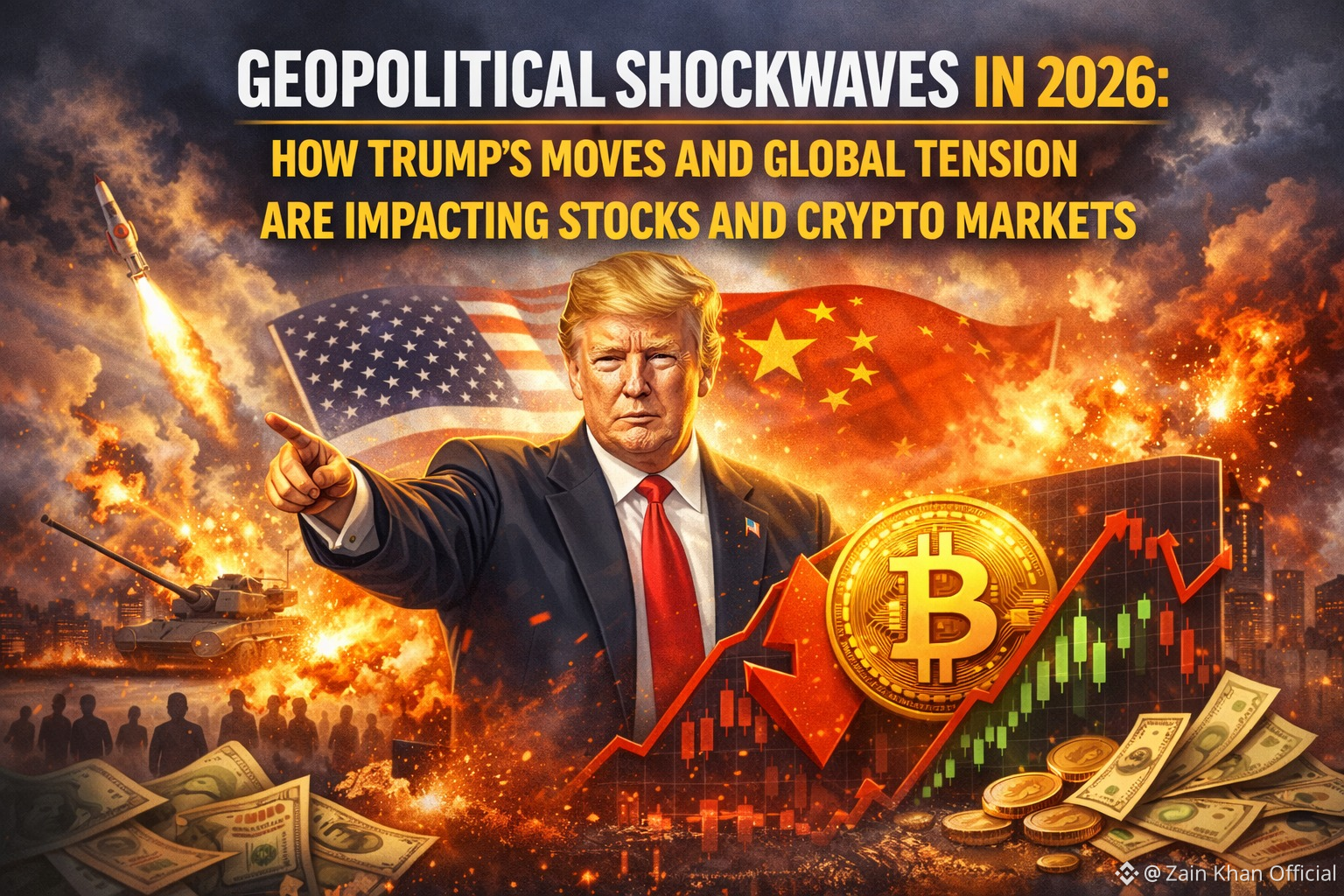
In early January 2026, U.S. forces captured Venezuelan President Nicolás Maduro, an event that immediately drew attention from global investors. Rather than causing panic, equity markets responded positively, with major European indices hitting record highs and defense shares leading gains as markets anticipated higher defense spending and structural shifts in commodity flows. Energy and industrial stocks also rose on expectations that U.S. firms could benefit from renewed access to Venezuelan oil assets.
Despite geopolitical tension usually being bearish for risk assets, crypto markets showed resilience during this period. Bitcoin reclaimed levels above $93,000 and Ethereum climbed past $3,200 even as traditional markets grappled with geopolitical uncertainty. Analysts suggest crypto’s safe-haven narrative and stablecoin inflows helped support prices.
However, geopolitical events do not always support bullish price action. In prior episodes, sharp political rhetoric and protectionist policies triggered significant market reactions. For example, in late 2025, announcements of 100 per cent tariffs on Chinese imports and export controls led to steep sell-offs in global equities and crypto markets alike, with major indices sliding and record liquidations wiping out billions in leveraged positions. These events highlight that geopolitical uncertainty can quickly shift sentiment, especially when tied to global trade confrontation and rising inflation fears.


The mechanics behind these impacts are rooted in investor psychology and risk sentiment. In times of conflict or policy uncertainty, investors often reduce exposure to risk assets such as stocks and crypto and move into perceived safe havens like gold and high-quality government bonds. This risk-off behavior can create price volatility across markets and trigger cascading liquidations, particularly in highly leveraged crypto positions.
The modern market reaction to geopolitical events has also evolved. While conflicts historically caused strong sell-offs across all asset classes, today’s markets sometimes differentiate between traditional equities and alternative assets like cryptocurrencies. Bitcoin’s limited sensitivity in isolated cases suggests that over time, some investors increasingly view it as a digital store of value similar to gold, even amid global instability.
In summary, geopolitical tension such as Trump’s strategic actions and global conflicts do matter for markets — but the impact varies:

• Stocks: Often sensitive to policy shifts, trade tensions, and conflict through economic growth prospects and corporate profitability.
• Crypto: Can be volatile but occasionally shows resilience as a risk-managed safe haven, particularly when combined with macroeconomic signals like interest-rate expectations.
• Investor Behavior: Crisis tends to increase demand for safety assets and reduce appetite for leveraged or high-beta positions.
For traders and long-term investors alike, staying informed on geopolitical developments has become as essential as tracking technical indicators, because political shifts are now directly influencing capital flows and market psychology across global asset classes $BTC
