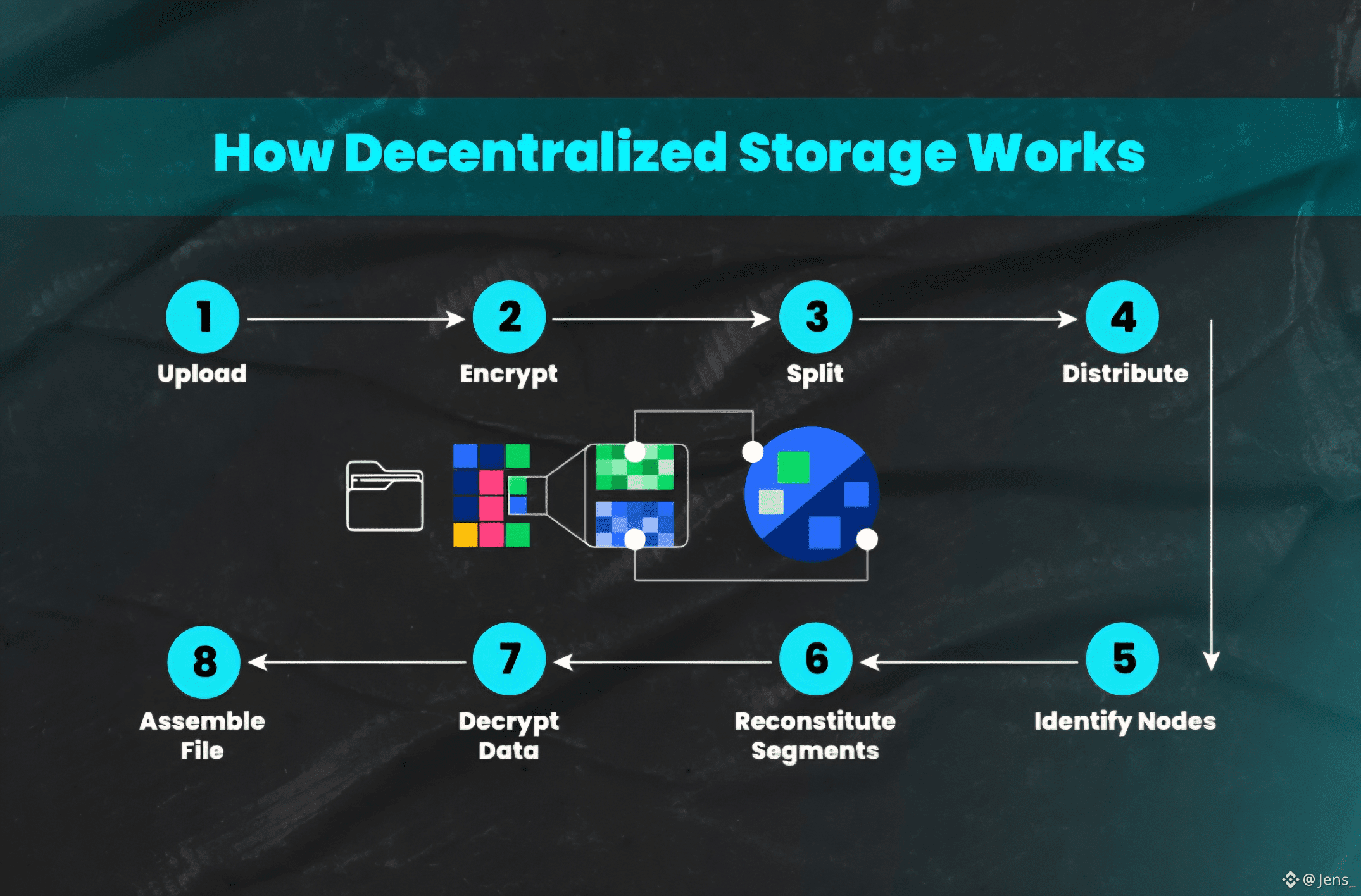
As Web3 continues to evolve, one fundamental limitation is becoming increasingly clear. Blockchains are exceptional at consensus, ownership, and programmable logic, but they were never designed to store or manage massive volumes of real-world data. Images, videos, AI datasets, game assets, social content, and user-generated files quickly overwhelm traditional on-chain storage models. This gap between what blockchains do well and what modern applications require has quietly become one of the biggest bottlenecks in the entire ecosystem.
This is where Walrus Protocol becomes deeply relevant. Walrus is not trying to replace blockchains or compete with them. Instead, it addresses one of their most persistent weaknesses: scalable, decentralized data storage that works in practice. By focusing on this missing layer, Walrus plays a critical role in enabling AI systems, NFTs, and data-heavy on-chain applications to function at real-world scale.
The silent storage problem in Web3
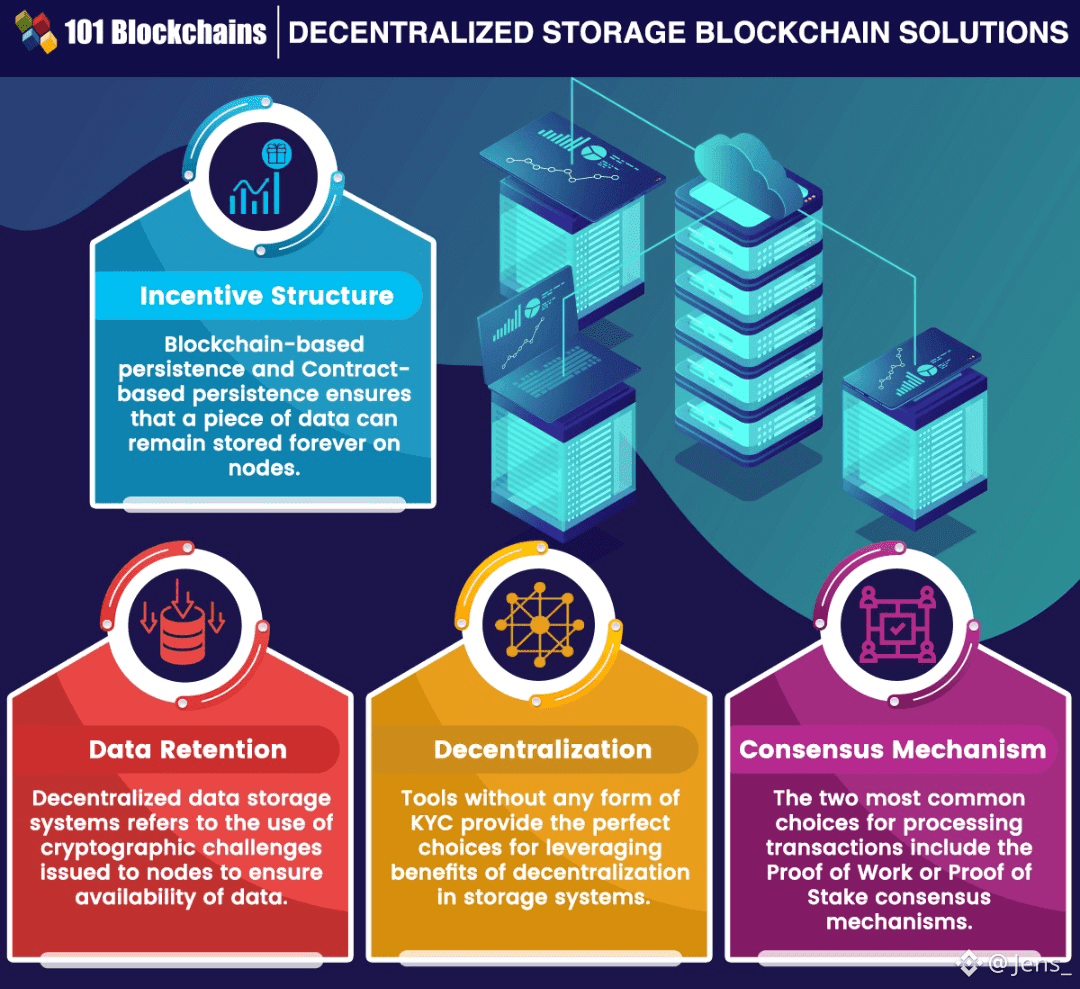
For years, Web3 has focused heavily on transactions per second, gas fees, and network decentralization. While these are important, storage has often been treated as an afterthought. Many decentralized applications rely on centralized cloud providers or fragile hybrid solutions to store their data. The logic might be on-chain, but the content itself often lives off-chain in systems that reintroduce trust assumptions, censorship risks, and long-term fragility.
This approach works for prototypes, but it breaks down as applications grow. A decentralized app that depends on centralized storage is only partially decentralized. If the storage provider fails, censors content, or changes terms, the application suffers. Walrus is designed to eliminate this weakness by providing decentralized blob storage that is optimized for large files while remaining verifiable and composable with on-chain logic.
Rather than forcing data directly into blocks, Walrus separates concerns cleanly. Blockchains handle ownership, access rules, and execution, while Walrus handles scale, availability, and cost-efficient storage. This division allows applications to grow without sacrificing decentralization.
Built to complement Sui, not compete with it
Walrus is deeply integrated with Sui, a blockchain designed for high performance, parallel execution, and expressive ownership models. Sui excels at managing complex on-chain logic and assets, while Walrus provides the data layer that those assets depend on.
This relationship is important. Instead of existing as an external add-on, Walrus feels like a natural extension of the Sui ecosystem. Developers can reference large data blobs stored in Walrus directly from smart contracts on Sui, creating a seamless flow between data and logic. This makes application design cleaner, more efficient, and easier to reason about.
As Sui-based applications become more sophisticated, the demand for reliable storage grows automatically. Walrus benefits from this growth while reinforcing the overall strength of the ecosystem.
Why AI data changes everything
AI is fundamentally a data-driven technology. Training models, fine-tuning parameters, running inference, and logging outputs all generate enormous volumes of data. Traditional blockchains simply cannot handle this load, which is why most AI systems rely entirely on centralized infrastructure today.
Walrus offers a different path. By enabling decentralized storage of large datasets and model-related files, it allows AI systems to operate in a more transparent and trust-minimized way. Data provenance, access permissions, and usage incentives can be enforced on-chain, while the heavy data itself lives in a scalable storage layer.
This architecture enables new categories of applications. Decentralized AI agents can fetch data from Walrus, produce outputs, and store results without relying on centralized servers. Data marketplaces can emerge where contributors are rewarded transparently, and users can verify the origin and integrity of datasets. Over time, this could lead to AI systems that are not only powerful, but also auditable and community-driven.
As AI and crypto continue to converge, storage becomes core infrastructure rather than a secondary feature. Walrus sits directly at this intersection.
NFTs need durable data to matter long term
NFTs are often discussed as digital collectibles, but the underlying concept is much broader. NFTs represent ownership of digital assets, and those assets often depend on external media files. Images, videos, music, 3D models, and interactive content give NFTs their value and meaning.
The problem is that many NFTs today rely on centralized or semi-centralized storage. If the media disappears or becomes inaccessible, the NFT loses its substance. Ownership remains, but the asset itself becomes hollow.
Walrus provides a more resilient foundation for NFTs. High-quality media can be stored in a decentralized way that aligns with the permanence promised by blockchain ownership. Dynamic NFTs that evolve over time, generative art that updates based on inputs, and game assets that change state all benefit from a storage layer that can handle large files reliably.
For creators, this means confidence that their work will remain accessible. For collectors, it means owning something that retains its integrity over time. Walrus helps move NFTs beyond speculation and toward lasting digital ownership.
Enabling real on-chain applications
Modern applications generate data continuously. Social platforms store posts and media. Games store assets, states, and user-generated content. Marketplaces store listings, images, and transaction histories. Without scalable storage, developers are forced to compromise between decentralization and usability.
Walrus removes this tradeoff. Developers can keep critical logic, ownership, and permissions on-chain while storing large data off-chain in a decentralized system designed for performance. This allows applications to feel fast and affordable without reverting to centralized infrastructure.
As a result, on-chain applications can start to resemble the products users expect from Web2, while retaining the trust and composability of Web3. This is a crucial step in moving from experimental dApps to mainstream adoption.
Cost efficiency and scalability as first principles
One of the most overlooked aspects of decentralized storage is cost. Storing large files directly on-chain is prohibitively expensive and inefficient. Walrus is designed with cost efficiency in mind, using techniques that allow data to be distributed across a network without unnecessary duplication.
This makes it viable for long-term use. As applications scale, storage costs remain predictable and manageable. This matters not just for developers, but also for end users, who ultimately bear these costs through fees or subscription models.
By treating scalability as a core design goal rather than an afterthought, Walrus positions itself as infrastructure that can grow alongside real demand.
A foundation for future ecosystems
What makes Walrus particularly compelling is its long-term relevance. Storage demand grows naturally as ecosystems grow. More users, more applications, more AI agents, and richer media all translate into more data.
Walrus is not chasing short-term narratives. It is building a foundational layer that becomes more valuable over time as usage increases. This kind of infrastructure often operates quietly in the background, but it is essential for everything built on top of it.
In many ways, Walrus represents a shift in how Web3 thinks about data. Instead of treating storage as a limitation to work around, it treats storage as a first-class component of decentralized systems.
Why this matters now
The next wave of Web3 adoption will not come from simple token transfers or basic smart contracts. It will come from applications that feel complete, data-rich, and intuitive to use. AI-powered tools, immersive NFT experiences, and complex on-chain platforms all require a storage layer that can support them without compromise.
Walrus addresses this need directly. By providing decentralized, scalable storage that integrates naturally with on-chain logic, it enables developers to build without artificial constraints.
In the long run, the most important infrastructure projects are often the least visible to end users. They are the systems that quietly support everything else. Walrus fits this pattern. As AI, NFTs, and on-chain applications continue to grow, the importance of reliable decentralized storage will only increase. Walrus is positioning itself exactly where that future demand is heading.