
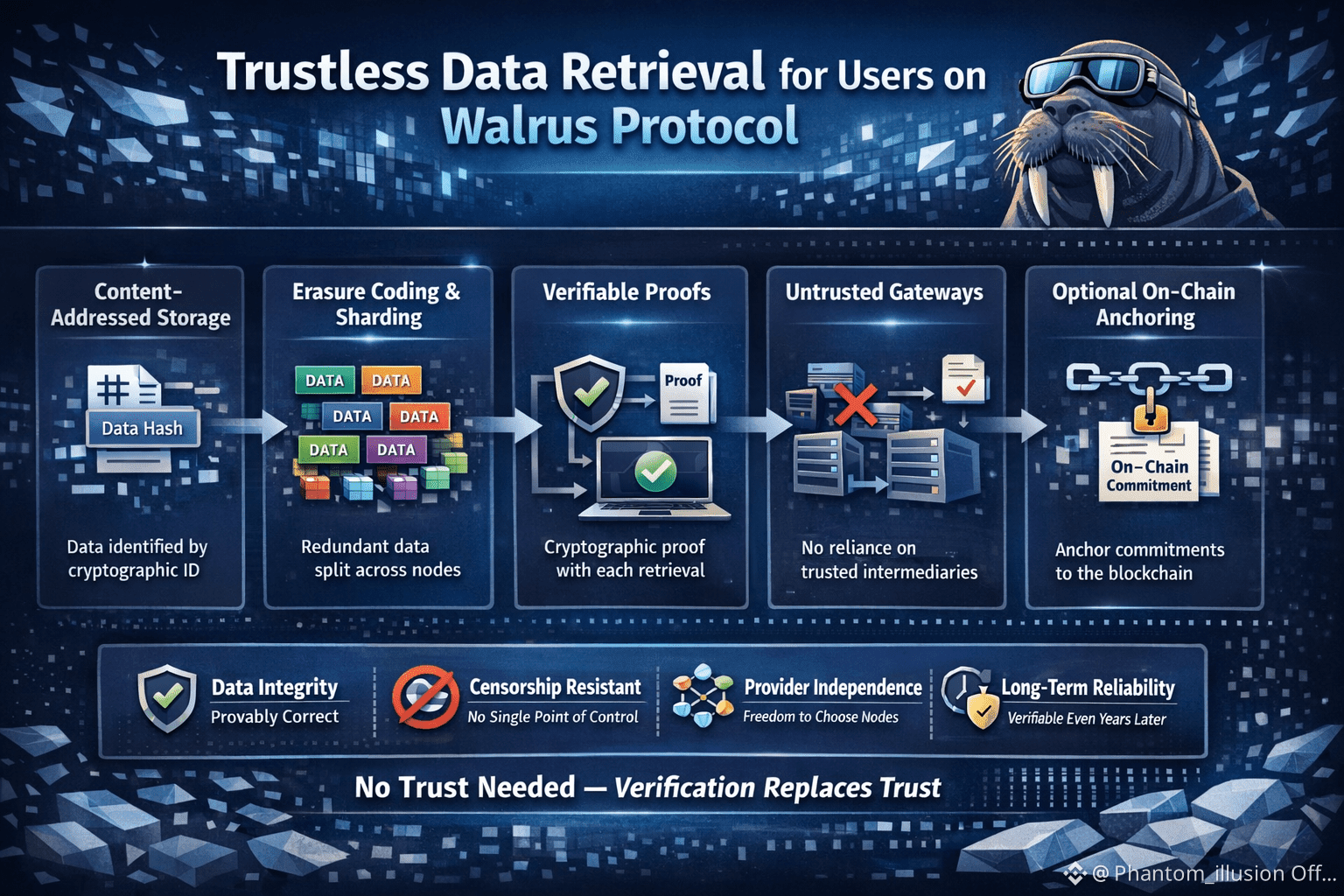
When I talk about Walrus Protocol, one thing I always highlight is trustless data retrieval, because this is where Web3 really starts to make sense.
In Web3, we’re not supposed to trust companies or servers to tell us what our data is. But if we’re being honest, a lot of Web3 apps still rely on centralized APIs and third-party services just to show balances, transactions, or app data. That kind of defeats the purpose. Walrus Protocol fixes this.
What Walrus does is make sure data is pulled from verifiable, decentralized sources, not from a single entity you just have to believe. So when I check my wallet balance, transaction history, or interact with a dApp, I know the data is actually coming from the blockchain or decentralized storage and I can trust it because it’s provable.
The best part is that I don’t have to deal with any technical complexity. I’m not manually verifying proofs or running nodes. Walrus handles all of that behind the scenes while keeping the experience simple and smooth for users.
Another thing I like is consistency. With Walrus Protocol, the same data looks the same across different apps. There’s no confusion, no mismatched balances, no missing transactions. Everything is standardized and reliable because it’s coming from a trustless foundation.
For users, this really matters. It means:
▪︎ No relying on centralized servers
▪︎ No hidden manipulation or censorship
▪︎ No worrying about outages from third-party providers
To me, this is what Web3 is supposed to feel like. You’re in control, your data is transparent, and you don’t need to trust anyone in the middle.
That’s why I see Walrus Protocol as more than just infrastructure. It’s a step toward true decentralization, where data retrieval is honest, verifiable, and actually aligned with the core values of Web3.

