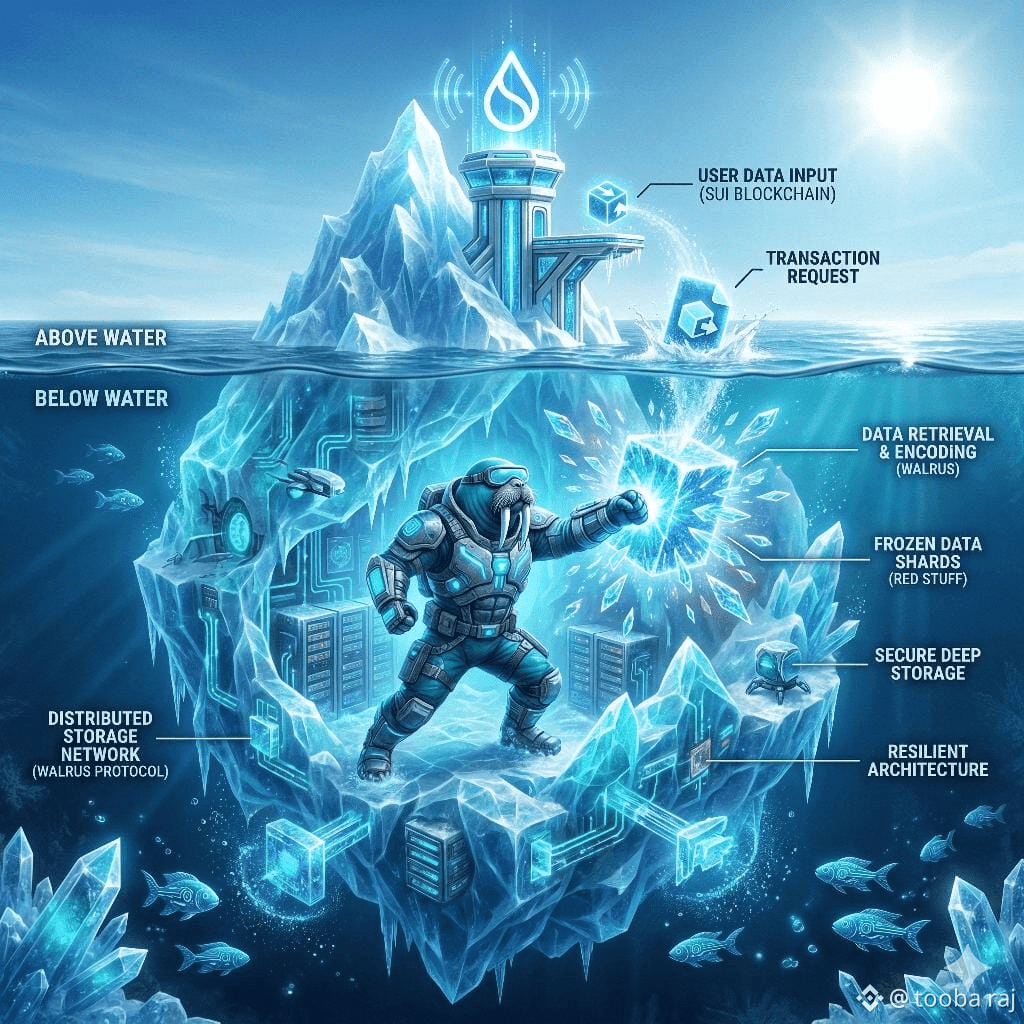
The Walrus (WAL) protocol is a decentralized storage solution built on the Sui blockchain, designed to provide a scalable, secure, and cost-effective way to store large data files. In this article, we'll delve into the engineering architecture of Walrus, exploring its technical components and how they work together to enable a robust distributed storage layer.
Architecture Overview
Walrus consists of several key components:
1. Storage Nodes: These are the nodes responsible for storing data and handling requests.
2. Aggregator: This component aggregates data from storage nodes and forwards it to other systems or end-users.
3. Publisher: The publisher records blobs (data files) into the network.
4. Client: The client connects end-users and publishers, handling data reception and reading.
5. CDN/Cache: A temporary storage system providing low-latency data access.
RedStuff Erasure Coding
At the heart of Walrus is RedStuff, a groundbreaking erasure coding protocol that breaks data into smaller "slivers" and distributes them across storage nodes. This approach ensures:
- Fault Tolerance: Data remains accessible even if up to two-thirds of storage nodes fail.
- Cost Efficiency: Storage costs are significantly reduced compared to full replication models.
- Scalability: The network can scale horizontally to hundreds or thousands of nodes.
Data Flow
Here's a step-by-step overview of how data flows through the Walrus network:
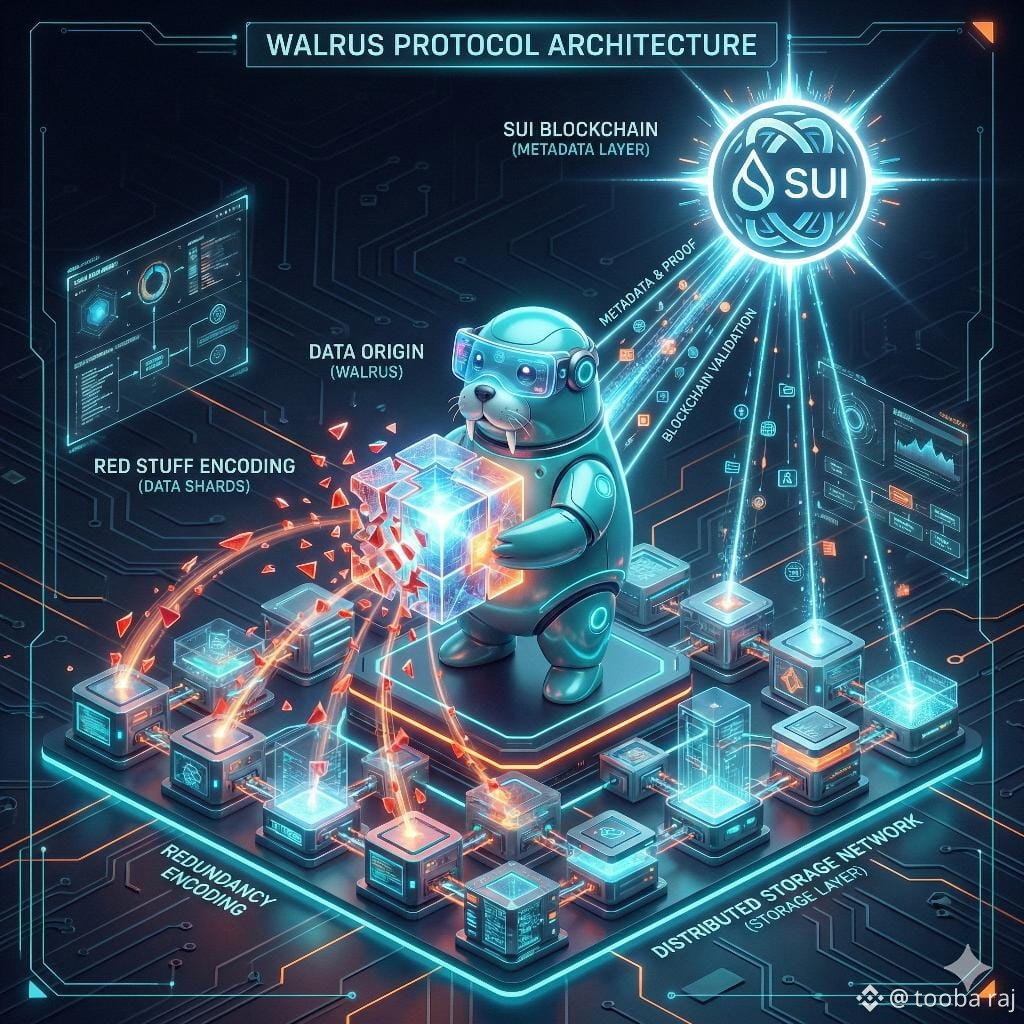
1. Upload: Data is uploaded to the publisher, which encodes it using RedStuff and distributes it to storage nodes.
2. Storage: Storage nodes store the encoded data fragments.
3. Proof of Availability: Storage nodes provide proofs of availability, ensuring they still hold the data.
4. Retrieval: The aggregator collects data fragments from storage nodes and reconstructs the original data.
5. Delivery: The reconstructed data is delivered to the end-user through a CDN or cache.
Sui Blockchain Integration
Walrus leverages Sui's advanced features for storage management and smart contract integration. Storage space is represented as a resource on the Sui network, enabling:
- Programmable Storage: Smart contracts can directly interact with stored data.
- Ownership Management: Storage resources can be owned, split, merged, and transferred.
WAL Token Economics
The WAL token is central to the Walrus ecosystem, used for:
- Storage Payments: Users pay for storage services using WAL tokens.
- Node Incentives: Storage providers earn WAL tokens for maintaining reliable service.
- Governance: Token holders vote on protocol upgrades and economic parameters.
Conclusion
The Walrus protocol offers a promising solution for decentralized storage on the Sui blockchain. Its innovative RedStuff erasure coding protocol, combined with Sui's scalability and security, makes it an attractive option for developers building data-intensive applications.
Sources:
- Walrus (WAL): The Next Generation of Decentralized Storage
- Walrus (WAL): Building the Private, Scalable, and Trust-Grade Data Infrastructure for Web3
- Walrus Protocol: Changing How We Do Decentralized Storage on Sui
- What Is Walrus (WAL)? | Binance Academy
- Announcing Walrus: A Decentralized Storage and Data Availability Protocol - Mysten Labs Blog
- What Is Walrus Crypto? Decentralized Storage on Sui | Nansen
- Walrus Launches on Mainnet, Unlocking Programmable Storage for All
- Walrus Protocol: Revolutionizing Decentralized Storage on Sui | by Yuusuf | Jul, 2025 | Medium