
A Technical Analysis of a Distributed Storage Layer on Sui
Introduction
The Walrus Protocol is a next-generation decentralized storage network built atop the Sui blockchain, designed to provide scalable, cost-efficient, and programmable blob storage suitable for Web3 applications such as NFT metadata, decentralized content hosting, AI data sets, and distributed applications. It uniquely merges on-chain coordination and off-chain data persistence, harnessing erasure coding, economic incentives, and Sui’s Move-based smart contracts to deliver a resilient, maintainable, and open data storage substrate.
Walrus Docs +1
Separation of Control and Storage Layers
A defining characteristic of Walrus’s architecture is its separation of control/metadata and physical storage:
Control Layer (On-Chain on Sui)
Walrus leverages Sui’s fast finality and programmable smart contract environment to coordinate core protocol operations. Smart contracts manage metadata, storage lifecycle states, economic parameters, and epoch coordination. All high-level state—such as registered blobs, certificates of availability, storage space rights, and staking data—is expressed as objects on the Sui ledger.
Walrus Docs +1
Data Storage Layer (Off-Chain Network Nodes)
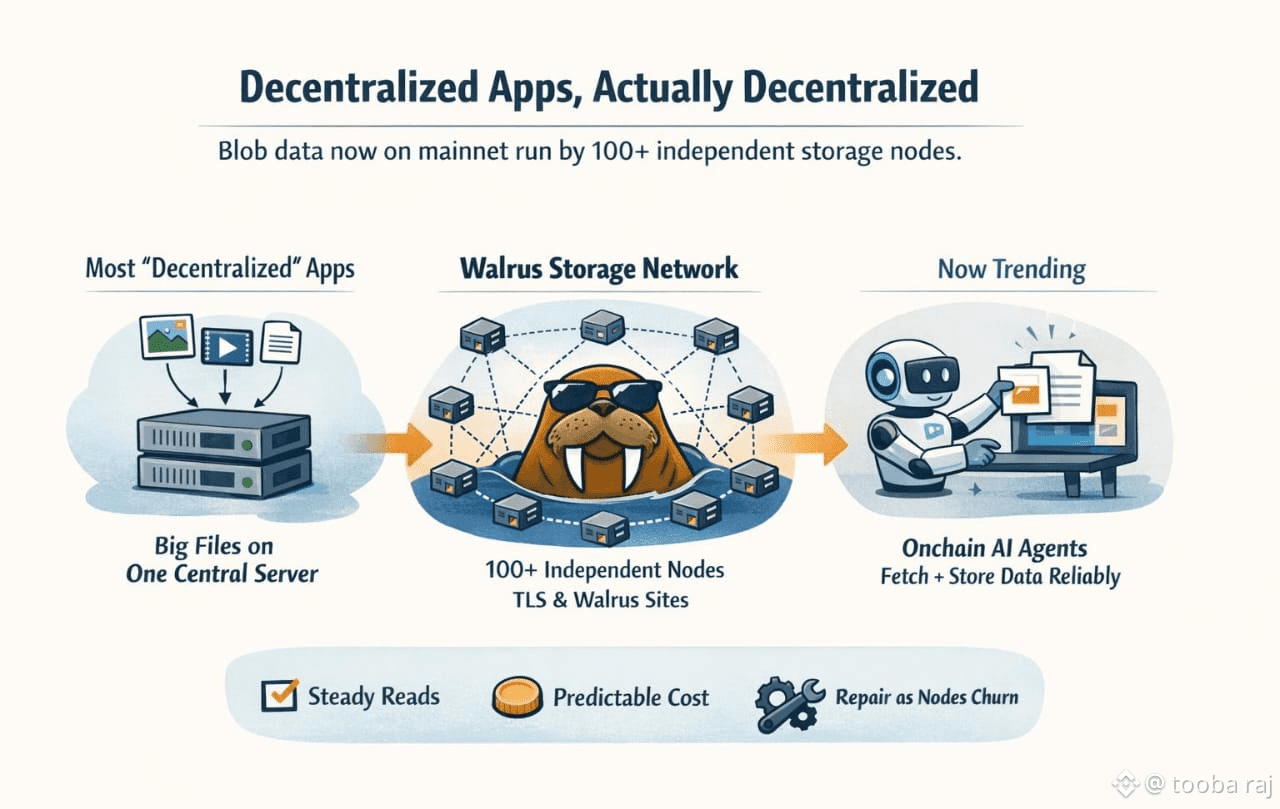
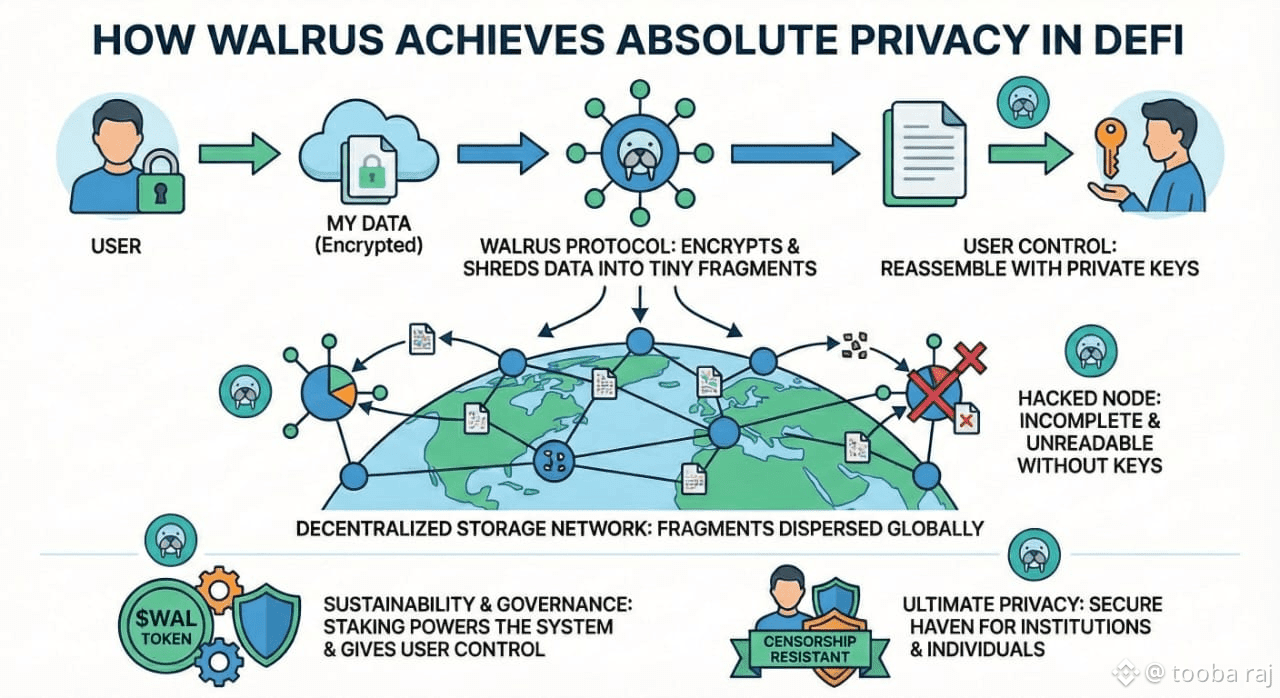
Actual blob content resides on a network of independently operated storage nodes. Each node stores encoded fragments (“slivers”) of blobs assigned for a storage epoch. These nodes are not validators on Sui; instead, they run Walrus’s storage stack and participate in cryptographic proof routines to assure data availability.
Walrus Docs +1
Blob Management and Metadata
In Walrus:
A blob represents a binary large object—such as a video, image, or data set—stored using an erasure-coded distribution across nodes.
Each blob has a Blob ID, and this is registered on Sui as a Move object. The Move type encodes metadata like owner, certification epoch, expiry, and availability guarantees.
The blob is registered before storage and certified once sufficient slivers are stored and validated across nodes. Certification is essential, since it signals to smart contracts and users that the blob will remain retrievable through the current storage epoch.
Walrus Docs
Smart contracts emit events (e.g., BlobRegistered, BlobCertified) that signal off-chain components—such as storage nodes and indexers—about state transitions in the blob’s lifecycle. These events also facilitate decentralized light-client proofs of availability to external clients.
Walrus Docs
Erasure Coding with RedStuff
At the heart of Walrus’s data resilience is its custom erasure coding scheme, often referred to as RedStuff:
Instead of naive full replication, Walrus encodes data into slivers using multi-dimensional erasure codes. This yields a replication factor often around ~4–5× the original blob size—dramatically lower than simple replication methods and cost-effective compared to early decentralized storage networks.
Walrus Docs +1
RedStuff enables loss tolerance and self-healing: even if a large portion of shards is unavailable (even up to two-thirds), the protocol can reconstruct the original data from the remaining pieces.
Superex
Recovery bandwidth is optimized: the design allows recovering only the missing slivers rather than re-downloading whole fragments, which significantly reduces network load during repairs.
blockeden.xyz
This approach offers Byzantine fault tolerance and resiliency against node churn—essential in a decentralized, permissionless environment.
Superex
Storage Epochs and Node Committees
Walrus manages storage in discrete epochs:
A storage epoch defines a fixed period in which a set of storage nodes participate in storing and serving blob slivers.
For each epoch, the protocol forms a storage committee comprising nodes that have staked WAL tokens and met protocol requirements.
Shard assignments—mappings from slivers to storage nodes—are encoded on Sui as part of the system’s metadata. Nodes serve slivers and respond to availability challenges throughout the epoch.
Walrus Docs
At the end of an epoch, the system transitions smoothly to a new committee while ensuring continuous availability and consistency of blob storage metadata.
Walrus Docs
Economic Incentives and Staking
Economic incentives form a backbone of the Walrus incentive mechanism:
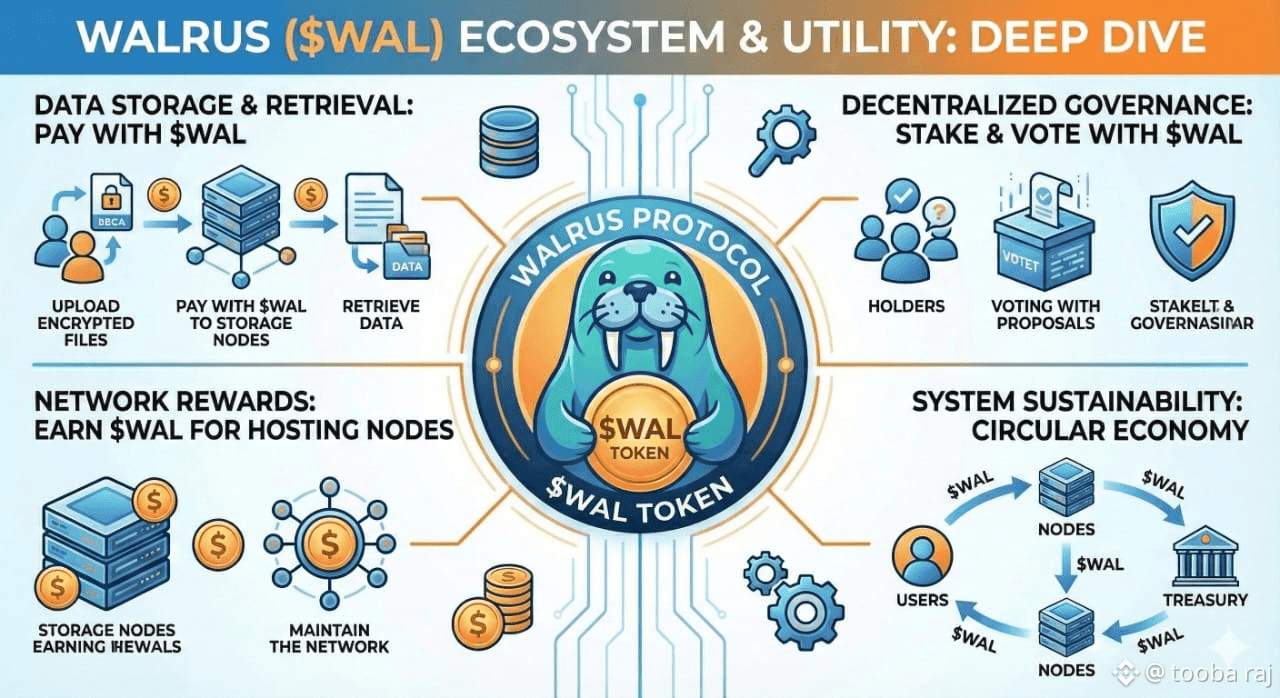
WAL Token: The native token is used to pay for storage, to stake for earning rewards, and to participate in governance.
Walrus Docs +1
Delegated Proof-of-Stake (dPoS): Nodes must stake WAL tokens to qualify as storage operators. WAL holders can also delegate their tokens to nodes, which increases nodes’ effective stake and potential reward share.
Gate.com
At epoch close, storage nodes receive rewards based on storage performance and challenge responsiveness, and delegators share in these rewards. Misbehaving or unresponsive nodes may be slashed, aligning economic incentives with availability and honesty.
Gate.com
Challenge-Response Proofs and Availability Guarantees
To guarantee that nodes are genuinely storing assigned slivers:
Walrus enforces a challenge-response protocol, where nodes periodically submit cryptographic proofs of availability for their assigned slivers.
Smart contracts verify these proofs on-chain or via compact authenticated structures, ensuring that nodes cannot falsely claim storage.
Gate.com
Light-clients and external protocols can use these proofs to verify that a blob remains retrievable without accessing the full dataset.
Walrus Docs
The challenge schedule is pseudo-random, making it unpredictable for nodes—and thus harder to cheat.
Gate.com
Interaction and APIs
Users interact with Walrus through:
CLI and SDKs: Tools for developers to store and retrieve blobs programmatically.
HTTP/JSON Interfaces: RESTful protocols that bridge Web2 consumption patterns with Walrus storage primitives.
Sui Smart Contracts: Developers can integrate blob metadata directly into Move contracts, enabling data-aware decentralized apps.
Walrus Docs
Moreover, Walrus is intentionally CDN compatible, allowing traditional caching and distribution layers to serve hot data, while the Walrus network guarantees the canonical availability and proof structure.
Walrus Docs
Security and Threat Models
Walrus is engineered with robust security assumptions:
Byzantine Fault Tolerance: The system tolerates up to ~one-third faulty nodes by leveraging erasure coding and redundancy.
Superex
Authenticated Data Structures: These ensure malicious clients or nodes cannot tamper with blob metadata or pass invalid availability proofs.
blockeden.xyz
Economic Disincentives: Staking and slashing mechanisms align node behavior with network goals—penalties for unavailability or fraudulent responses strongly discourage misbehavior.
Gate.com
Conclusion
The Walrus Protocol represents a sophisticated blend of distributed systems engineering, cryptographic data availability proofs, and blockchain-native coordination mechanisms. By splitting responsibilities between an on-chain coordination layer on Sui and a resilient, erasure-coded storage network off-chain, Walrus delivers cost-effective, scalable, and reliable blob storage. Its architectural choices—particularly RedStuff coding, epoch governance, staking incentives, and programmable metadata via Move contracts—position it as a foundational data layer for decentralized applications and services seeking strong availability guarantees with on-chain integration.


