
When I explain Walrus to people face to face, I usually start with a simple observation: in Web3, we talk a lot about ownership of tokens, but much less about ownership of data. From my personal experience talking with builders and users, this gap becomes obvious once applications start growing. Smart contracts can live on chain, but the data they rely on often lives somewhere fragile. That’s where @Walrus 🦭/acc changes the conversation, especially in the context of the Sui ecosystem.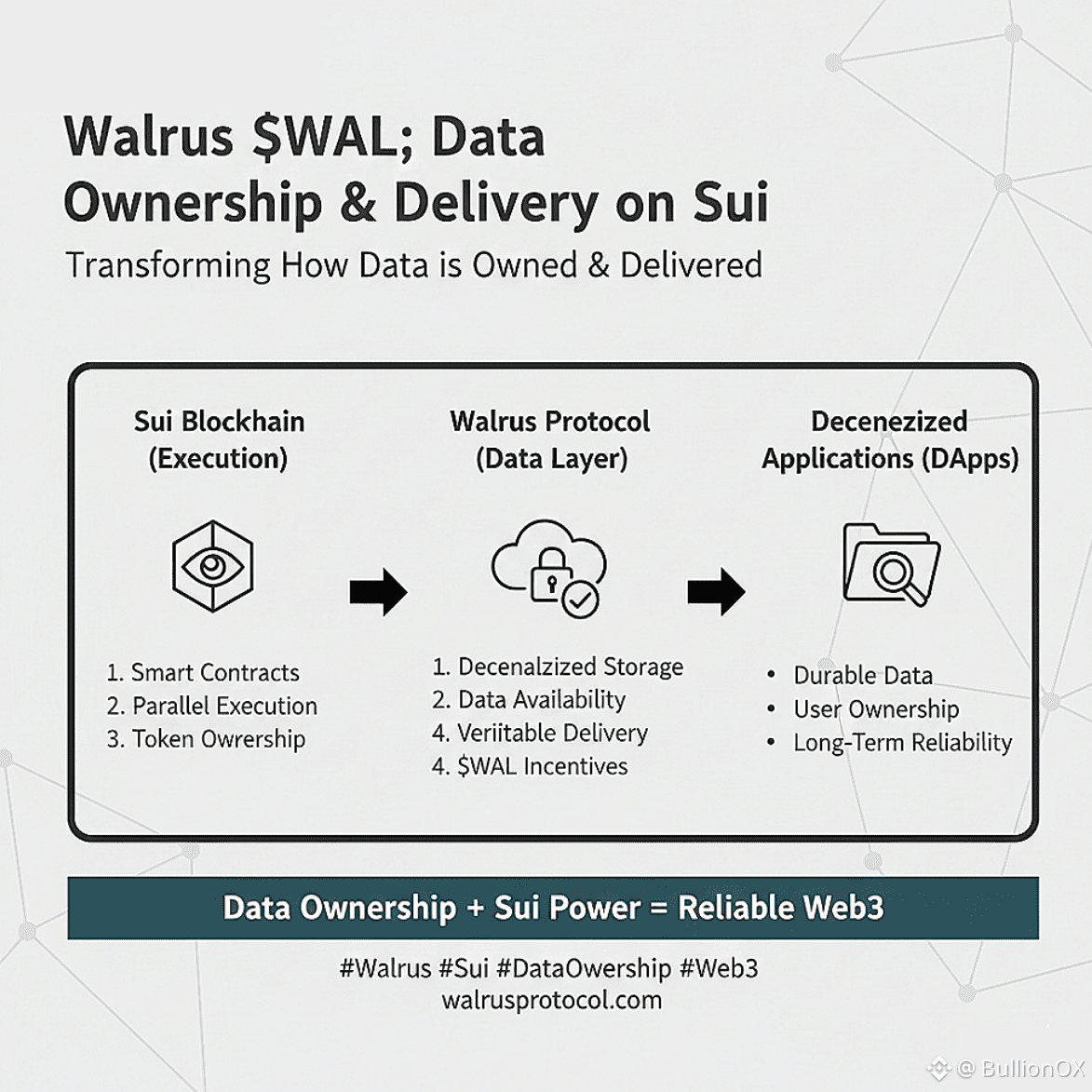
Walrus is designed as a decentralized data availability and storage protocol built to work closely with Sui. When I explain this in person, I make it clear that Walrus is not trying to replace blockchains. Instead, it complements them by handling large, long.lived data in a way that blockchains are not optimized for. On Sui, where parallel execution and object.based design already push performance forward, Walrus focuses on something quieter but just as important: making sure data can always be retrieved and verified.
One thing I often emphasize is how Walrus reframes data ownership. In traditional systems, data is owned in theory but controlled by platforms. If the service disappears, so does access. Walrus changes this by distributing data across independent storage providers. From my observation, this makes data ownership more practical. Even if individual nodes fail or leave, the data itself remains available through redundancy and cryptographic guarantees.
When people ask how this works in real applications, I usually explain it using simple examples. NFT metadata, application state, historical records, or large datasets can live on Walrus, while the logic that references them lives on Sui. This separation keeps costs manageable and improves reliability. More importantly, it allows applications to scale without constantly pushing data on-chain, which would be inefficient and expensive.
Another point that resonates during face-to-face conversations is delivery. Walrus isn’t just about storing data somewhere and hoping it stays there. It is designed around verifiable delivery, meaning applications can prove that the data they reference hasn’t been altered or lost. From my experience, this is critical for long-term trust. Users don’t just want data to exist; they want assurance that it’s the same data that was originally published.
The economic layer plays a role here too. The $WAL token aligns incentives so storage providers are rewarded for keeping data available and behaving honestly. I usually explain this part carefully, because it’s not about speculation. It’s about sustainability. Without incentives, decentralized infrastructure tends to weaken over time. Walrus builds incentives directly into the system to avoid that problem.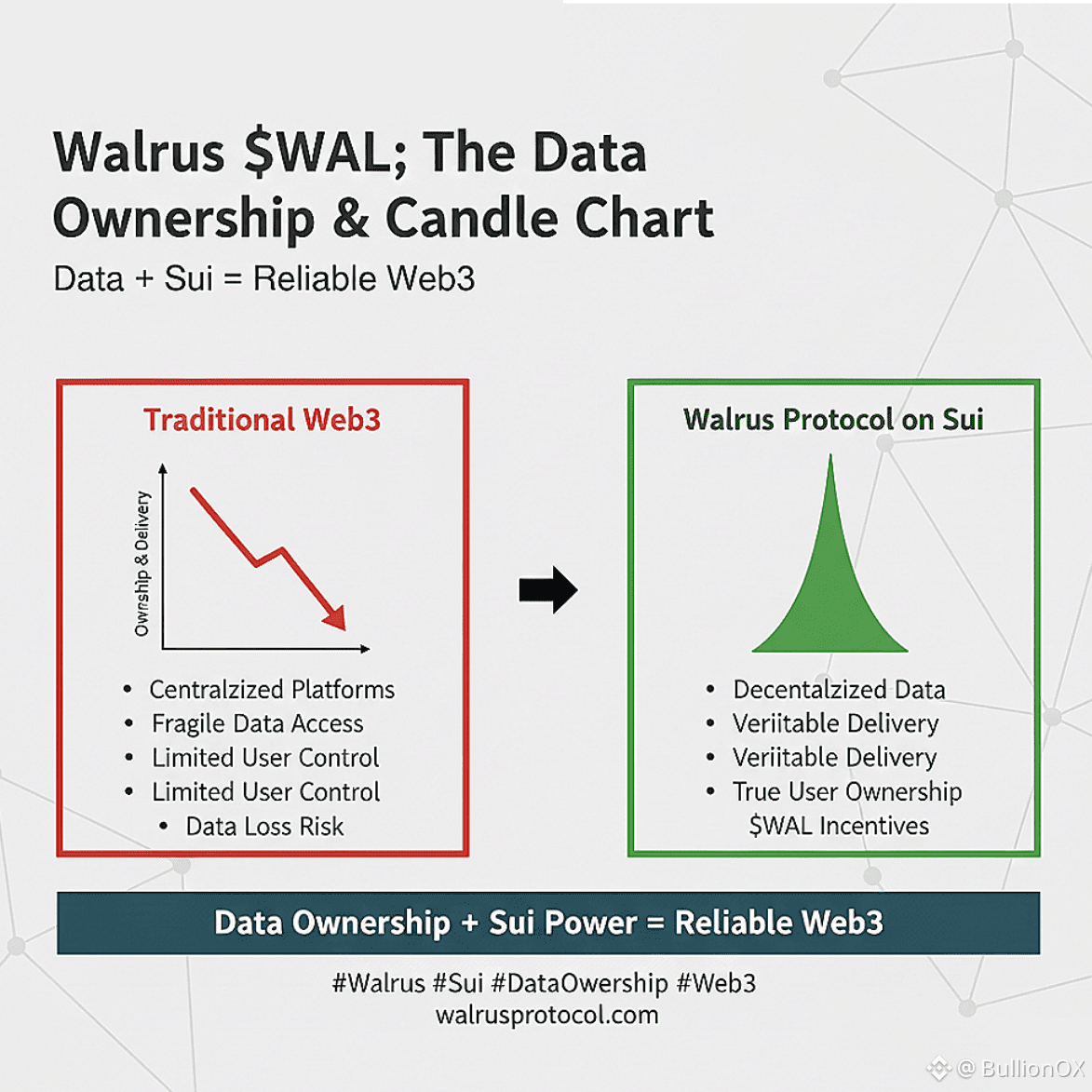
What makes Walrus particularly relevant on Sui is how naturally it fits into a modular design philosophy. Sui focuses on fast execution and scalability. Walrus focuses on durable data. Together, they allow developers to design applications where ownership, performance, and reliability are not trade offs but separate layers working together. From my personal observation, this is exactly how mature systems are built outside of crypto.
When I summarize Walrus to people, I don’t describe it as flashy technology. I describe it as a shift in how data is owned and delivered. By making data decentralized, verifiable, and resilient, Walrus gives users and developers more confidence that what they build today will still exist tomorrow. That’s why I see walrus as a foundational part of the Sui ecosystem not because it makes noise, but because it quietly ensures that data remains accessible, trustworthy, and truly owned over the long term.


