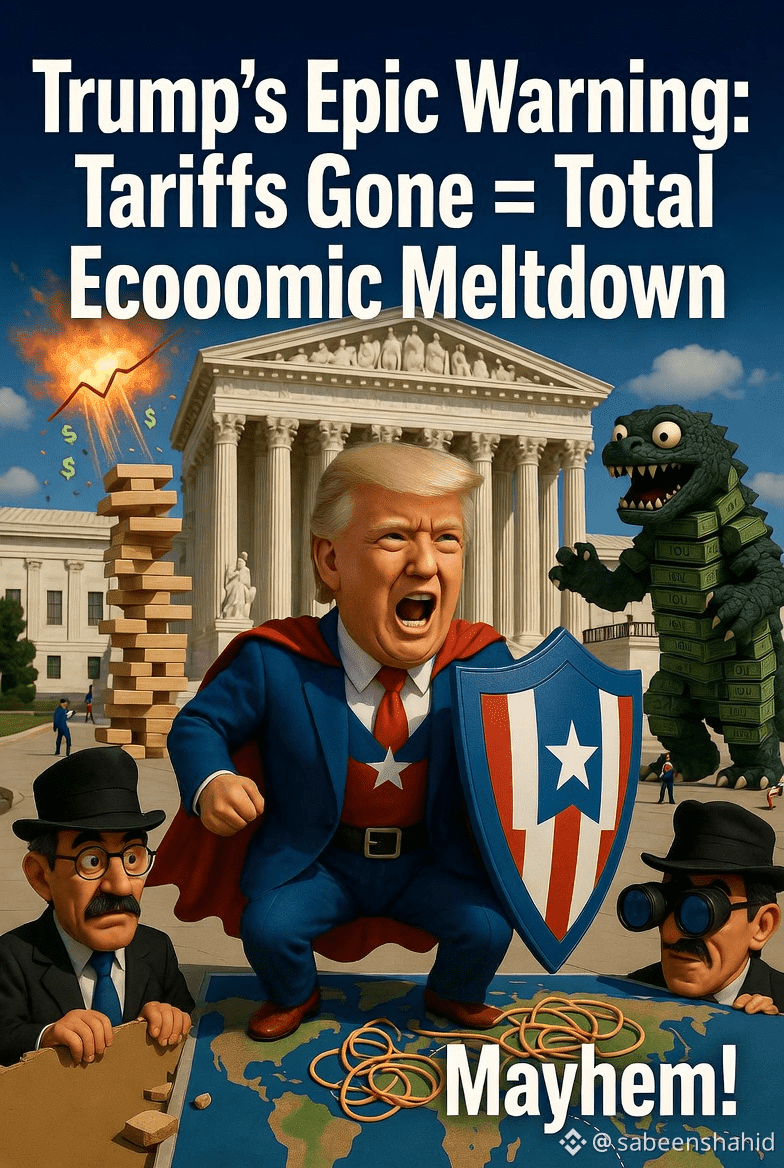
In the ever-evolving landscape of global finance and geopolitics, few voices carry as much weight as that of Former President Donald Trump. His recent dire warning about the potential Supreme Court decision to overturn existing US tariffs has sent shockwaves through economic circles, raising alarms about massive financial liabilities that could reshape America's future. For investors and traders monitoring "Trump Supreme Court tariffs warning economic impact" or "US tariffs overturn consequences for national security," this development isn't just political rhetoric—it's a potential game-changer for markets, supply chains, and long-term economic stability. As we delve deeper into this issue in 2026, understanding the nuances could be crucial for safeguarding portfolios amid rising uncertainties.
The Core of Trump's Warning: A Potential Financial Tsunami for the United States
At the heart of Trump's statement is a stark prediction: if the Supreme Court rules against current tariffs, the US could face liabilities amounting to hundreds of billions—or even trillions—of dollars. This isn't hyperbole; it's rooted in the real-world implications of retroactive tariff reversals. Imagine refunds pouring out to foreign entities, draining national coffers and exacerbating already strained federal budgets. For those searching "economic consequences of Supreme Court overturning tariffs" or "Trump tariffs policy impact on US debt 2026," the scenario paints a picture of cascading effects: inflated national debt, weakened currency strength, and diminished investor confidence.
Trump framed this as more than a fiscal hiccup—labeling it a "national security disaster." In an era where economic power underpins military and diplomatic leverage, such a ruling could erode America's global standing. Adversaries like China or Russia might exploit this vulnerability, accelerating their own trade advantages while the US grapples with repayment obligations. This ties directly into broader queries like "how US tariffs protect national security" or "Trump warning on tariffs and global economic rivalry," highlighting how trade policies aren't isolated; they're intertwined with sovereignty and strategic defense.
Why Tariffs Matter: Protecting American Industries in a Competitive World
Tariffs have long been a contentious tool in US economic policy, designed to shield domestic industries from unfair foreign competition. Critics often decry them as barriers to free trade, but proponents—including Trump—argue they safeguard jobs, innovation, and critical supply chains. Overturning them could mean not just refunds but a floodgate for legal challenges, allowing competitors to demand compensation for past duties paid.
Consider the manufacturing sector: factories in key states could face closures if cheaper imports surge unchecked. This resonates with longtail searches such as "impact of removing US tariffs on American manufacturing jobs" or "tariffs role in protecting US supply chains 2026." Moreover, in the context of emerging technologies and green energy transitions, losing tariff protections might hinder America's push toward self-reliance, affecting everything from semiconductors to electric vehicles. The ripple effects? Stock market volatility, reduced corporate earnings, and a potential slowdown in GDP growth—factors every investor eyeing "US economic stability post-tariffs ruling" should monitor closely.
Broader Implications: Sovereignty, Precedents, and Long-Term Economic Survival
This issue transcends immediate financial hits; it's about setting dangerous precedents. A Supreme Court decision favoring tariff overturns could undermine future administrations' ability to implement protective measures, effectively ceding economic control to judicial interpretations over executive strategy. For those researching "Supreme Court rulings on trade policy precedents" or "how tariffs affect US economic sovereignty," this could mark a shift where courtroom decisions dictate market dynamics, potentially leading to prolonged legal battles and policy paralysis.
Trump's call to action serves as a wake-up call for policymakers, businesses, and citizens alike. In a world where economic warfare is as potent as military conflict, maintaining leverage through tools like tariffs is essential. Echoing searches like "Trump national security disaster tariffs explanation" or "long-term effects of US debt from tariff refunds," the former president's words underscore a crossroads moment: preserve economic defenses or risk generational fallout that weakens households, industries, and international alliances.
Current Context and Market Reactions: What Investors Need to Know in 2026
As of January 2026, markets are already jittery with anticipation of the Supreme Court's deliberations. Stock indices tied to trade-sensitive sectors—such as industrials and materials—have shown increased volatility, reflecting investor fears. Cryptocurrency enthusiasts and fiat traders alike are watching closely, as a weakened dollar from mounting debts could boost digital assets as hedges. Relevant longtail keywords here include "market reactions to Trump tariffs warning 2026" or "how Supreme Court tariff decision affects stock markets."
Supporters of Trump's view argue this isn't partisan—it's pragmatic. Decisions in Washington don't stay confined; they reverberate globally, influencing everything from commodity prices to international investment flows. For Binance Square users interested in "global economic risks from US policy changes" or "tariffs impact on cryptocurrency markets," this warning highlights the interconnectedness of traditional finance and crypto ecosystems. A destabilized US economy could drive capital toward decentralized alternatives, potentially sparking a bull run in assets like Bitcoin or stablecoins.
A Call to Vigilance: America's Future Hangs in the Balance
In summary, Donald Trump's powerful alert on the Supreme Court and tariffs isn't mere speculation—it's a clarion call about risks that could redefine America's trajectory. With potential liabilities in the trillions, eroded national security, and lasting precedents, the stakes couldn't be higher. For anyone tracking "Trump economic catastrophe warning detailed analysis" or "US at crossroads tariffs and global standing 2026," staying informed is key. As the world watches, proactive measures—whether through advocacy, diversified investments, or policy engagement—could mitigate the fallout.
This moment demands attention: protect economic foundations today to secure prosperity tomorrow. Whether you're a seasoned trader or a curious observer, the outcome will echo far beyond US borders, shaping the global financial landscape for years to come.