
Blockchain networks have optimized execution, consensus, and cryptoeconomic coordination over the past decade, yet storage remains an externalized dependency. Data frequently resides outside the verifiable boundary of the system, creating structural fragility. Walrus addresses this by treating storage as a protocol-enforced condition, decoupled from execution logic but verifiable through object-level interactions on Sui.
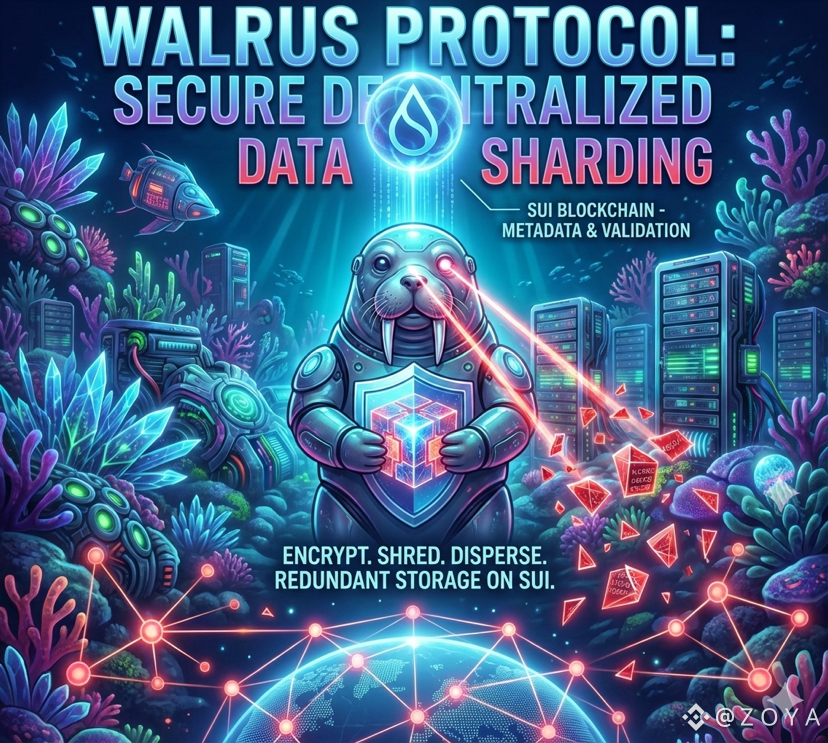
The protocol leverages Sui’s object-centric architecture, associating stored data with independent on-chain objects. This separation allows horizontal scaling without inflating global state. Control and settlement operations proceed independently of payloads, preserving integrity while enabling efficient coordination. Decoupling payloads from execution creates a system in which verifiability and availability are intrinsic properties rather than external assumptions.
Data is fragmented using erasure coding and distributed across independent nodes. Nodes maintain encrypted segments, enabling reconstruction even under partial network failure. Probabilistic recoverability replaces full replication, achieving high durability with reduced resource overhead. This approach prioritizes mathematically enforced resilience over operational redundancy, optimizing efficiency while preserving system-level guarantees.
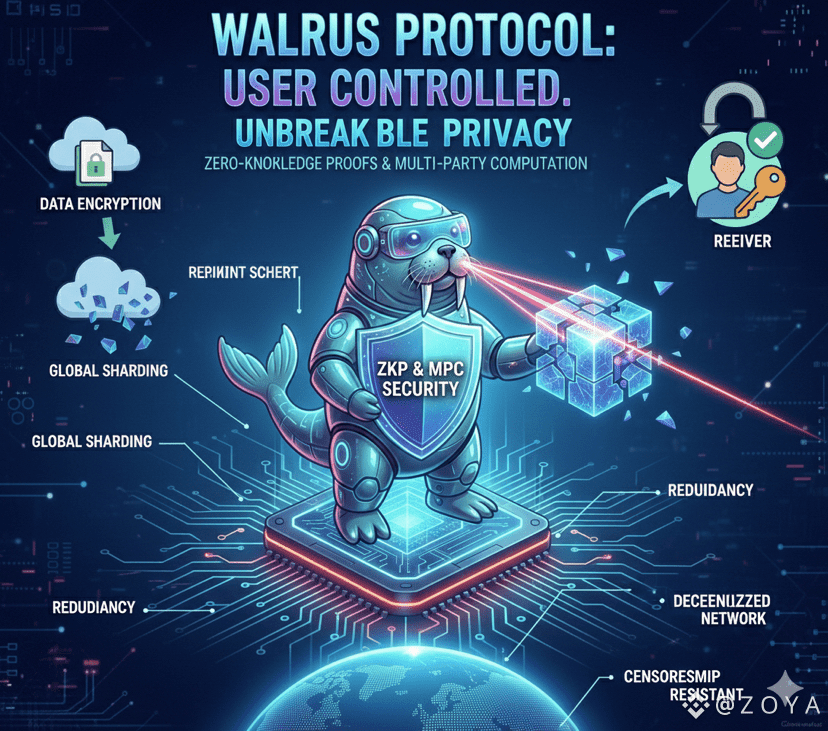
Privacy is enforced at the protocol level. Nodes operate as blind custodians of encrypted fragments, preventing reconstruction or inference of user data. Indexing and content-aware retrieval are delegated to application layers, positioning Walrus as foundational infrastructure rather than an end-user platform. Complexity is displaced upward, preserving security assumptions while maintaining decentralized verifiability.
The WAL token functions as an incentive alignment mechanism. Payments, staking, and penalties coordinate node participation, anchoring token utility to operational performance. Economic activity enforces storage persistence, ensuring that protocol guarantees remain enforceable without external trust.
Trade-offs exist. Latency is inherent to distributed reconstruction. Node participation favors technically capable operators. Durability and sovereignty are prioritized over immediacy, limiting short-term adoption while maintaining structural coherence under scale.
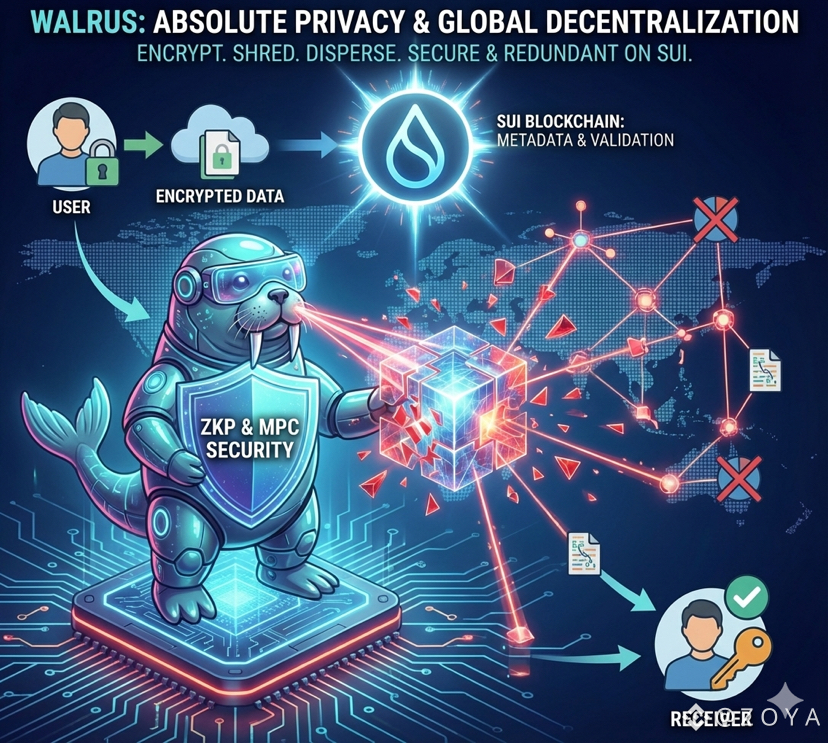
Walrus represents a systemic approach to a long-standing architectural gap. By internalizing storage as a verifiable condition, the protocol reduces reliance on externalized trust and reinforces the integrity of decentralized systems. Its significance is rooted in establishing storage as a first-class component of blockchain infrastructure rather than as a peripheral service.


