
Digital sovereignty is increasingly challenged when storage remains external to blockchain systems. Many decentralized applications still rely on off-chain or semi-centralized solutions, creating structural weaknesses and trust dependencies. Walrus addresses this gap by repositioning storage as an enforceable protocol condition, decoupled from execution but verifiable through Sui’s object-based architecture. The protocol treats storage as a first-class system primitive rather than a peripheral service, ensuring data availability, integrity, and confidentiality.
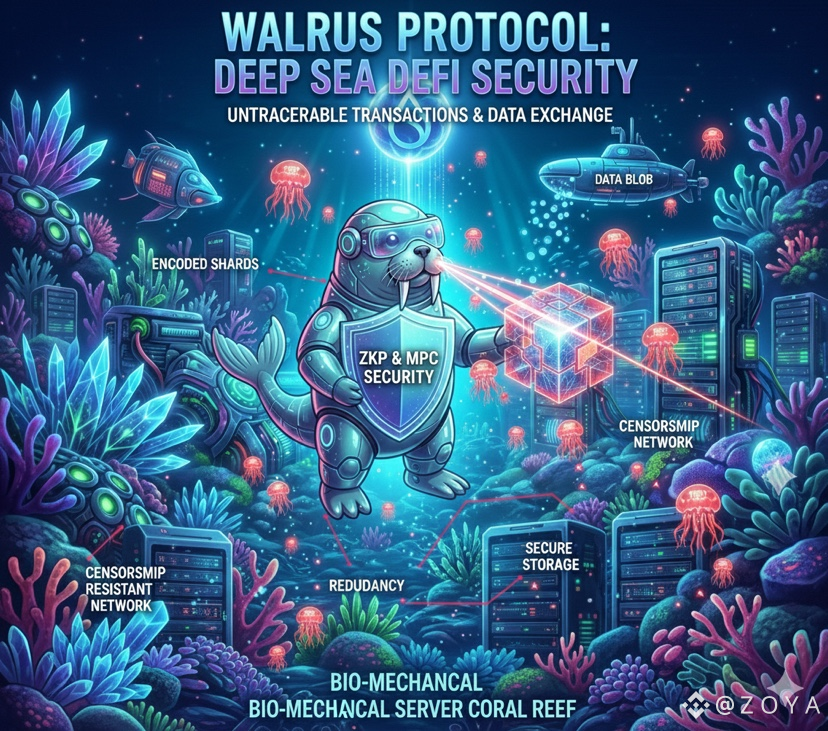
Sui’s object-centric model allows independent data units to be processed and verified in parallel, minimizing global synchronization costs. Walrus associates encrypted fragments with verifiable on-chain objects, enabling scalable coordination between control logic and data payloads. This design allows horizontal expansion while preserving verifiability, reducing systemic fragility without inflating global state, and establishing storage persistence as a native property of the network rather than an external dependency.
Data is split via erasure coding into encrypted segments distributed across independent nodes. Probabilistic reconstruction ensures fragments can be recovered even under partial node failure. By minimizing full replication, Walrus achieves resilience through mathematically enforced properties rather than operational redundancy. Durability is embedded at the protocol layer, providing reliability and consistency while lowering storage overhead and cost.
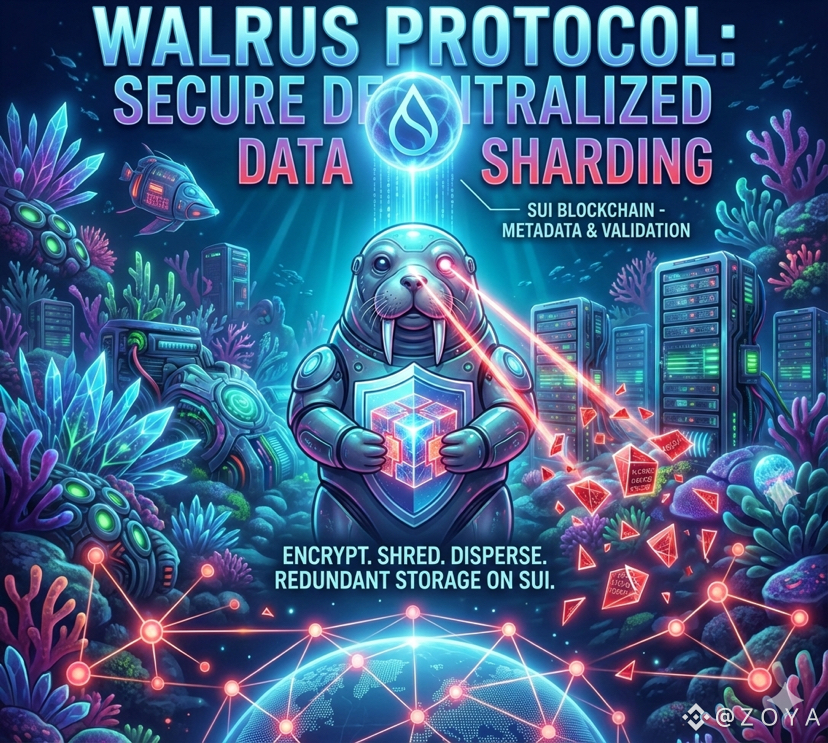
Privacy is fundamental. Nodes act as blind custodians, storing encrypted fragments without access to content or user identity. This design reduces exposure to insider threats and regulatory capture, while application-level retrieval and indexing remain decoupled from core protocol operations. By prioritizing confidentiality alongside verifiability, Walrus positions itself as foundational infrastructure rather than a turnkey storage platform, leaving complexity and analysis to the application layer.
The WAL token governs economic coordination within the network. It is used for storage payments, incentivizing node operators, enforcing compliance, and staking participation. Token-driven incentives align availability guarantees with economic reward, embedding governance and operational oversight into the protocol without reliance on centralized authorities, while creating a sustainable flow of activity tied directly to storage usage and network health.
Economically, Walrus balances efficiency and cost. The partial distributed storage model reduces resource consumption relative to full replication while maintaining security guarantees. By minimizing redundant storage, the network optimizes operational overhead and positions itself competitively compared with traditional cloud infrastructure and other decentralized solutions. Cost-efficiency complements structural resilience, supporting adoption across applications with varying scale requirements.
Potential use cases are extensive, encompassing decentralized finance protocols that require high data integrity, digital identity solutions, and enterprise applications seeking reliable alternatives to centralized cloud services. Walrus also integrates as a permanent storage layer for Web3 ecosystems, enabling verifiable and secure storage for applications that cannot tolerate data loss, manipulation, or external dependency.
Challenges remain. Latency is inherent in distributed reconstruction, and node participation favors technically capable operators. Adoption requires developer engagement, accessible tooling, and ecosystem maturity. Competition in decentralized storage is intense, with established networks refining cost and performance. Success depends on sustained demand and the network’s ability to deliver reliable, private, and verifiable storage over time.
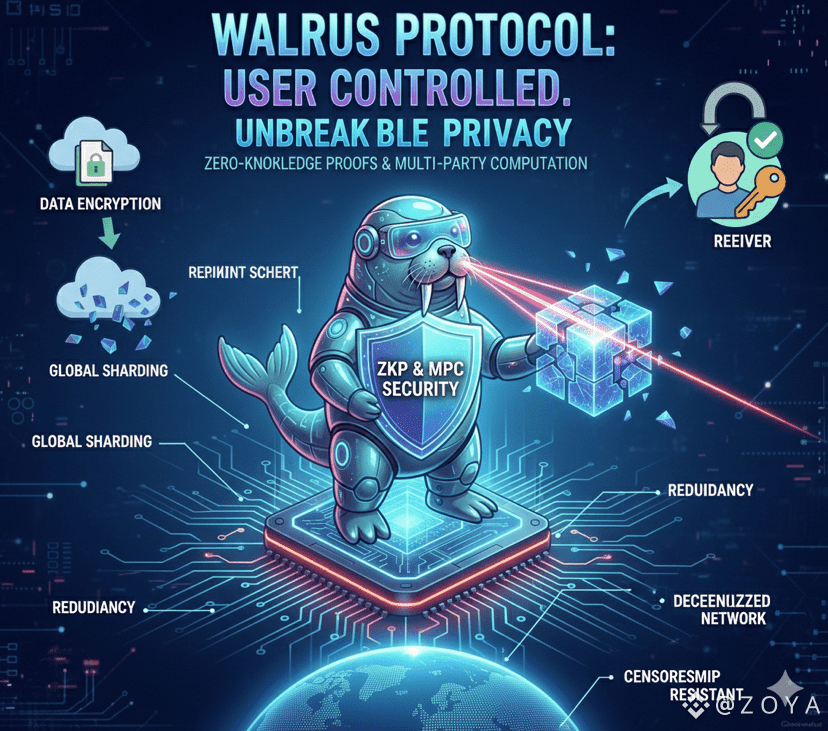
Walrus represents a structural solution to a persistent gap in decentralized infrastructure. By embedding availability, privacy, and verifiability into the protocol layer, the project establishes storage as a native and sovereign component. Its relevance lies less in immediate adoption and more in shaping the foundations upon which data-intensive decentralized applications can securely and efficiently operate.

