
Storage remains one of the least optimized components in blockchain infrastructure. While execution, consensus, and cryptoeconomic coordination have advanced, data persistence and availability often rely on off-chain or semi-centralized solutions. Walrus addresses this structural imbalance by embedding economic incentives directly into storage operations, transforming what was previously a passive service into a verifiable, token-governed system. The protocol aligns operator participation, network resilience, and long-term sustainability through WAL token mechanics, integrating finance and infrastructure into a cohesive model.
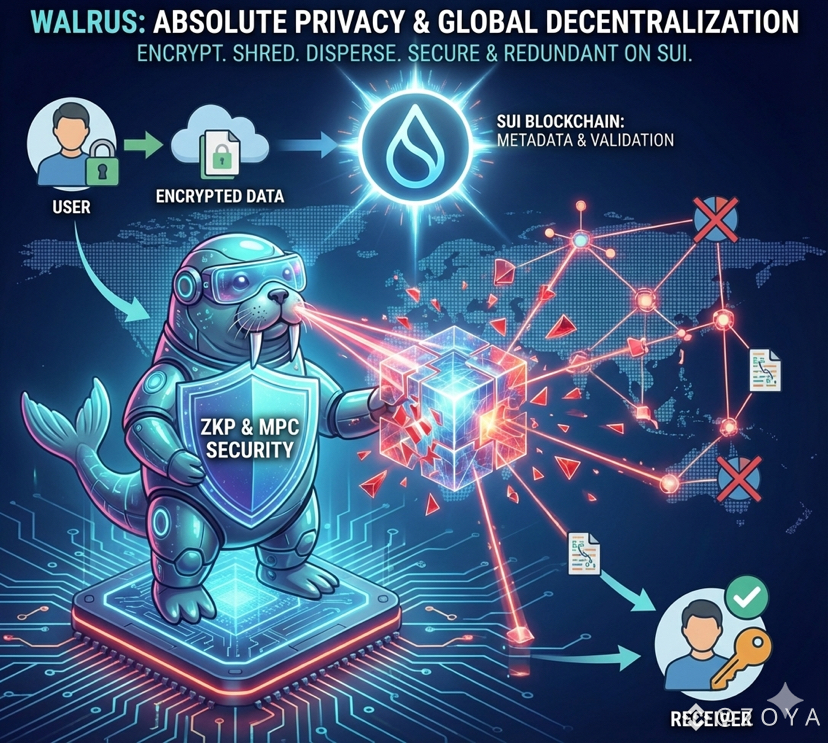
The protocol leverages Sui’s object-centric data model, allowing independent data units to be processed and verified in parallel. Storage fragments are associated with on-chain objects, enabling economic settlements without global synchronization costs. This architecture separates payload management from control logic, supporting scalable growth while preserving verifiability and system integrity. By linking token incentives to operational compliance, Walrus ensures that storage persistence becomes a naturally enforced property of the network.
Data is divided using erasure coding into encrypted fragments distributed across independent nodes. Probabilistic reconstruction guarantees durability even if nodes fail or act adversarially. Minimizing full replication reduces operational overhead while maintaining high availability. This approach embeds resilience into the economic framework, transforming redundancy costs into an incentive-aligned process rather than a purely technical concern.
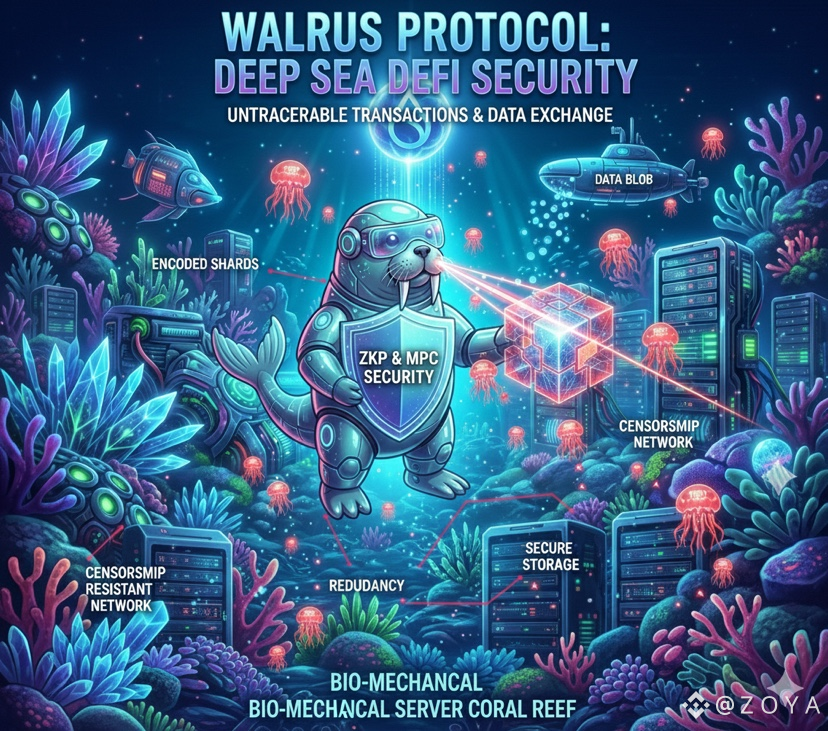
Privacy is enforced protocol-wide. Nodes cannot access the semantic content of stored fragments, preserving confidentiality and reducing attack surfaces. Application-layer retrieval and indexing remain separate from storage operations, emphasizing that Walrus functions as infrastructure rather than an application-specific solution. Privacy considerations are integrated into the economic design, ensuring that incentives and protocol rules jointly preserve data integrity.
The WAL token drives network activity. Payments for storage, staking, and rewards are mediated through on-chain logic, aligning operator behavior with system guarantees. Economic incentives directly enforce availability, creating a decentralized governance mechanism embedded in operational functionality. Token utility is thus inseparable from protocol performance, making WAL both a governance tool and a value-transfer mechanism for storage services.
Economically, Walrus balances cost efficiency with durability. Partial distributed storage reduces resource consumption while maintaining security guarantees, positioning the network competitively against traditional cloud solutions and alternative decentralized protocols. By integrating costs into the incentive structure, Walrus transforms infrastructure into an active marketplace where operators are motivated to maintain performance over time.
Use cases span decentralized finance protocols requiring verifiable transaction histories, digital identity platforms demanding secure storage, and enterprises seeking alternatives to centralized cloud solutions. Additionally, Walrus can function as a permanent storage layer for Web3 ecosystems, enabling applications to preserve critical data with cryptographic guarantees.
Challenges persist. Latency is introduced by distributed reconstruction, and node participation favors technically proficient operators. Broad adoption requires developer tooling, ecosystem engagement, and consistent token demand. Competition is intense, and the network must demonstrate reliability, privacy, and economic stability simultaneously to achieve long-term viability.
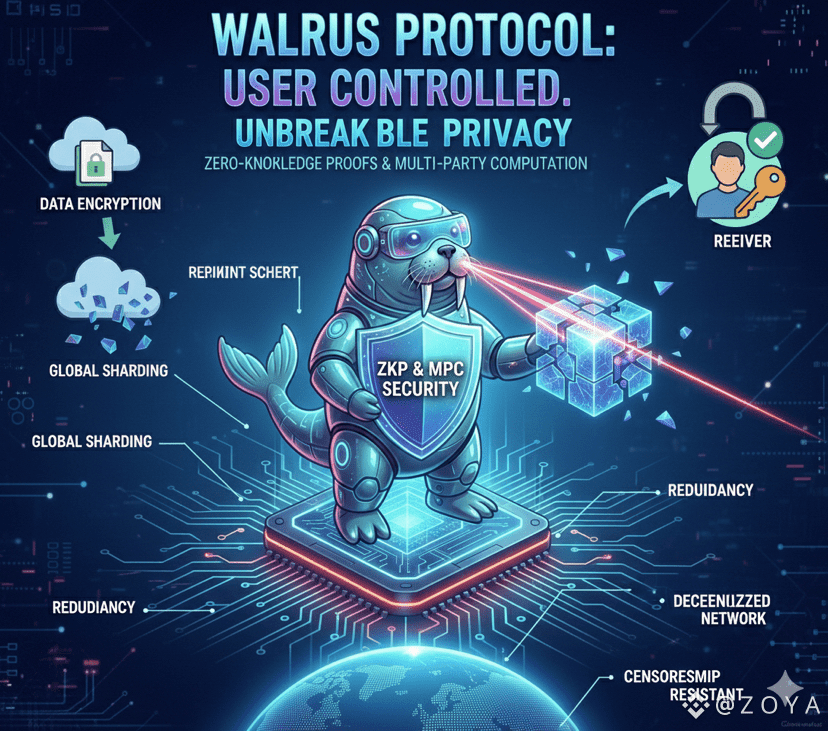
Walrus illustrates a systemic shift in decentralized storage. By embedding economic incentives into protocol-level operations, the project establishes a model where durability, privacy, and availability are enforced through aligned token mechanisms. Its significance lies in redefining how storage can be both economically sustainable and technically resilient, providing a foundational infrastructure for Web3 applications that depend on verifiable and sovereign data.


