
The moment that really stuck with me came while watching another institutional pilot quietly stall, not because the product failed, but because no one could agree on who was allowed to see what. The code worked. The economics worked. The privacy assumptions did not. That was when it clicked that regulated DeFi is not being held back by yield or throughput, but by the absence of privacy layers that feel earned rather than hidden.
For years, DeFi treated transparency as a moral absolute. Every transaction public, every balance exposed, every position traceable forever. That openness created trust early on, but it also created friction once real institutions showed up. Banks, funds, and regulated issuers are legally required to disclose selectively, not universally. They need privacy with boundaries. Not secrecy, but control. That distinction is changing how the next phase of DeFi is being built.
Understanding that helps explain why privacy layers are no longer a side feature but a foundation. On the surface, privacy sounds like encryption and zero knowledge proofs. Underneath, it is about governance, auditability, and risk management. If a regulator cannot verify compliance without exposing sensitive data, the system breaks. If counterparties cannot transact without revealing their entire balance sheet, liquidity stays thin. Privacy becomes the texture that determines whether capital actually flows.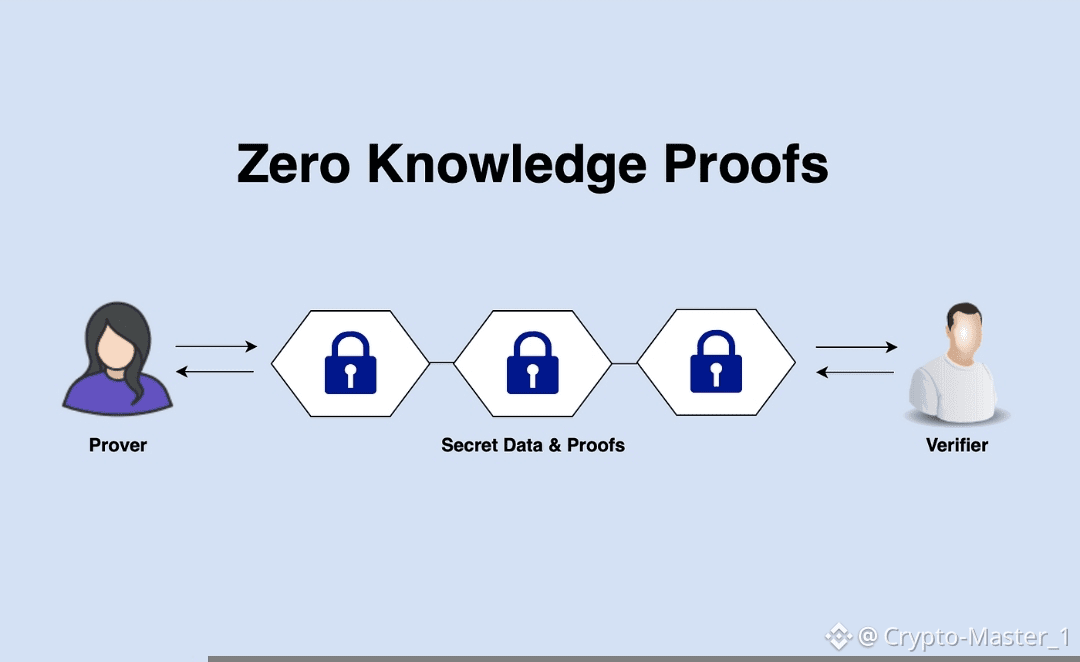
This is where Dusk Network feels different from most chains that bolt privacy on later. When I first looked at Dusk, what struck me was not the cryptography, but the restraint. The chain was designed from the start for regulated finance, which meant privacy that can be proven, not privacy that disappears into a black box.
Dusk launched in 2018, long before regulation became fashionable again in crypto. That timing matters. It gave the team years to work through the uncomfortable tradeoffs between confidentiality and oversight. Today, Dusk supports privacy preserving smart contracts where transaction details stay hidden, while compliance proofs remain visible to authorized parties. In plain terms, you can show that rules were followed without showing your homework.
The data around this is still early, but revealing. As of early 2026, Dusk has processed millions of private transactions across test and production environments. That number only matters when you add context. These are not retail swaps chasing memecoins. They are structured transactions tied to tokenized securities and real world assets, where each interaction carries legal weight. The network’s validator set has grown steadily, now sitting above 50 active validators, which suggests participation without the speculative spikes seen elsewhere.
That steady growth creates another effect. Developers who care about compliance are starting to design applications differently. Instead of assuming everything must be public by default, they are asking what needs to be disclosed, to whom, and when. Dusk’s zero knowledge circuits allow a smart contract to confirm eligibility, limits, or ownership without revealing identities on-chain. That sounds abstract until you realize it enables private bond issuance, confidential secondary markets, and compliant on-chain settlement.
Critics often push back here. They argue that privacy weakens transparency and invites abuse. That concern is not wrong. Unchecked privacy has historically been used to hide risk, not manage it. The difference with regulated privacy layers is accountability. On Dusk, privacy is permissioned at the protocol level. Regulators or auditors can be granted viewing rights without opening the data to the entire world. That balance is fragile, and it remains to be seen how it scales under pressure, but early signs suggest the architecture is more adaptable than older privacy chains.
Another number that matters is settlement time. Traditional securities settlement still runs on T plus two in many markets. Dusk supports near instant settlement while preserving confidentiality. Even shaving settlement from days to minutes changes counterparty risk calculations. It frees capital that would otherwise sit idle. That efficiency does not show up in TVL charts immediately, but it changes how institutions think about deploying assets on-chain.
Meanwhile, the broader market context is shifting fast. The EU DLT Pilot Regime, MiCA implementation, and increased regulatory clarity in parts of Asia are pushing tokenized assets out of theory and into production. In 2025 alone, tokenized real world assets crossed the 10 billion dollar mark globally, according to industry estimates. That number is small compared to traditional markets, but it is large enough to attract scrutiny. Without privacy layers, most of that growth would stall.
What Dusk reveals is a quieter truth about where DeFi is heading. The next wave is not about replacing banks or hiding from regulators. It is about building infrastructure that regulators can live with and institutions can trust. Privacy, in this context, is not rebellion. It is coordination.
There are risks, of course. Complexity increases attack surfaces. Zero knowledge systems are harder to audit than simple transparent contracts. Governance around access control can become political. If these layers become too rigid, innovation slows. If they become too loose, trust erodes. That tension will define the next few years.
Still, if this holds, privacy layers like Dusk’s may become the default for serious financial applications. Not because they are flashy, but because they respect how finance actually works. Quietly. Underneath the surface. With rules that are enforced, not assumed.
The sharp realization for me is this. Transparency built DeFi’s first chapter, but selective privacy is writing the second, and the chains that understand that difference early are already shaping what regulated finance on-chain is allowed to become.
