

I remember the first time I seriously looked at Dusk, it was not because of a flashy announcement or a sudden price move. It was because almost nothing about it felt rushed. In a space that rewards speed, Dusk moved quietly, almost stubbornly, and that alone made me pause. Most blockchains announce a vision first and then spend years explaining why reality looks different. Dusk did the opposite.
Back in 2018, when Dusk Network was first sketched out, privacy in crypto meant one thing to most people. Hide everything. Transactions, balances, identities. That approach made sense at the time. Crypto was still defensive, reacting to skepticism and regulation rather than engaging with it. What Dusk’s early work suggested, though it was easy to miss back then, was that full opacity was not going to work for finance that wanted to be taken seriously.
That early insight shaped everything that followed. On the surface, Dusk set out to build confidential smart contracts. Underneath, the real challenge was much harder. How do you let contracts operate privately while still allowing audits, compliance checks, and dispute resolution. If this sounds abstract, imagine trying to run a stock exchange where trades are hidden but regulators still need proof that rules were followed. That tension sits at the foundation of Dusk’s design.
Progress was slow, and honestly, at times it looked uncomfortable. While other chains rushed to mainnet in a year or two, Dusk spent years refining its cryptographic approach. By 2020, zero knowledge proofs were gaining attention, but they were still expensive and complex. Dusk chose a proof system optimized for verification efficiency, not just theoretical privacy. In practice, that meant transactions could remain confidential without turning every block into a computational bottleneck.
By the time Dusk’s mainnet began taking shape, the market had changed. DeFi had exploded, then fractured. Regulators had moved from ignoring crypto to actively defining how it could exist. That shift gave Dusk’s earlier restraint new meaning. When mainnet validators came online, now numbering over 50 active participants, the emphasis was not on raw throughput but on predictable execution. That number matters because validator count signals decentralization without chaos. Too few validators centralize trust. Too many, too fast, and stability suffers.
What happens on the surface of a Dusk transaction is simple enough. A user interacts with a smart contract. What happens underneath is where the work shows. The contract proves that conditions were met without revealing sensitive data. Ownership, eligibility, transaction limits stay hidden, while correctness stays visible to those who need to see it. That architecture enables something most chains struggle with. Selective disclosure.
This design choice opens doors that are still closed elsewhere. Consider tokenized securities. In 2025, estimates put global tokenized real world assets above 10 billion dollars, still tiny compared to traditional markets but large enough to matter. Most of that capital cannot touch fully transparent blockchains. On Dusk, issuers can meet confidentiality requirements while still settling on-chain. That difference is not philosophical. It is operational.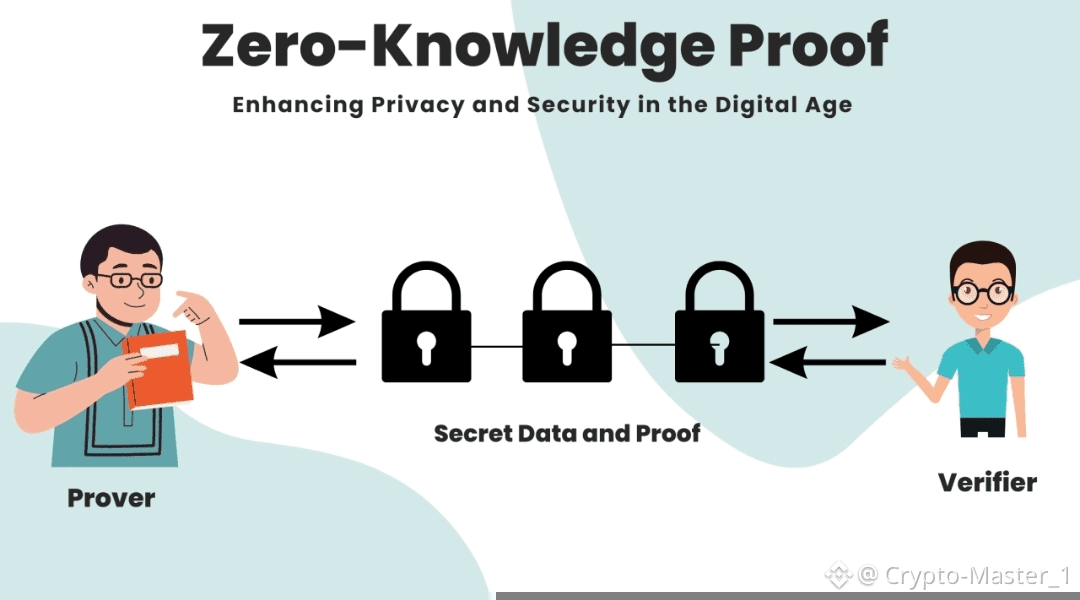
Of course, this approach carries risk. Complexity always does. Zero knowledge systems are harder to reason about than transparent contracts. Bugs can hide longer. Auditing requires specialized expertise. Dusk mitigates this by keeping its contract logic deliberately constrained, prioritizing predictable behavior over expressiveness. That tradeoff limits some creative DeFi experiments, and critics are right to point that out. The question is whether regulated finance values creativity over certainty. Early signs suggest certainty wins more often than not.
Another number worth grounding is time. Traditional securities settlement still often runs on T plus two. Dusk enables near instant settlement while preserving confidentiality. Even cutting settlement from days to minutes changes how institutions manage liquidity. Capital that used to sit idle becomes deployable. Risk calculations shift. That effect does not show up in daily volume charts, but it reshapes incentives quietly.
Meanwhile, market sentiment around privacy has matured. Privacy is no longer framed as hiding from oversight. It is increasingly discussed as protecting counterparties, strategies, and personal data within a rule based system. Dusk’s evolution mirrors that shift. Its confidential smart contracts are not designed to evade scrutiny, but to focus it. Regulators see what they need. Participants reveal only what is required. Everyone else sees proofs, not details.
What struck me most watching Dusk move from concept to mainnet is how little the core idea changed. The tools improved. The ecosystem matured. The surrounding narrative caught up. But the foundation stayed steady. That consistency is rare in crypto, where roadmaps often bend with market cycles.
There is still uncertainty. Adoption remains early. Tooling for developers is improving, but remains less familiar than mainstream EVM chains. Liquidity will take time to build. If institutions hesitate longer than expected, progress could slow. Those risks are real, and ignoring them would be dishonest.
Still, when you zoom out, Dusk’s journey reflects a broader pattern. Crypto is growing up. The industry is moving from proving that things can exist on-chain to proving they can exist responsibly. Confidential smart contracts sit at that intersection. They are not loud. They are not instantly viral. They are earned.
If this trajectory holds, the untold story of Dusk is not about being first or fastest. It is about being patient enough to build infrastructure that finance can actually use. And the quiet truth is that in regulated systems, what you choose not to reveal often matters as much as what you do.
