

Most systems are built for speed. Very few are built for the moment when someone wishes they could take something back.
That moment is not dramatic. It is quiet. A transfer is already done. A report is already sent. A position already moved. And only then does someone notice that the context was wrong, the entitlement expired, the disclosure scope was misjudged, or the policy version was not what everyone thought it was.
In traditional finance, this is where memory starts to matter more than technology. Who approved what. Under which rule. With which exception. And can you still prove it six months later when nobody remembers the call?
Dusk is designed for that uncomfortable future, not for the optimistic present.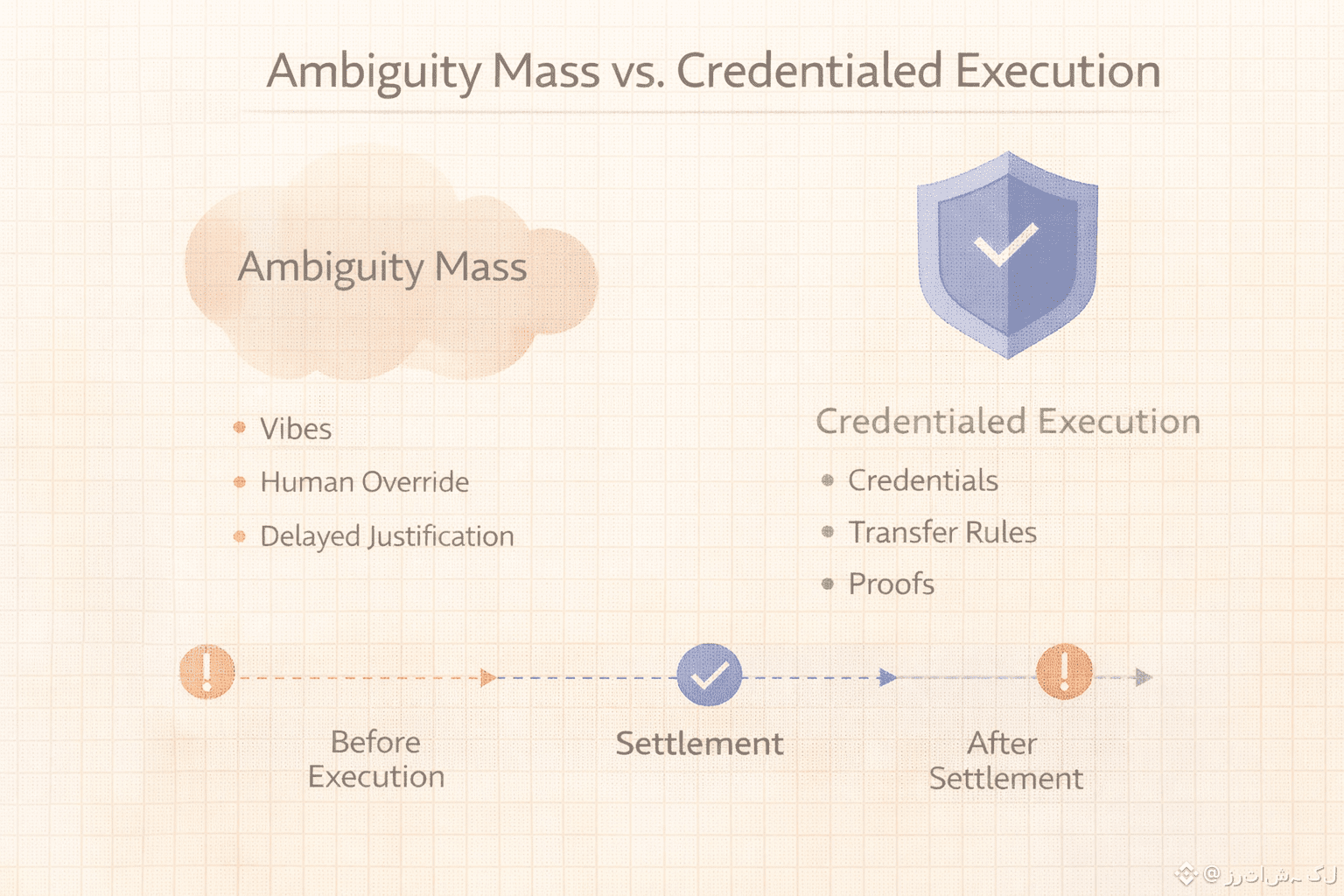
What makes it feel different to work around is not speed or novelty, but friction that appears in the right places. Transfers that require credentials. Assets that carry rules. Proofs that can be shown without turning the entire history into a public performance. It is a system that assumes someone will ask later, and builds for that person instead of the demo.
Most blockchains treat irreversibility as a virtue by itself. On Dusk, irreversibility is treated as a responsibility. If something cannot be undone, then the conditions under which it happens have to be narrower, clearer, and more defensible. Finality is not the goal. Finality that survives scrutiny is.
This changes how people behave long before it shows up in metrics.
You see it in how flows are prepared. More checks before execution. More attention to credential freshness. More concern about whether a counterparty can accept, not just whether the network will include. People stop assuming that “on-chain” means “finished.”
They start assuming it means “now we have to live with it.”
Selective disclosure is what makes that livable. Not secrecy. Not radical transparency. Just enough proof, scoped tightly enough, that a claim can be defended later without reopening everything else. The system does not try to make disputes impossible. It tries to make them smaller.
And that is a very different ambition.
In many stacks, compliance and audit live outside the transaction path. They are stories told after the fact. On Dusk, the asset itself carries its constraints forward. The questions are not deferred. They are asked at the moment they are cheapest to answer.
This is slower in human terms. It feels more cautious. Sometimes it is.
But it also means fewer moments where someone says, “we will sort it out later,” and then discovers that “later” is expensive, political, and unclear.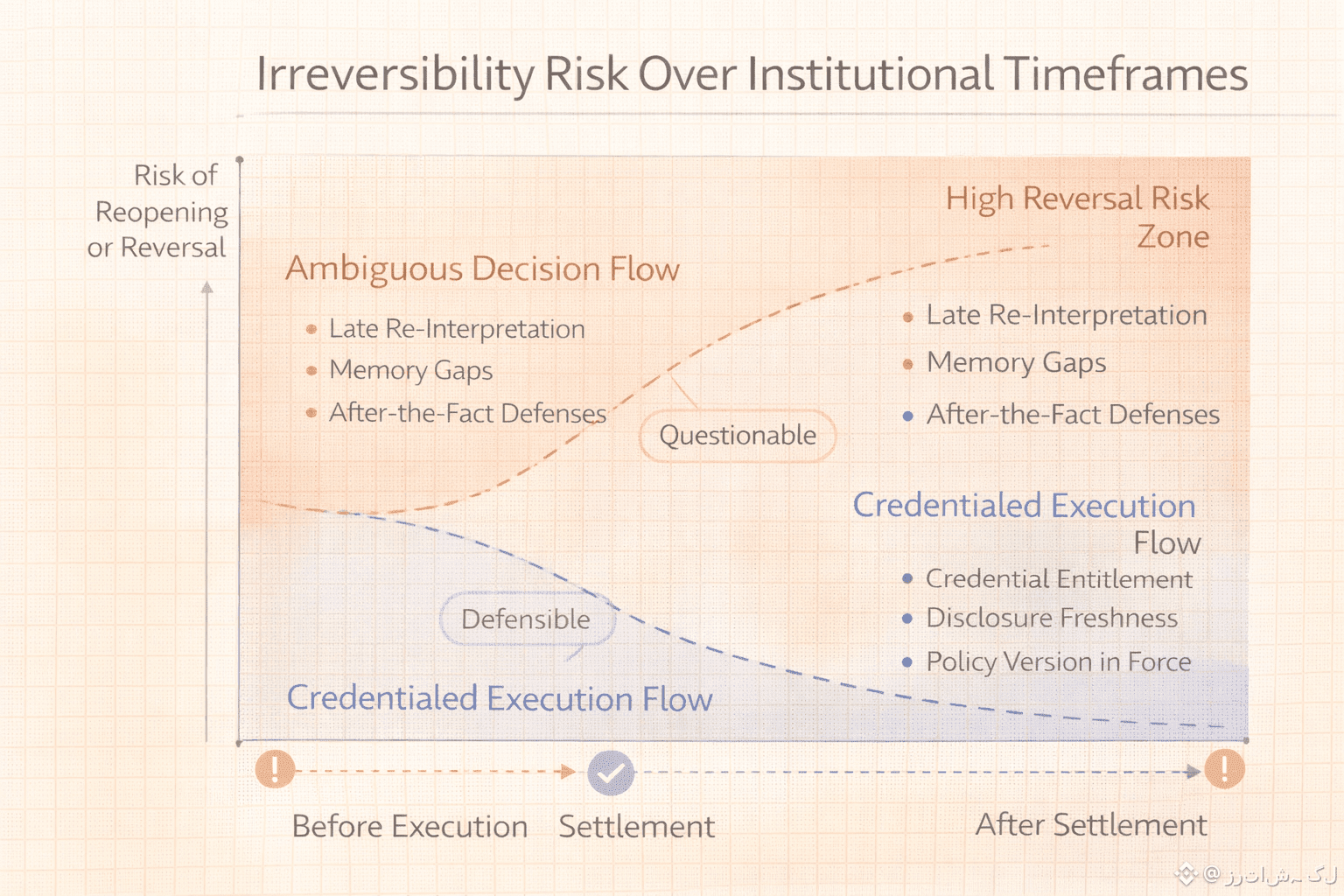
What Dusk is really building is not just a private settlement layer. It is a system that has a longer memory than its users.
And that is what institutions actually need.
Not a chain that moves fast.
A chain that can still explain itself when everyone else has moved on.
