
The latest inflation data has put Federal Reserve Chair Jerome Powell in a challenging position. While the Fed remains publicly hawkish, economic indicators suggest the central bank may need to pivot sooner than anticipated. $DASH
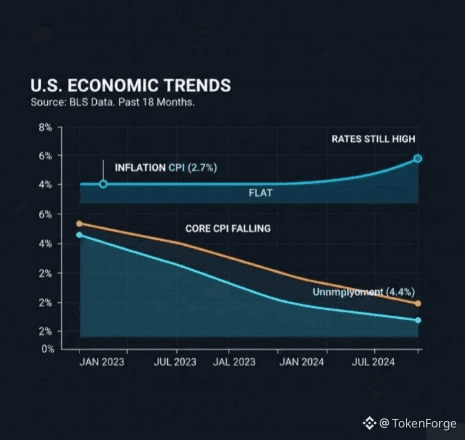
📊 INFLATION DATA: COOLING OFF
Headline CPI: 2.7% (in line with expectations)
Core CPI: 2.6% (below expectations)
Truflation: shows inflation under 1.8%
Key insight: Inflation is not accelerating. The numbers are clearly telling a story opposite to the Fed’s recent pause on rate cuts.
⚠️ THE FED’S DILEMMA
Powell paused rate cuts hoping inflation would pick up, but the data is sending a different signal:
CPI is flat
Core CPI is falling
Inflation expectations are declining
In short, the Fed is behind the curve, risking overtightening at a time when the economy is already feeling pressure.
📉 ECONOMIC HEADWINDS
Despite the Fed’s hawkish stance, the broader economy is under stress:
Growth is slowing
Unemployment rising to 4.4%
Financial stress is building
Historical context:
In 2024, the Fed cut 50 bps when Core CPI was 3.3% and unemployment at 4.1%
Today, inflation is LOWER and unemployment HIGHER, yet the Fed remains hawkish
🔥 WHAT THIS MEANS FOR MARKETS
Powell can talk tough, but the data speaks louder:
Rate cuts are likely inevitable
Markets may start pricing in policy easing sooner than expected
2026 could force the Fed’s hand, reshaping risk assets, bonds, and equities
💡 BOTTOM LINE
The Fed is walking a tightrope. With inflation cooling and the economy slowing, monetary policy may need to pivot, despite the public hawkish rhetoric.
Investors should watch:
CPI & Core CPI trends
Unemployment updates
Fed communications for subtle hints of easing
The next rate cut cycle could arrive faster than Powell anticipates, creating opportunities and volatility across markets.
