
Assets with Privacy and Auditability
When most traders hear “tokenized securities,” they imagine a simple upgrade: take a stock or bond, put it on-chain, and suddenly markets run faster. The reality is far more complex—and far more compelling. Tokenization itself is straightforward. The challenge is making tokenized securities function like their traditional counterparts: issued under strict rules, traded under regulatory restrictions, settled with finality, and still private enough for institutions to trust the system.
This is precisely where Dusk Network has carved its niche.
As of January 13, 2026, DUSK trades around $0.070, with intraday highs of $0.0796 and lows of $0.0653. Price alone doesn’t tell the story, but it highlights a crucial point: Dusk is still valued like a small-cap infrastructure project, not yet as a mature financial network already capable of powering large regulated markets. For investors, the real insight lies in this gap between market perception and the network’s actual potential.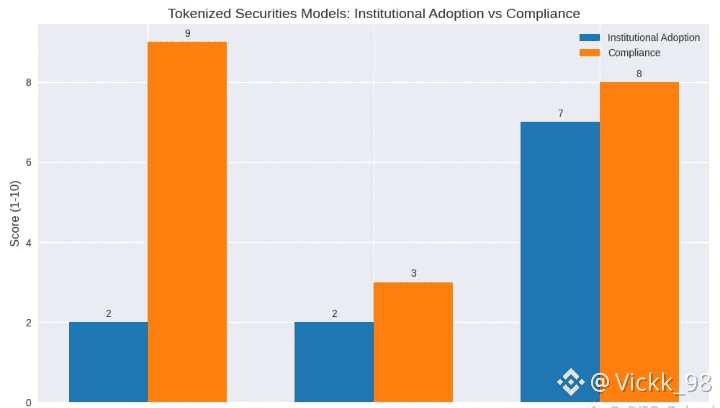
To understand Dusk’s significance, it helps to grasp the core tension in bringing regulated finance on-chain.
Public blockchains are transparent by default. Securities markets are not.
In traditional markets, trading activity is highly sensitive. Positions, counterparties, and transaction patterns are closely guarded. Public visibility of this information would deter institutional participation. Yet regulators demand oversight: proof of compliance, audit trails, and mechanisms to investigate misconduct. Most blockchains face a binary choice: total transparency that scares off institutions or opaque privacy systems that raise compliance concerns.
Dusk pursues a third path: privacy combined with auditability, enforced cryptographically rather than relying on trust.
At its core, Dusk employs a privacy-focused transaction model called Phoenix, built on zero-knowledge proofs. This allows transactions and smart contract activity to be verified without exposing sensitive details publicly. In regulated environments, formal proofs are essential—“it works” is not enough. Dusk’s Phoenix framework delivers that credibility.
How does this connect to real-world assets and tokenized securities?
Tokenized securities are more than digital tokens—they are regulated instruments with embedded conditions.
A tokenized bond may have transfer restrictions, reporting obligations, settlement windows, and issuer controls. Tokenized equity may require shareholder recordkeeping, corporate actions, and specific disclosure rules. Most blockchains leave these requirements off-chain, tokenizing ownership while relying on traditional systems to enforce rules.
Dusk takes a different approach: enforce compliance directly on-chain without exposing sensitive information. Privacy and regulation become complementary rather than conflicting. Zero-knowledge proofs allow verification such as: “this wallet is authorized to hold this asset” without revealing identities. Dusk frames this as maintaining privacy and compliance on a public blockchain.
Consider a practical example. A regulated exchange tokenizes a portfolio of corporate bonds. A mid-sized asset manager wants exposure but doesn’t want competitors tracking every trade. On a transparent chain, their trading patterns become public intelligence. Dusk allows settlement to occur on-chain, shields trade details, and ensures compliance through cryptographic proofs. The system is readable by regulators but opaque to the market.
This distinction is profound. It expands the universe of participants able to engage confidently in tokenized markets.
Unlike many projects that simply wrap assets and keep critical functions off-chain, Dusk emphasizes native issuance. The compliance, logic, and settlement behavior of instruments are integrated into the chain itself, not bolted on after the fact.
Timing also matters. Real-world asset adoption is emerging as a dominant institutional narrative for 2025–2026, yet most markets still treat it as a future promise. Dusk is strategically positioned within this window, with public discourse around regulated exchange infrastructure and tokenized securities pipelines gaining traction.
From an investor’s perspective, this type of network will never experience rapid, hype-driven cycles like meme coins or retail DeFi. Its pace is deliberate, credibility-driven, and paperwork-intensive. But that is precisely the point. In regulated markets, slow and methodical execution is the cost of being taken seriously.
The future of tokenized securities will not favor the fastest blockchain. It will favor the blockchain that can demonstrate, with unassailable clarity, that privacy, compliance, and enforceability can coexist.
This is the bet Dusk is making—a bet that deserves attention before the market fully recognizes its significance.
