

Most conversations about blockchain infrastructure start with speed.
Some start with fees.
A few start with decentralization.
Walrus starts with something far more uncomfortable:
What happens when data is trusted… but memory is fragile?
This is not a story about storing files.
This is a story about how truth survives when machines lie, disappear, or forget.
The Quiet Crisis No One Likes to Talk About
Blockchains are excellent at agreement.
They are terrible at memory.
Every validator remembers everything, even when it shouldn’t. That brute-force memory model works for balances and state, but it collapses under the weight of real data — images, models, logs, media, proofs, datasets, histories.
So the ecosystem did what it always does:
Push data off-chain
Hope links don’t rot
Pray hosts stay online
Trust that someone else remembers
Walrus exists because that compromise failed.
Why “Blob Storage” Sounds Boring (and Isn’t)
A “blob” sounds dull.
Like something you ignore on a hard drive.
In reality, blobs are where meaning lives:
NFTs without images are receipts without goods
AI models without training data are rumors
Rollups without availability are promises without proof
Social protocols without media are empty shells
Walrus treats blobs as first-class citizens, not leftovers.
Not by copying them endlessly.
Not by trusting a few machines.
But by redesigning how memory itself works in hostile environments.
Replication Is a Lie We Tell Ourselves
Traditional decentralized storage leans on a comforting myth:
“If we copy data enough times, it will survive.”
That works — until it doesn’t.
Replication explodes costs.
Replication attracts Sybil attacks.
Replication assumes honesty scales linearly.
Walrus does something counterintuitive:
It reduces replication while increasing resilience.
That sounds impossible — until you stop thinking in one dimension.
Enter Red Stuff: Memory, Folded Twice
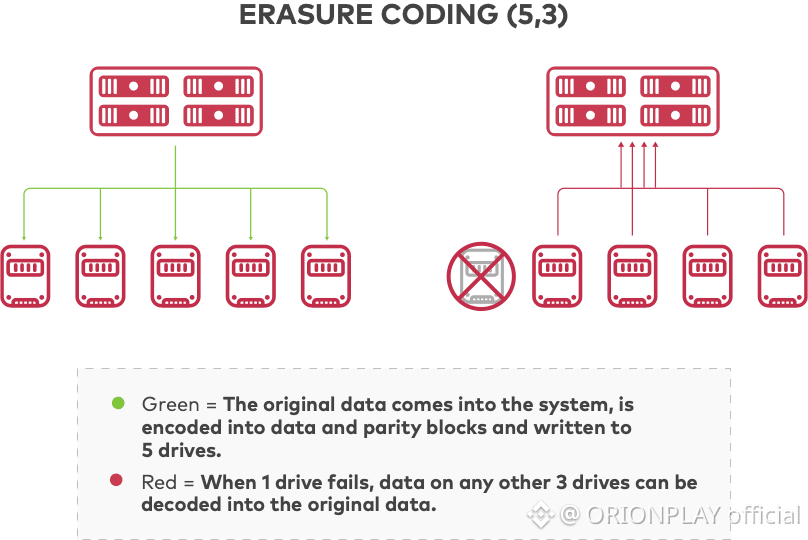
Walrus is built on a new encoding design known as Red Stuff.
Forget heavy math.
Forget polynomial gymnastics.
Forget slow recovery.
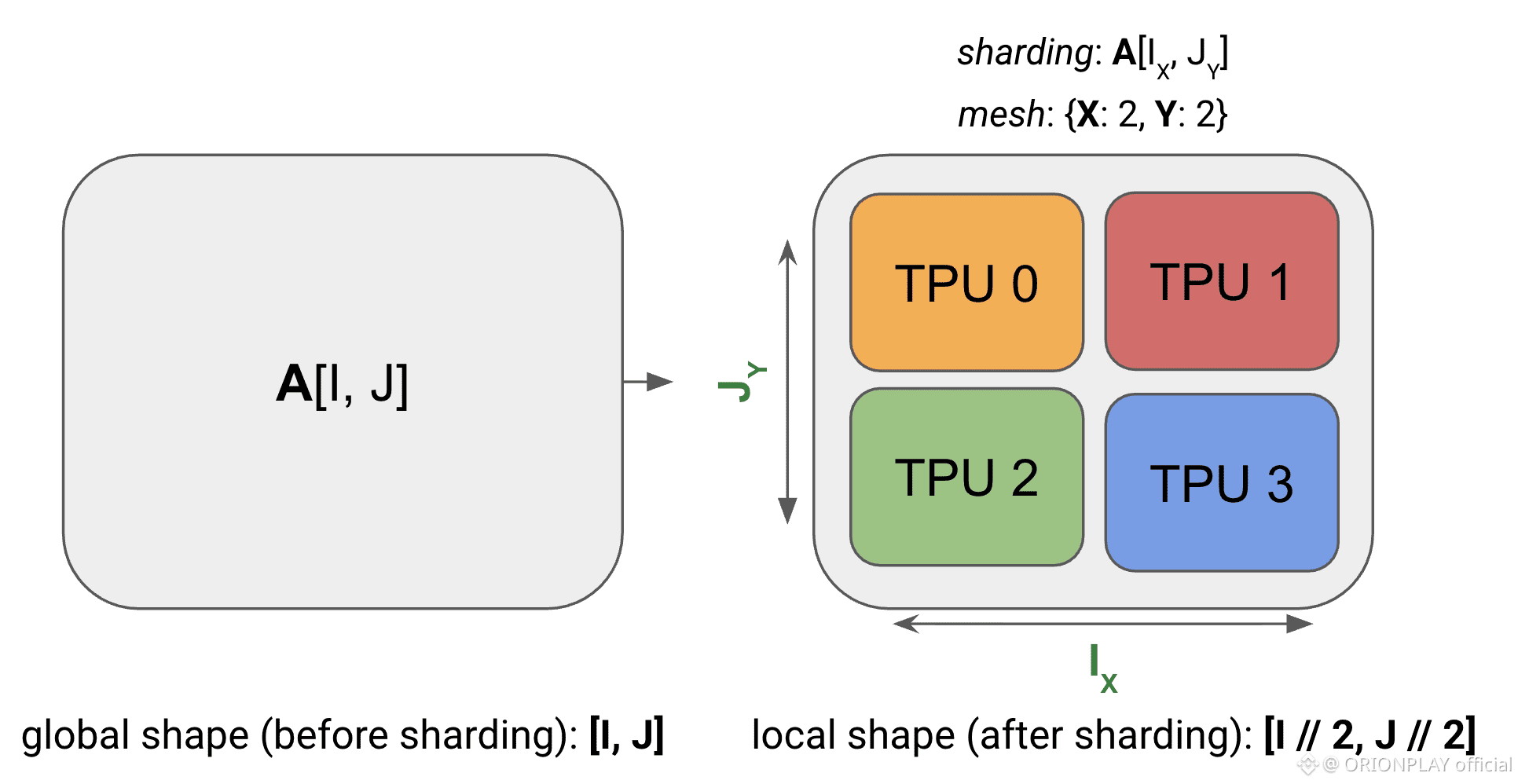
Red Stuff encodes data in two dimensions, like a grid instead of a line.
Why that matters:
Losing a node no longer means re-downloading everything
Recovery bandwidth scales with what was lost, not what exists
Nodes help each other reconstruct memory instead of hoarding it
Think of it like this:
A book is not copied page by page.
Instead, fragments of chapters are woven across shelves.
Lose a shelf — the story still reconstructs itself.
This is how Walrus remembers.
Asynchrony: The World as It Actually Is
The internet is not polite.
Messages arrive late.
Nodes crash mid-sentence.
Writers vanish halfway through uploads.
Walrus assumes all of this.
Not as edge cases — as defaults.
Its storage model works even when:
Writers are malicious
Readers disagree
Nodes lie
Networks stall
Committees rotate
Memory is not assumed to be calm.
It is assumed to be chaotic.
And still — it survives.
Committees, Epochs, and Time as a First-Class Variable
Walrus does not pretend nodes live forever.
Time is segmented into epochs.
Each epoch has a committee.
Committees change.
Stake shifts.
Machines come and go.
Most systems panic during transitions.
Walrus plans for them.
Data is never rewritten wholesale.
It migrates logically.
Slivers recover themselves.
New nodes inherit memory without re-uploading history.
This is not storage that freezes time.
This is storage that moves with it.
Proofs That Scale Like Logarithms, Not Like Pain
Traditional storage proofs ask an exhausting question:
“Are you still storing this file?”
Now multiply that by millions.
Walrus flips the challenge:
Nodes store everything
Challenges test the node, not the file
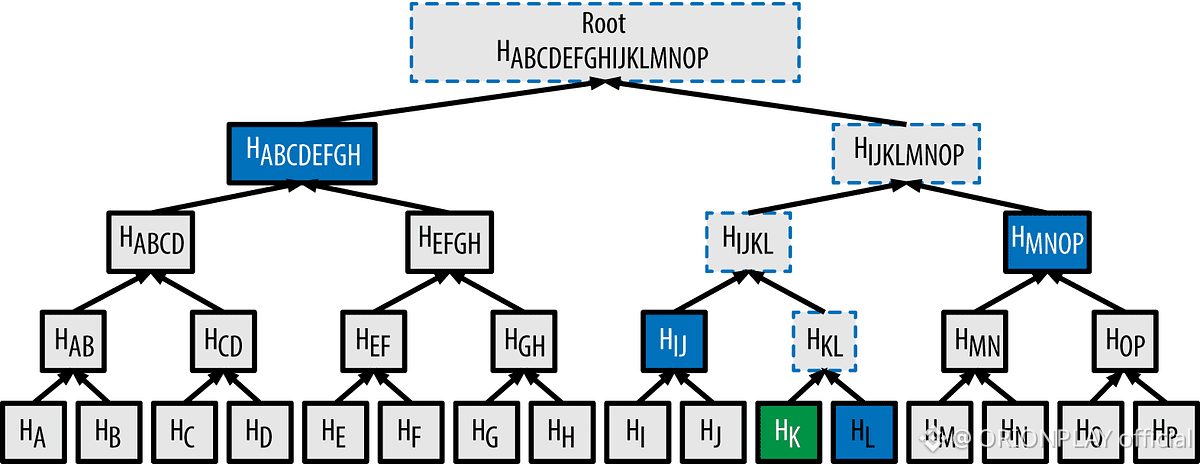
Proof costs grow logarithmically, not linearly
Instead of interrogating memory piece by piece, Walrus tests the organism.
It’s the difference between:
Asking every neuron if it remembers
Or checking whether the brain still functions
Reading Without Trusting, Writing Without Waiting
A reader in Walrus:
Collects slivers
Verifies commitments
Reconstructs truth independently
Rejects lies deterministically
A writer in Walrus:
Encodes once
Collects acknowledgements
Posts availability on-chain
Walks away
No trusted hosts.
No “pinning services.”
No silent assumptions.
Memory is certified — not hoped for.
WAL Is Not a Reward — It’s a Liability
The WAL token exists for one reason:
To make forgetting expensive.
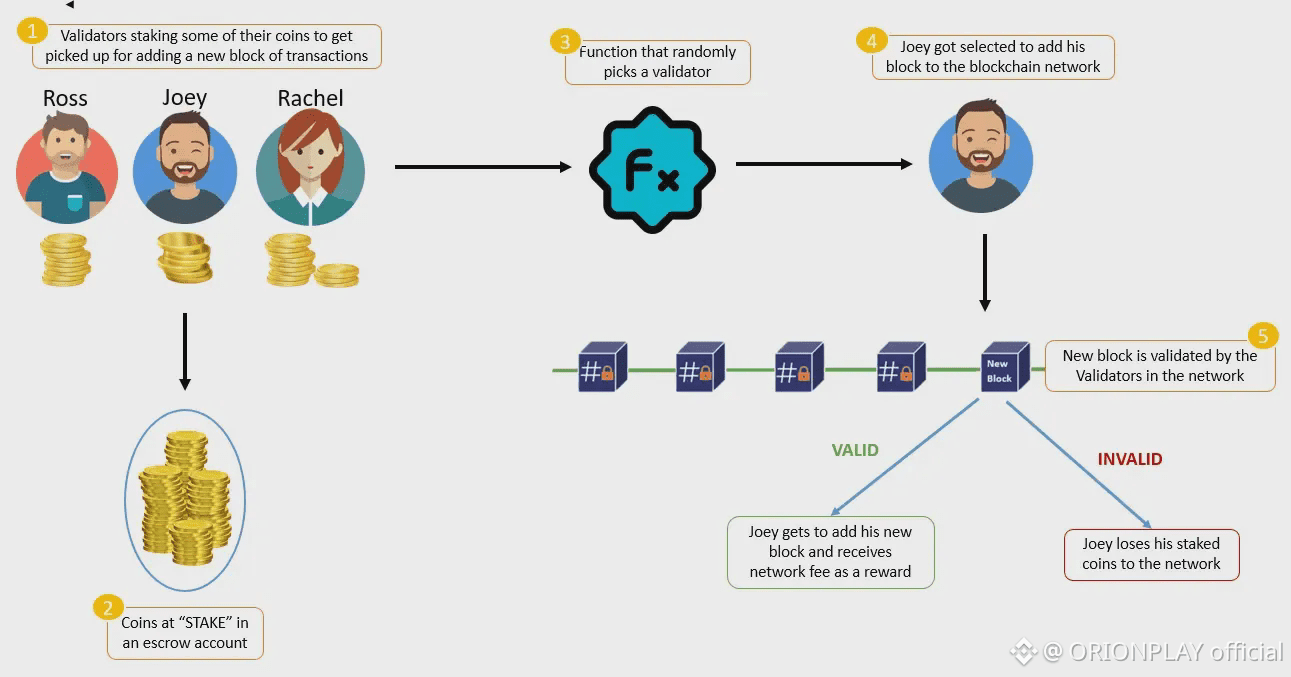
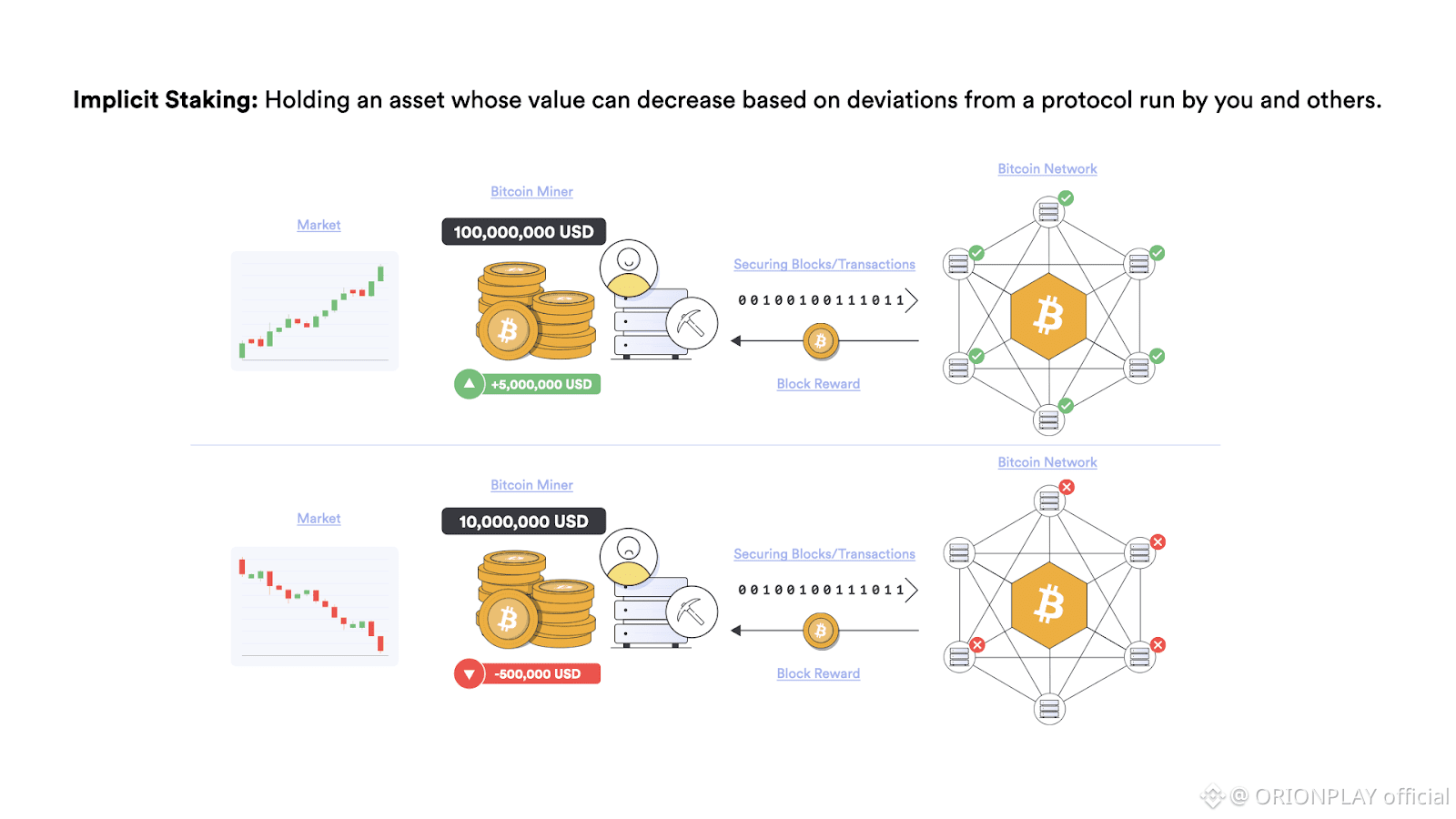
Stake is locked.
Rewards are earned slowly.
Penalties hurt immediately.
Shard loss is punished.
Dishonesty compounds.
There is no “set and forget” operator advantage here.
Running Walrus infrastructure means:
Committing capital
Committing reputation
Committing to future behavior
This is not speculative economics.
This is memory insurance.
Why Walrus Refuses to Be Cheap
Cheap storage is easy.
Honest storage is not.
Walrus deliberately avoids:
Unlimited lifetime promises
Free-rider incentives
Infinite write spam
Short-term exit strategies
Instead, it enforces:
Time-bounded storage
Renewable commitments
Explicit pricing
Explicit accountability
Memory has a cost — pretending otherwise is how systems rot.
Deny Lists: Neutrality Without Hypocrisy
Walrus does something rare in decentralized systems:
It admits reality.
Nodes may have legal constraints.
Nodes may refuse certain data.
Nodes may opt out — individually.
As long as enough nodes remain, data survives.
Neutrality is preserved statistically, not morally enforced.
That honesty makes the system stronger — not weaker.
What Walrus Is Quietly Building Toward
Walrus is not chasing headlines.
It is laying groundwork for:
AI provenance that can be audited
Rollups that cannot lie about availability
Applications whose frontends don’t disappear
Data markets that don’t collapse under trust assumptions
This is not glamorous infrastructure.
It is foundational infrastructure.
The Real Innovation: Memory Without Authority
Most systems choose one:
Central memory with authority
Distributed memory with fragility
Walrus chooses a third path:
Distributed memory with accountability.
No single keeper.
No infinite copies.
No blind trust.
Just mathematics, incentives, and patience.
Final Thought 🐳
Walrus does not ask:
“How do we store more data?”
It asks:
“How does truth survive when everything else changes?”
And then it answers — slowly, carefully, and without shortcuts.

