Walrus serves as a decentralized storage solution on Sui, where users store blobs—arbitrary binary data—with guarantees of availability enforced through WAL token mechanisms. By leveraging Sui's object model, Walrus ensures blobs remain accessible, with WAL facilitating payments and incentives that drive node participation in the ecosystem.
Retrieval Mechanisms for Stored Blobs
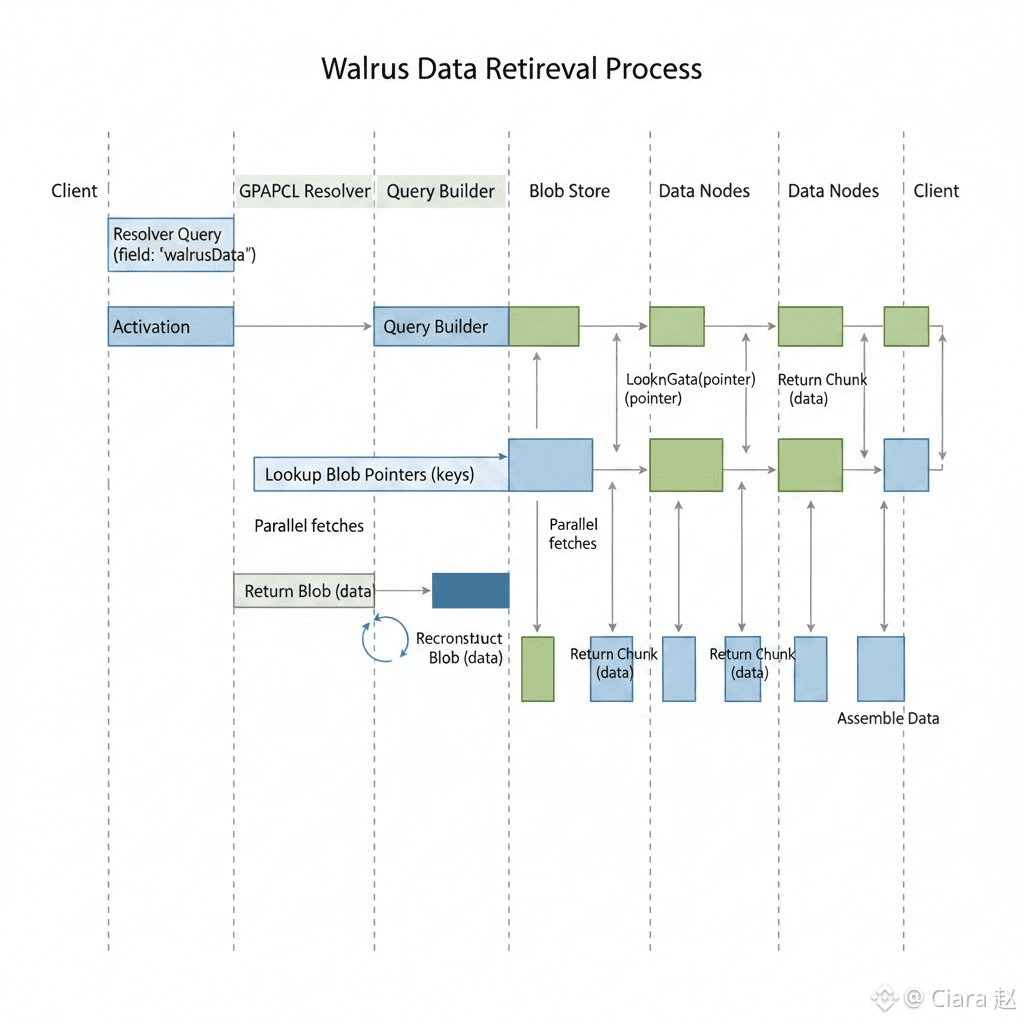
Retrieving data from Walrus involves querying the protocol's resolvers, which locate blob fragments across distributed nodes. A clear definition: resolvers are off-chain services that aggregate data from multiple nodes, reconstructing the original blob using erasure codes. Constraints include potential latency from node availability, capped by epoch durations where nodes must respond within set timeouts. In the Walrus ecosystem, WAL rewards efficient retrievals; nodes stake WAL to join the committee, and successful serves contribute to their reward shares, directly tying performance to token utility.
WAL Payments for Extended Access
Extending blob accessibility requires WAL payments that adjust based on protocol parameters to maintain consistent costs. Concrete steps: First, query the blob's current expiration via Sui's object state; second, calculate the extension fee using the Walrus API, factoring in size and duration; third, execute a Sui transaction transferring WAL to the storage resource. According to official sources, this system uses dynamic pricing per epoch, ensuring WAL holders can predict expenses. Such payments reinforce WAL's role in the ecosystem, as they fund node rewards and encourage sustained storage commitments.
Staking WAL for Node Participation
Staking in Walrus employs a delegated model where WAL holders assign tokens to nodes, influencing committee selection. Bullet points on delegation process:
Select a node via the Walrus interface based on uptime metrics.
Transfer WAL to a delegation object on Sui.
Monitor rewards accrued per epoch, proportional to staked WAL.
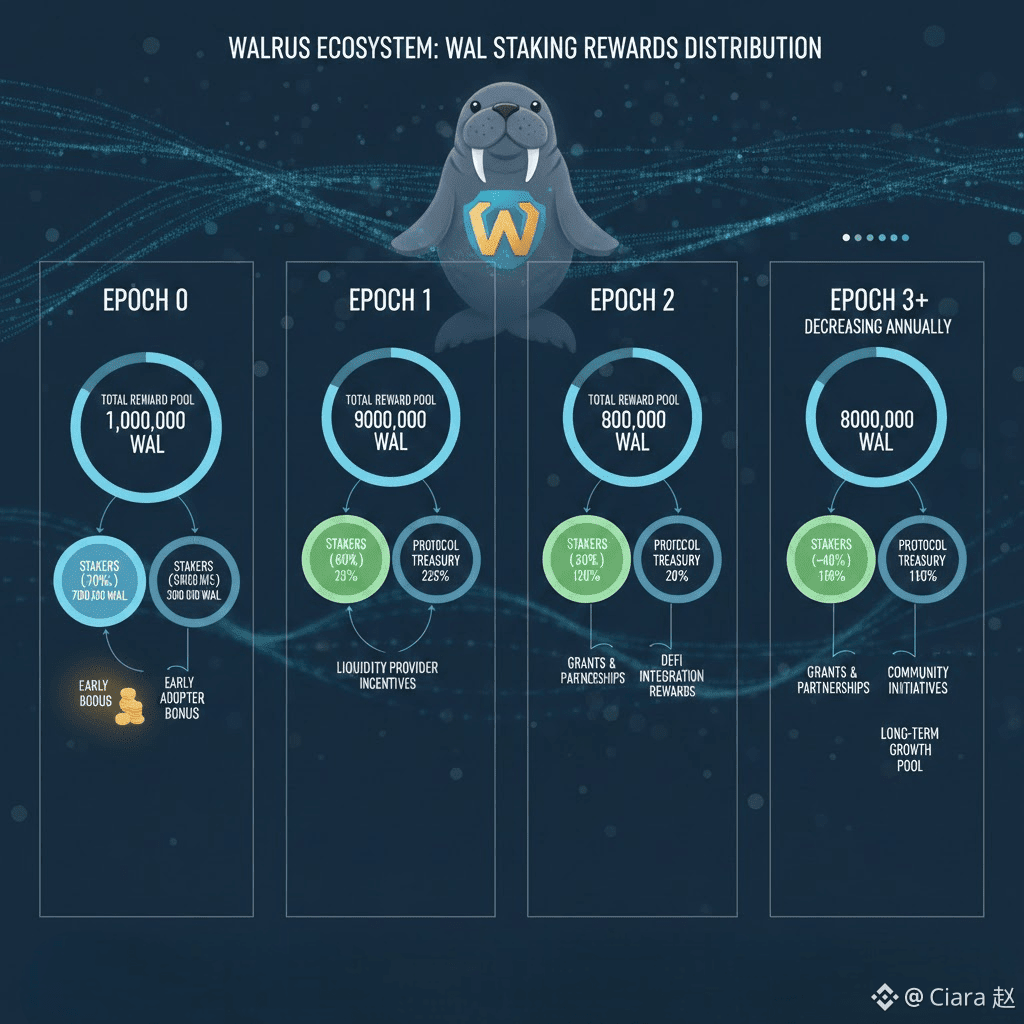
Constraints mandate minimum stake amounts to qualify nodes, with lock-up periods preventing frequent shifts. This setup secures the Walrus protocol, as higher WAL stakes elevate a node's chances of blob assignments, fostering a reliable ecosystem.
Governance Voting with WAL Weights
WAL holders participate in governance by voting on proposals that refine Walrus parameters, such as reward rates or coding thresholds. A walkthrough for voting: Lock WAL in a governance vault through the protocol's smart contract; review active proposals on the Sui dashboard; cast a vote scaled by locked WAL amount during the epoch window. Outcomes update the protocol automatically. Constraints include proposal fees in WAL to deter spam, ensuring decisions reflect committed stakeholders and enhance WAL's utility in ecosystem evolution.
Security Proofs and Challenges in Walrus
Walrus enforces data integrity through periodic challenges, where nodes prove possession of blob fragments without revealing content. This cryptographic mechanism uses zero-knowledge proofs tied to Sui's state, with failures triggering WAL slashing from stakes. For example, a challenge requires nodes to submit hashes within response windows, verifiable on-chain. In the ecosystem, this protects against data loss, as WAL penalties—up to specified fractions—deter negligence, maintaining trust in blob availability.
Developer Integration: Building with Walrus SDKs
Developers integrate Walrus into Sui dApps using SDKs that handle blob uploads and queries, all transacted in WAL. Constraints involve gas limits on Sui for large operations, necessitating batched transactions. A detailed integration: Import the Walrus SDK in your Sui Move code; create a blob object paying WAL fees; reference it in smart contracts for conditional logic based on availability. This empowers WAL users to build applications like decentralized media platforms, where token utilities extend to access controls and revenue shares.
Ecosystem Expansion via WAL Subsidies
Subsidies allocated from WAL reserves lower entry barriers for new projects in the Walrus ecosystem. According to official sources, 10% of the total supply supports these, covering storage costs for innovative uses like AI data repositories. Applications must demonstrate value, such as integrating WAL staking for user rewards. This mechanism circulates WAL through grants, stimulating development and increasing token demand as more blobs are stored and retrieved.
Walrus protocol optimizes decentralized storage with WAL at its core, enabling secure and scalable data management on Sui. As ecosystem participants engage through staking and payments, WAL sustains the network's growth and reliability.