

 The only honest way to evaluate privacy infrastructure is to assume it breaks.
Not catastrophically. Not all at once. But partially, unevenly, and at the worst possible time.
So I start with the uncomfortable premise: confidential execution is compromised.
Some information leaks. Some correlations become possible. Some observers learn more than intended.
Under that assumption, what still holds?
That question is the real test of Dusk Network.
Compromise is rarely total it is incremental and asymmetric.
When confidentiality weakens, it doesn’t flip from private to public. It degrades:
metadata becomes correlatable,
execution timing gains signal,
participation patterns look less random,
partial intent becomes inferable.
The system still runs. Blocks finalize. Proofs verify.
The danger is not stoppage it is advantage reallocation.
So the first question is not “is privacy gone?”
It is who benefits if it is thinner than expected.
What must still hold: correctness without discretion.
Even if execution privacy is stressed, the system must still guarantee:
valid state transitions only,
deterministic rule enforcement,
cryptographic finality,
objective verification.
On Dusk, correctness is orthogonal to confidentiality.
Proofs attest to what happened, not how it was decided. If execution cannot be proven correct, it simply does not finalize.
That property must hold even under partial exposure. It does.
What must not flip: incentives toward extraction.
The most dangerous privacy failure is the one that turns leakage into profit:
validators learn just enough to reorder,
observers infer intent to front-run,
insiders exploit partial visibility.
Dusk’s design explicitly resists this flip. Even if some context leaks:
ordering advantage remains unexploitable,
execution paths stay opaque,
outcomes cannot be simulated pre-finality.
In short, leakage does not become strategy. That is critical.
What must remain bounded: blast radius.
A survivable compromise contains damage:
no retroactive reconstruction of strategies,
no permanent exposure of historical behavior,
no widening inference over time.
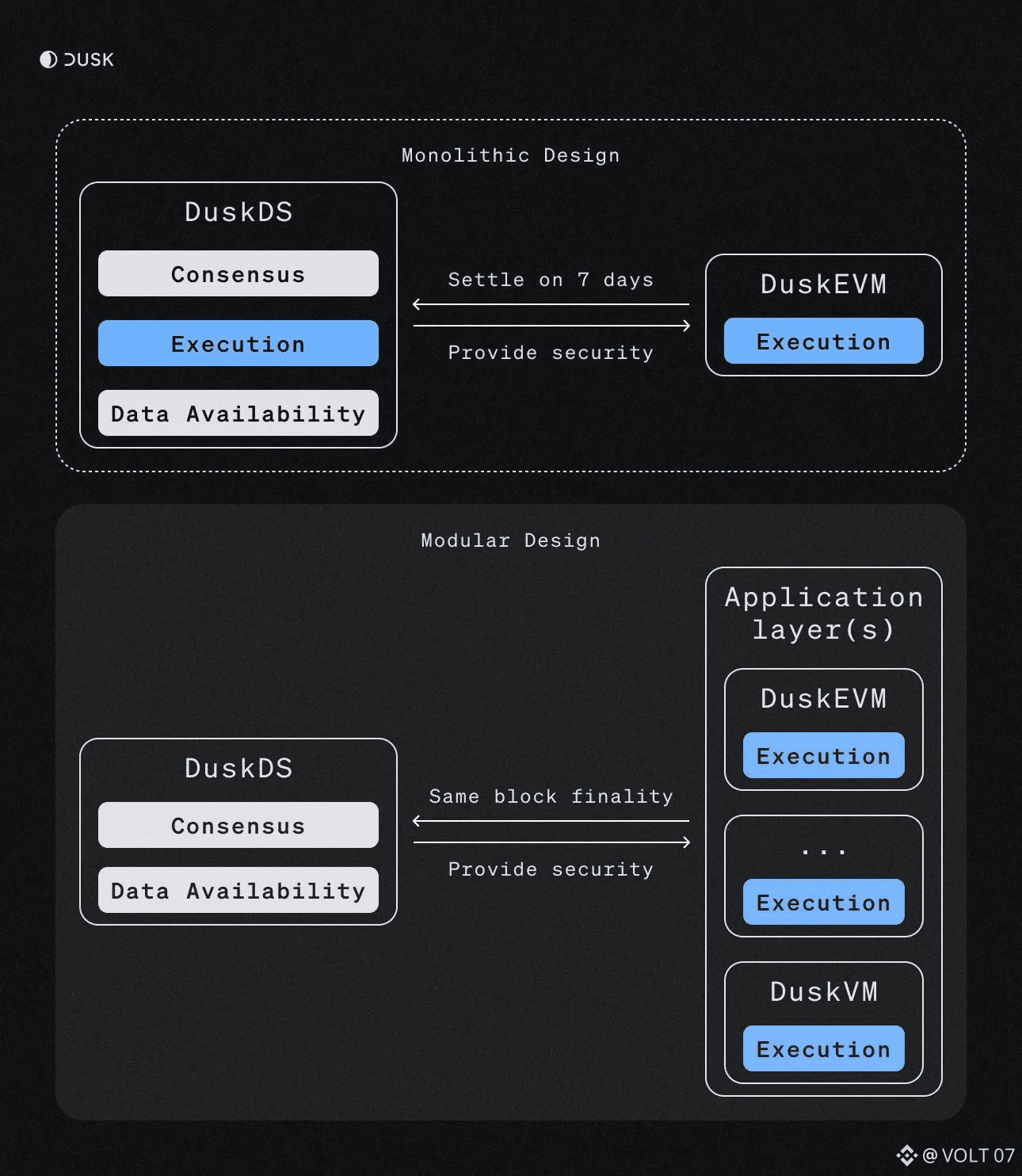
Because Dusk separates execution from verification and avoids public mempool intent, any leakage is local and time-bound, not compounding. There is no archive of exploitable intent to mine later.
That containment is the difference between stress and collapse.
What regulators still get: immediate proof, not explanations.
Assume confidentiality is stressed. A regulator asks:
Was the rule enforced?
Did the transfer comply?
Is this state transition valid?
Dusk does not answer with logs or narratives. It answers with proofs immediate, binary, and verifiable. Privacy pressure does not delay or weaken proof delivery.
What is more material from a regulatory viewpoint is quite apart from secrecy.Readiness of proof survives compromise.
What customers still retain: equity under strain.
Users only need to know, not perfect secrecy but rather:
no one profits from seeing more than they do,
outcomes are not biased by observer position,
execution remains predictable even when privacy thins.
Dusk’s architecture ensures that if confidentiality degrades, fairness does not invert. There is no moment where users subsidize insiders because the system revealed “just enough.”
That is survivability.
What institutions still require: non-inferability over time.
Institutions tolerate risk; they do not tolerate drift. The real fear is cumulative inference:
can strategies be reconstructed later?
can behavior be mapped historically?
can counterparties learn patterns retroactively?
Dusk minimizes longitudinal inference. Even under stress, the system does not emit the breadcrumbs needed to build durable intelligence. Compromise does not age into exposure.
Transparent systems fail this test immediately.
On fully transparent chains, assuming compromise is trivial it is the default:
intent is public,
execution is observable,
inference is permanent,
extraction scales automatically.
There is nothing to test. The system already pays the price.
Dusk is different precisely because assuming compromise still leaves core guarantees intact.
The real question is not “can privacy fail?”
It can. It will be tested.
The real question is:
When confidentiality is stressed, does the system become unfair, unprovable, or manipulable?
On Dusk, the answer is no. Correctness remains enforceable. Incentives remain aligned. Proof remains immediate. Damage is capped.
That is what still holds.
I stopped asking whether confidential execution is perfect.
Perfection is fragile.
I started asking whether the system is safe when it isn’t.
That is the difference between cryptography as a promise and cryptography as infrastructure.
Dusk earns credibility by surviving the assumption of compromise without turning stress into advantage for the wrong side.
