
Walrus delivers a programmable decentralized storage layer on Sui, where developers interact with blobs through SDKs and smart contracts, all powered by WAL for payments and incentives. This setup allows direct integration of storage into dApps, with WAL handling fees, staking, and governance to keep operations aligned across the ecosystem.
Setting Up the Walrus Development Environment
Developers start with the Walrus SDK and Sui CLI to interact with the protocol. Concrete steps: Install the Walrus Rust client via cargo; configure a Sui wallet with WAL balance; connect to the Walrus network endpoint for testnet or mainnet. Constraints require a funded Sui address with sufficient WAL for gas and initial storage tests. This foundation ties WAL utility to development, as every blob operation demands token transfers for fees, ensuring developers experience the economic model firsthand.
Programmatic Blob Creation and Upload
Creating blobs in Walrus involves the SDK to encode and upload data, returning a unique blob ID. A clear definition: the blob ID is a content-addressed hash computed before distribution. Walkthrough for upload:
Prepare data buffer in memory.
Call the SDK's certify_blob function, paying WAL upfront via Sui transaction.
Receive the blob ID and certificate for on-chain verification.
Constraints cap blob sizes per upload to match Sui transaction limits, requiring chunking for larger files. WAL payments here directly fund node storage, linking developer actions to ecosystem rewards.
Referencing Blobs in Sui Move Contracts
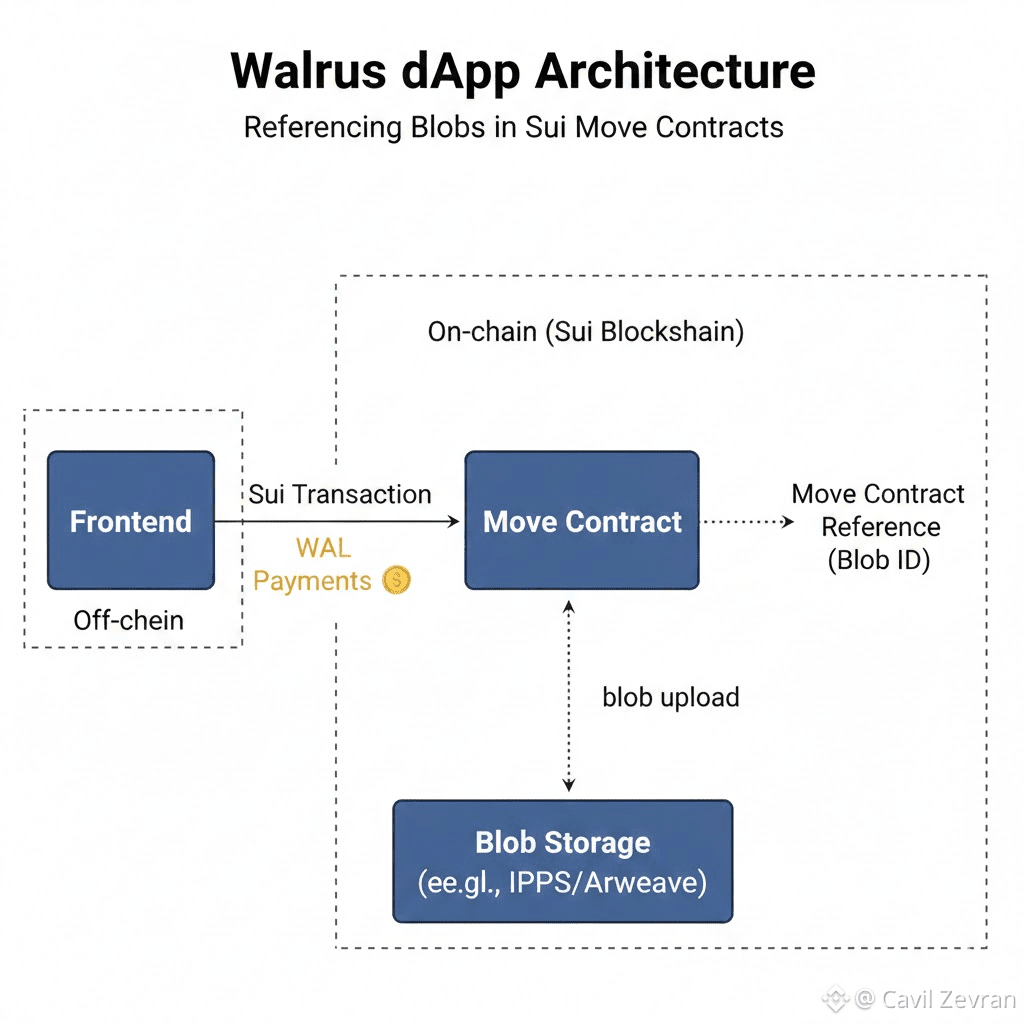
Sui Move contracts reference Walrus blobs by ID, enabling conditional logic based on data availability. Developers import the Walrus package to verify certificates within functions. Bullet points on integration:
Store blob ID in a custom object.
Use availability checks before executing state changes.
Emit events for off-chain indexers tracking WAL-paid blobs.
Constraints enforce certificate validation on-chain, consuming gas proportional to proof size. This mechanism extends WAL utility, as contracts often require users to pay WAL fees for blob interactions, embedding storage costs into dApp economics.
Automating WAL Payments in dApps
dApps automate storage payments by bundling WAL transfers in user transactions. For example, a frontend estimates fees via the Walrus API, then constructs a payable Sui transaction. According to official sources, fee stability mechanisms adjust WAL rates per epoch. Constraints include minimum payment durations to filter spam uploads. In the Walrus ecosystem, this automation drives WAL demand, as recurring payments for blob extensions flow to staked nodes, rewarding infrastructure providers.
Implementing User Staking Interfaces
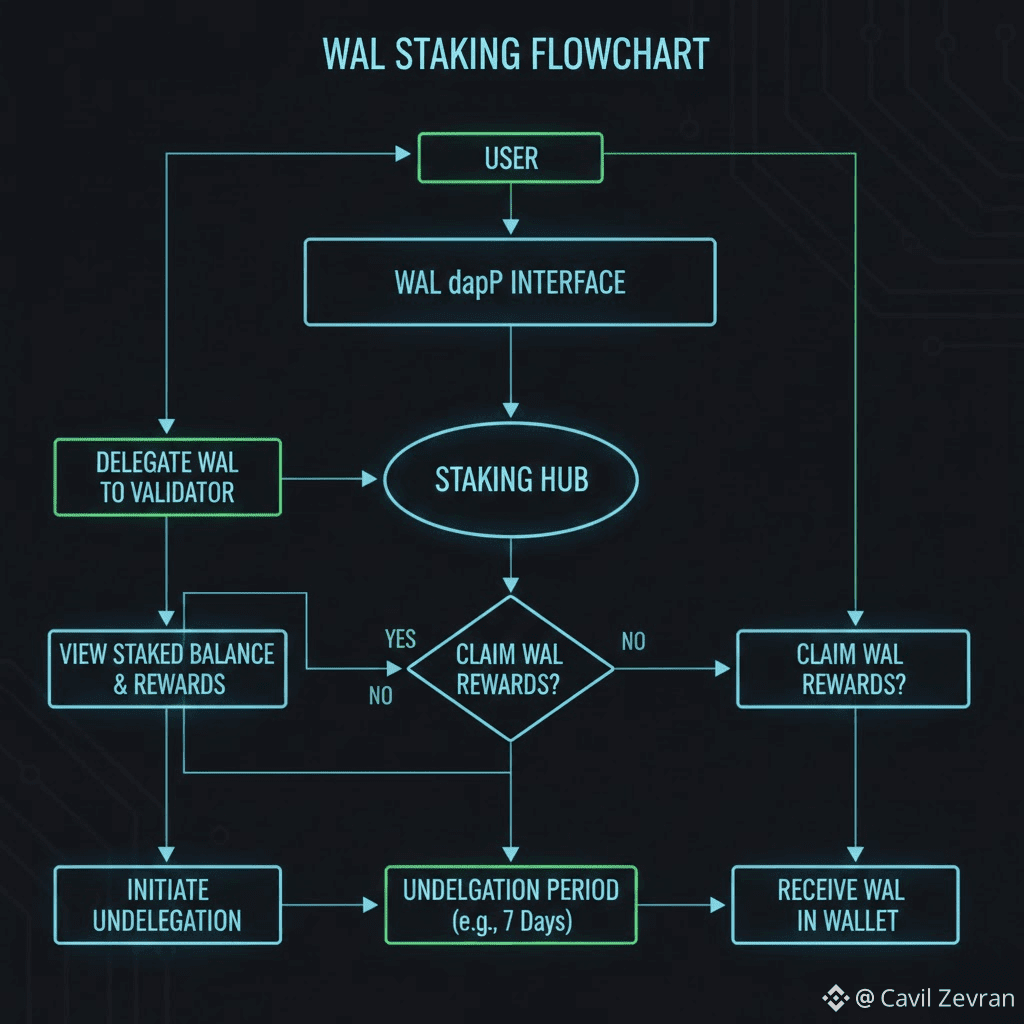
Developers build staking UIs that delegate WAL to nodes through custom Move modules. A walkthrough: Create a delegation object owning user WAL; call the Walrus staking entrypoint with node ID; track rewards via epoch events. Constraints lock delegated WAL for a cooldown period after undelegation. This feature lets dApps offer yield-bearing storage, where users stake WAL to reduce personal fees, circulating tokens deeper into the ecosystem.
On-Chain Governance for Protocol Upgrades
Walrus governance modules allow dApps to facilitate WAL-weighted voting. Developers integrate proposal creation by locking WAL deposits and vote casting via signed transactions. Constraints require minimum WAL holdings for proposal submission, preventing low-effort spam. Implemented correctly, dApps become governance hubs, increasing WAL lockups and aligning community upgrades with active ecosystem participants.
Real-World Example: Decentralized Media Platform
A media dApp on Walrus lets creators upload videos as blobs, paying WAL fees that viewers partially offset via micro-transactions. Smart contracts verify blob certificates before streaming links, while creators stake WAL for priority node assignments. Constraints on metadata size keep transactions efficient. This pattern demonstrates WAL's multi-role utility—payment for storage, staking for performance, and potential subsidies for high-value content—in a functioning ecosystem application.
Optimization Strategies and Constraints
Optimizing Walrus usage involves batching blob operations and leveraging compression to minimize WAL costs. Developers monitor epoch parameters via Sui queries to predict fee changes. Key constraints: rate limits on API calls require caching, and proof verification gas must stay under Sui's per-transaction caps. Effective optimization keeps WAL expenditure predictable, allowing dApps to scale storage without surprising users.
Walrus equips developers with tools to embed decentralized storage directly into Sui dApps, with WAL providing the economic glue for payments, staking, and governance. This integration creates applications where data persistence and token utilities reinforce each other on-chain.


