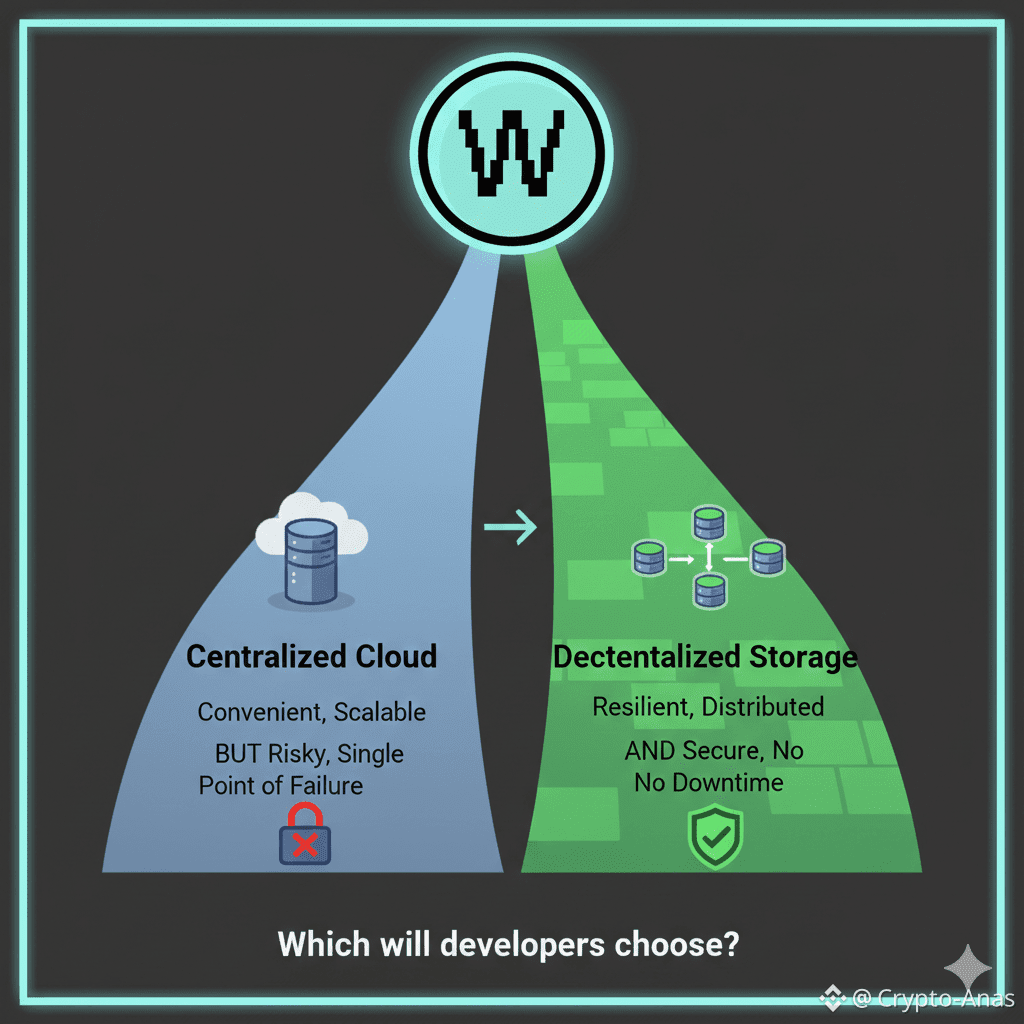
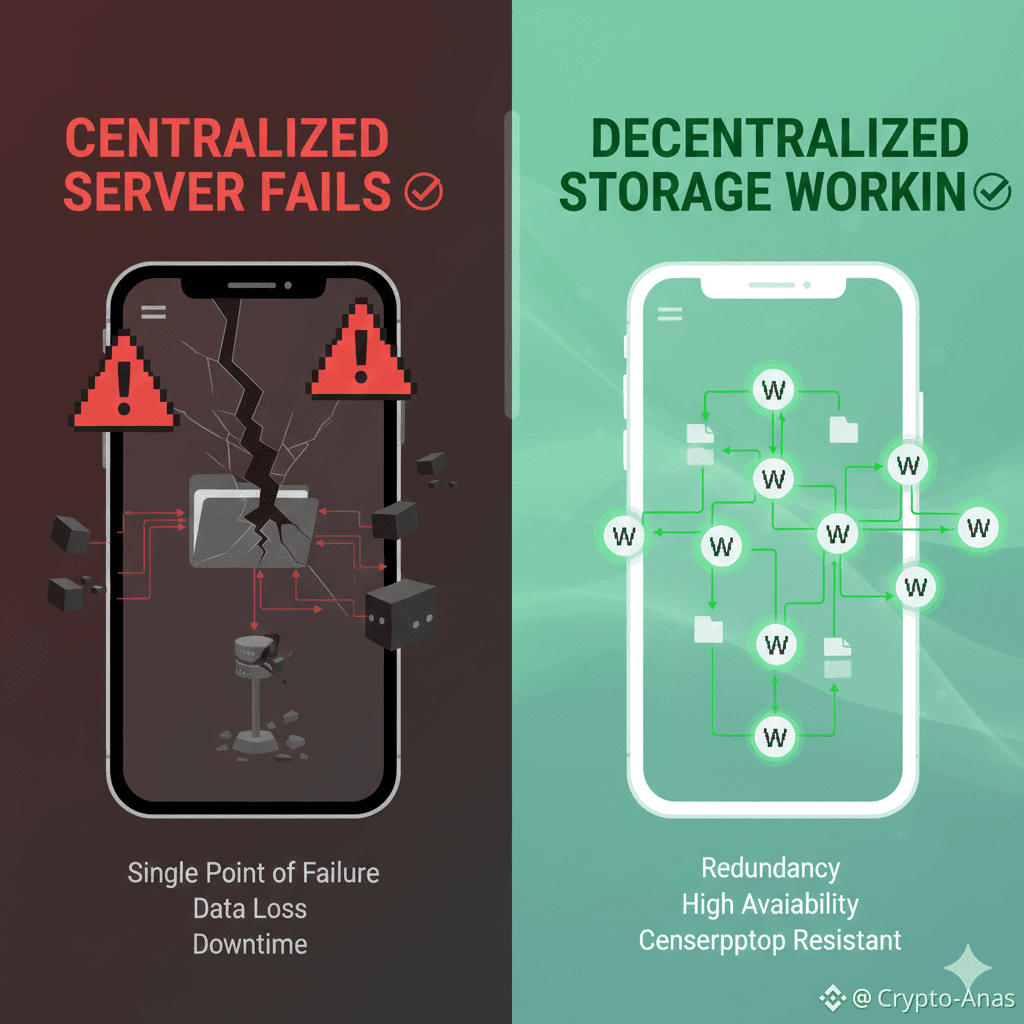
Most crypto apps seem decentralized on the surface, but their weakest link is hidden. Transactions and ownership are on-chain, yet large files and images often live on single servers. If that server fails, the app looks broken. Walrus solves this by offering decentralized blob storage, splitting files across many nodes. Even if some nodes go offline, data is fully recoverable, making apps resilient by design.
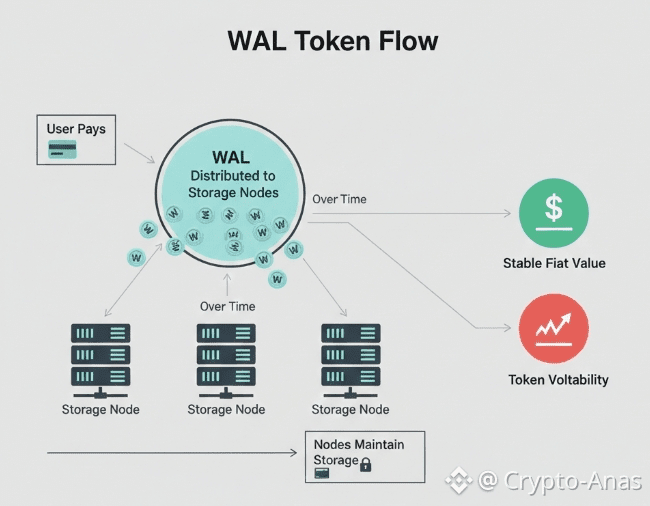
WAL is not just a token; it’s a utility asset. Payments for storage are distributed over time to nodes, keeping costs stable even as token prices fluctuate. This aligns incentives between users, storage providers, and the network itself.
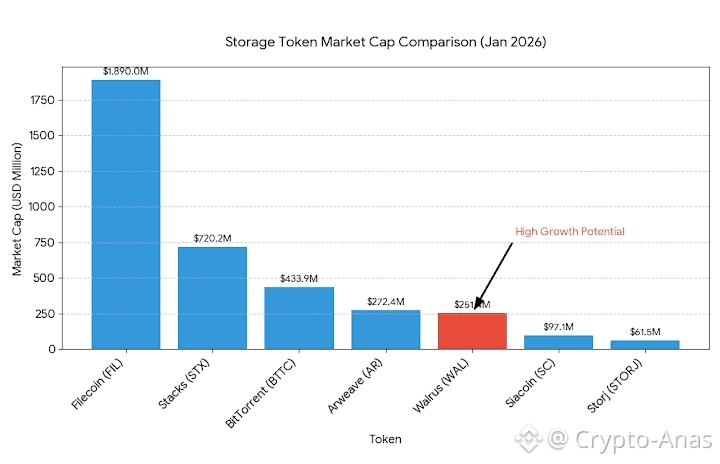
With ~1.57B circulating supply and ~$250M market cap, WAL sits in the middle: not ignored, not overvalued. As AI tools, on-chain games, social apps, and large datasets grow, dependable decentralized storage becomes essential. Walrus is quietly building that backbone for the next generation of Web3.
Will developers move meaningful data from centralized clouds if experience stays smooth?