
@Vanarchain Despite rapid innovation in blockchain technology, the industry still faces a critical obstacle: transforming advanced infrastructure into tools that everyday users and large enterprises can realistically adopt. Many existing blockchains prioritize extreme decentralization or maximum transaction speed, often overlooking usability, developer friendliness, and compatibility with real world business models. Vanar approaches this problem differently, positioning itself as a Layer 1 blockchain created specifically to support large scale consumer facing applications.
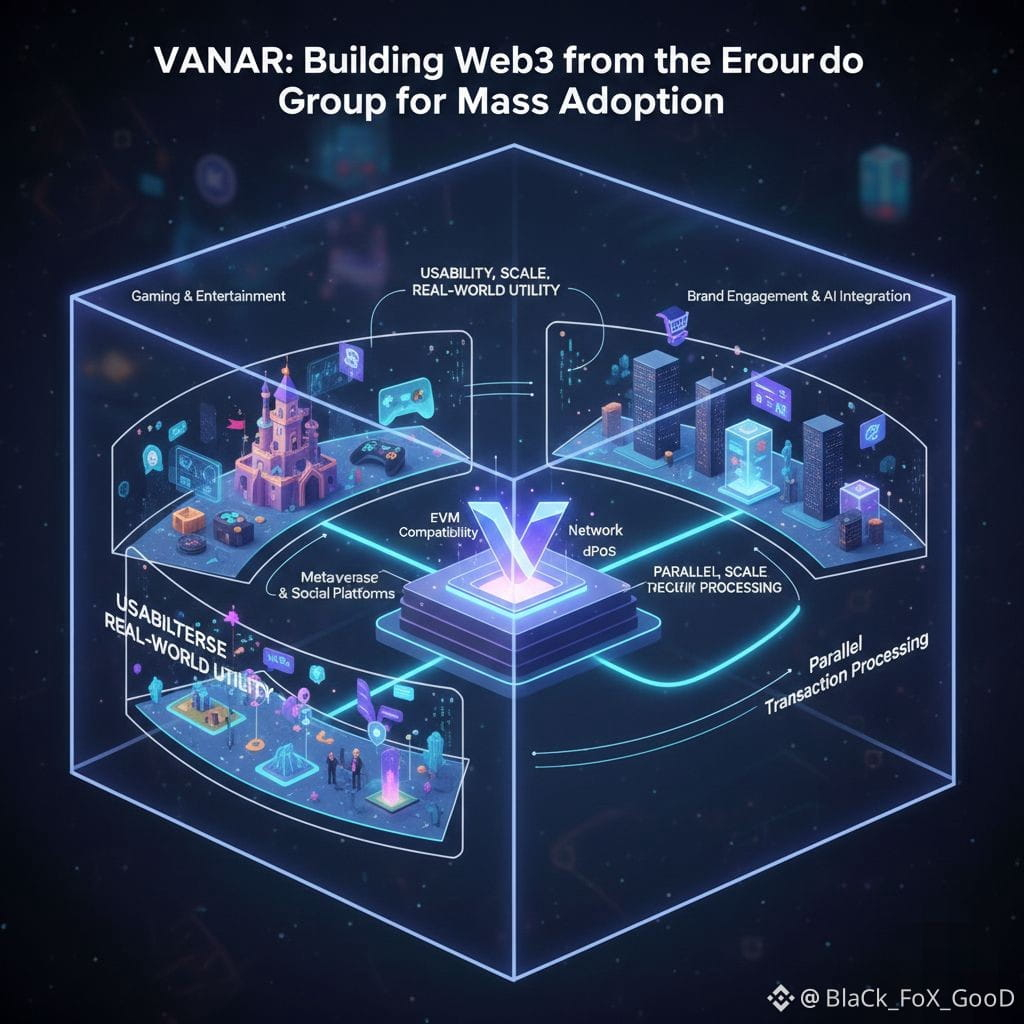
Closing the Usability Gap in Web3
#vanar The central challenge Vanar seeks to overcome is the complexity that discourages mainstream users from engaging with Web3. For non technical users, managing gas fees, private keys, and self custody wallets can be intimidating. From an enterprise perspective particularly in industries like gaming, entertainment, and retail l the cost, risk, and technical burden of blockchain integration often outweigh the perceived value. Vanar operates on the belief that onboarding the next wave of Web3 users requires infrastructure that is simple to use, affordable, and aligned with the operational needs of consumer driven industries.
Architectural Foundations and Technical Design
Vanar is built as a high performance blockchain that is fully compatible with the Ethereum Virtual Machine EVM. This design choice enables developers to reuse existing Ethereum smart contracts and development tools, minimizing friction for teams already familiar with Solidity and the Ethereum ecosystem. The network relies on a delegated Proof of Stake dPoS consensus model, in which token holders vote for validators responsible for block production and network security. This approach emphasizes speed, efficiency, and lower energy consumption, making it suitable for high volume consumer applications.
Functional Capabilities and Network Features
Vanar’s infrastructure is optimized to support scalability and real world utility through several core mechanisms:
Parallel Transaction Processing The network can handle multiple transactions concurrently, enabling high throughput and making it suitable for environments such as multiplayer games or digital worlds with heavy user activity.
Advanced Digital Asset Support Vanar offers tools for creating sophisticated digital assets, including game items, collectibles, and loyalty tokens, all with built in logic and traceable ownership.
EVM Compatibility Developers can easily migrate existing Ethereum based applications while continuing to use established development frameworks.
VANRY Token Utility The native VANRY token is used for transaction fees, staking, governance participation, and incentive mechanisms within applications built on the network
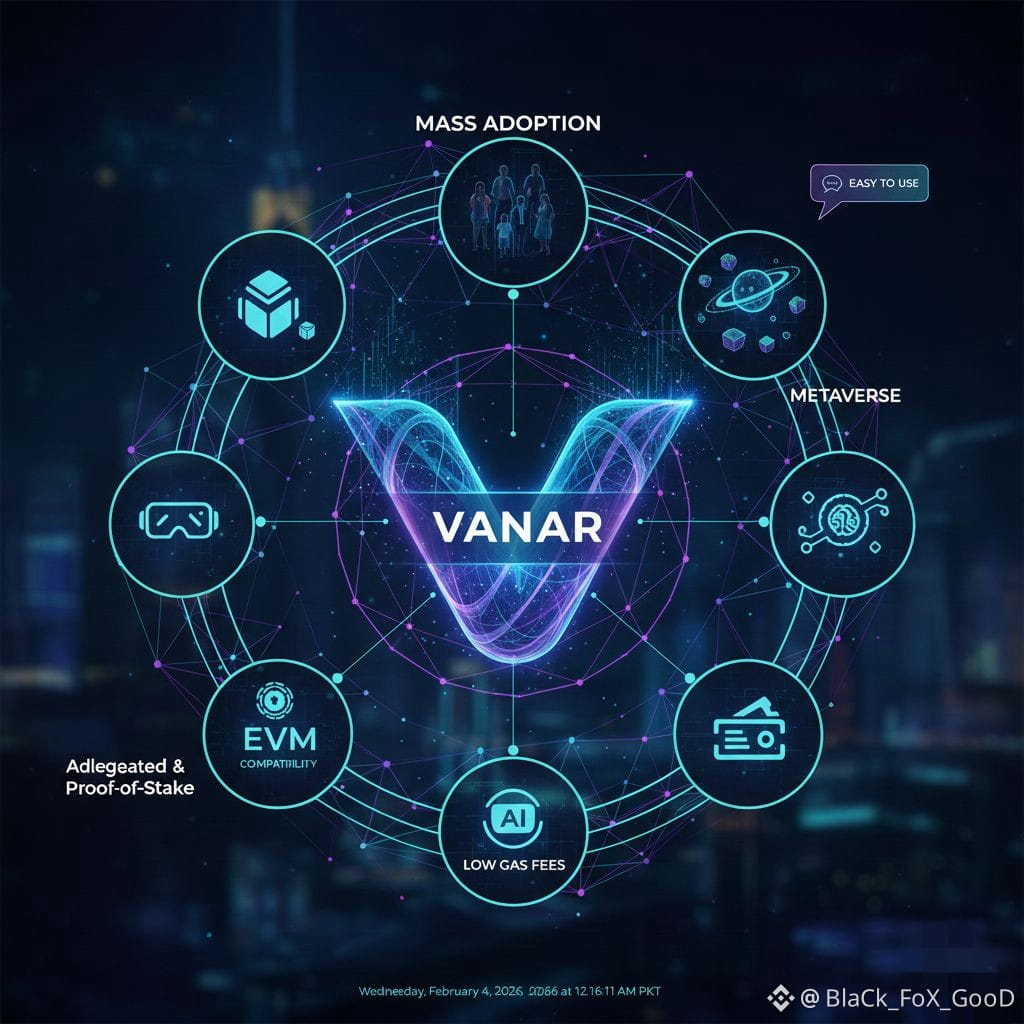
Focused Industry Applications
#vanar While Vanar is designed to be flexible, its strategy clearly targets sectors where digital interaction and ownership play a central role:
Gaming and Entertainment Networks such as VGN Games can use Vanar to support true ownership of in game assets, interoperable economies, and transparent reward systems without disrupting gameplay.
Metaverse and Social Platforms Projects like Virtua rely on fast, low cost transactions for virtual land ownership, digital wearables, and immersive social interactions.
Brand Engagement and AI Integration Vanar can underpin blockchain based loyalty programs, authenticate AI generated content, and power ticketing systems with programmable resale conditions.
Experience for Developers and End Users
For developers, especially those transitioning from Web2, Vanar lowers the barrier to entry through EVM compatibility and a focus on comprehensive tooling and documentation. The platform aims to absorb much of the complexity associated with scaling and onboarding, allowing teams to prioritize product design and user experience. For end users, blockchain interactions are intended to feel seamless or even invisible, with fast transactions, minimal fees, and optional custodial solutions provided by trusted brands to simplify onboarding.
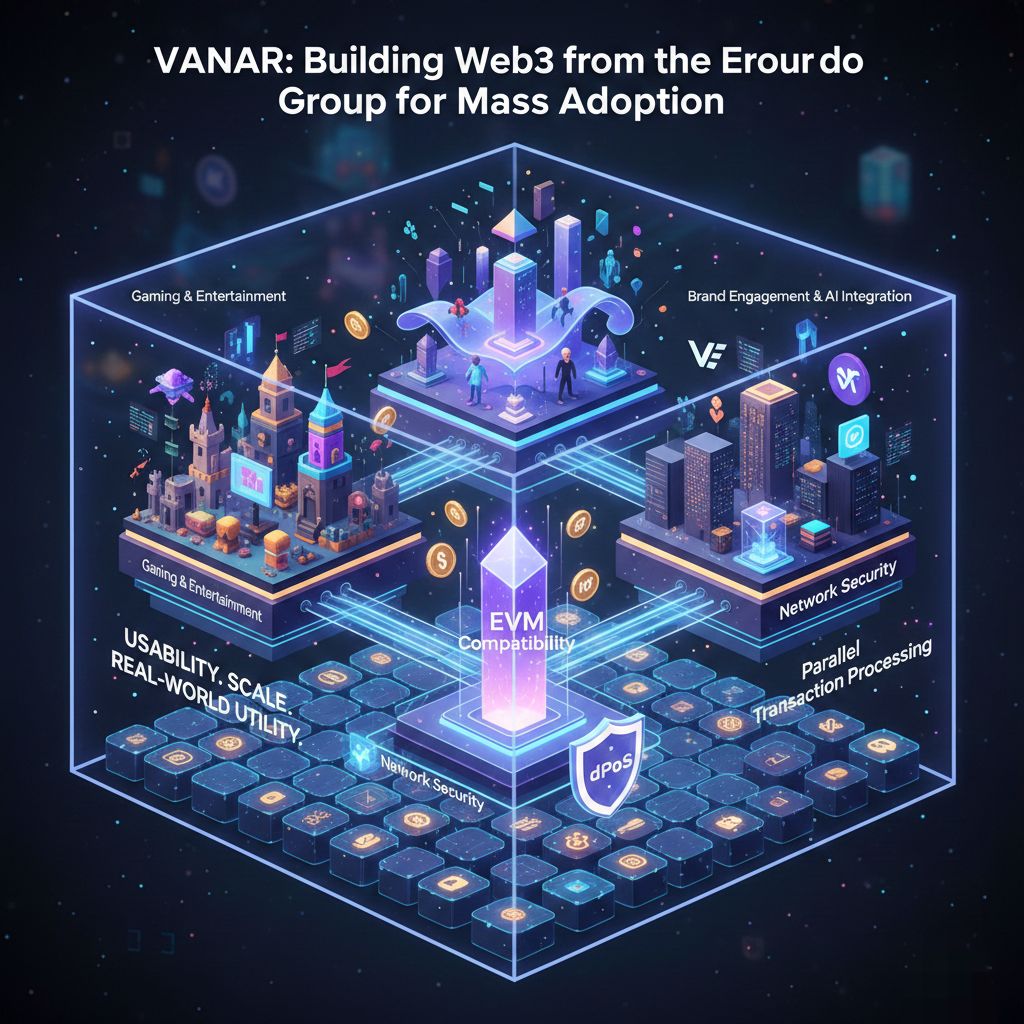
Network Security and Operational Stability
Vanar’s security model depends on its dPoS validator set, where participants are economically incentivized to act honestly through staked VANRY tokens. Validators that fail to meet expectations risk being removed through governance. High throughput and rapid transaction finality are designed to meet the reliability demands of consumer applications that require constant availability. Transparency and consistent performance over time are key to establishing trust in the network.
Performance, Interoperability, and Cost Efficiency
Scalability on Vanar is driven by parallel execution and an efficient consensus mechanism. EVM compatibility ensures interoperability with the broader Ethereum ecosystem, enabling cross chain asset and data movement. By minimizing computational overhead, the network aims to keep transaction fees extremely low an essential requirement for microtransactions and frequent user interactions in games and social platforms.
Long Term Vision and Market Competition
Vanar’s future success depends on its ability to establish itself as a preferred blockchain for major brands and entertainment companies seeking a practical entry into Web3. Adoption will be measured by real user engagement and application usage rather than speculative activity. However, competition among Layer 1 blockchains remains fierce, with many networks pursuing similar goals of scalability and enterprise adoption. Sustained success will require strong partnerships, continuous innovation, and a careful balance between decentralization principles and the operational needs of large corporate partners. Vanar’s evolution will ultimately test whether a blockchain built with mainstream adoption as its primary objective can thrive at the intersection of technology, usability, and commercial viability.
