
Most blockchains feel like a pitch deck that never ends. You don’t so much use them as you constantly explain them—why fees spike, why finality is probabilistic, why users need to care about gas, bridges, rollups, and an ever-growing glossary of “solutions” to problems they never asked for. Vanar reads like a quiet rebellion against that culture. It’s the kind of blockchain you design after you’re tired of justifying complexity and start asking a more honest question: what if the system simply behaved the way people already expect digital infrastructure to behave?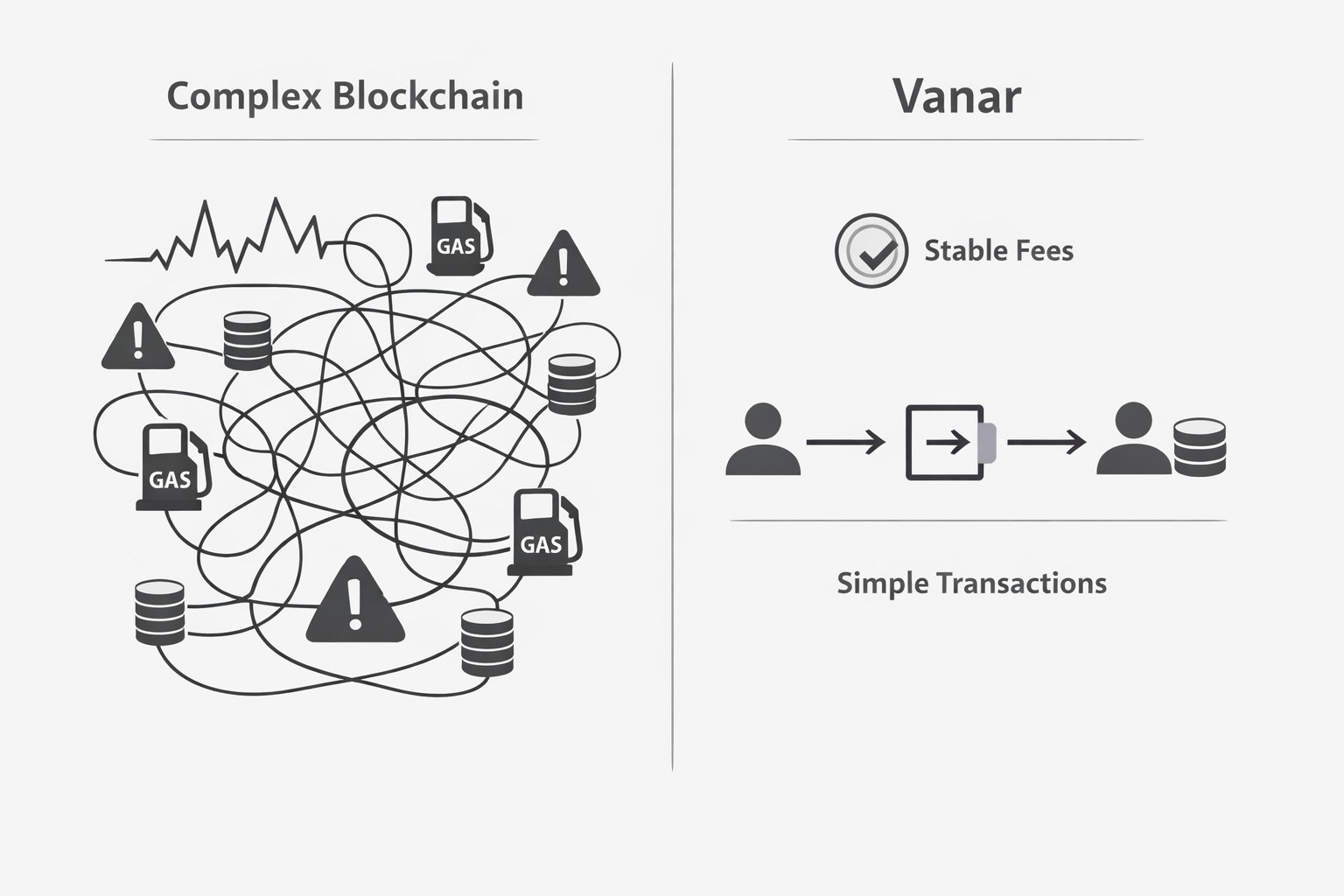
The story of Vanar doesn’t start with throughput charts or abstract consensus debates. It starts with friction—specifically, the friction that appears when blockchains collide with the real world. In most networks, transaction fees are a kind of financial weather: unpredictable, volatile, and strangely accepted as normal. Users learn to wait, to retry, to overpay “just in case.” Developers learn to explain why an action that cost cents yesterday costs dollars today. Vanar’s most defining idea is to treat that entire situation as a design failure rather than an unavoidable truth.
Instead of letting fees float freely on speculative demand, Vanar anchors them to a fiat-denominated target. The system continuously draws from multiple market data sources and dynamically adjusts the native cost of execution so that the user-facing fee remains stable and legible. This is not a cosmetic tweak. It fundamentally reframes what a blockchain fee is supposed to represent. On Vanar, a transaction is priced like a service, not like a commodity being auctioned off in real time. The result is less drama, less guesswork, and a network that behaves more like modern digital infrastructure and less like a financial experiment running in public.
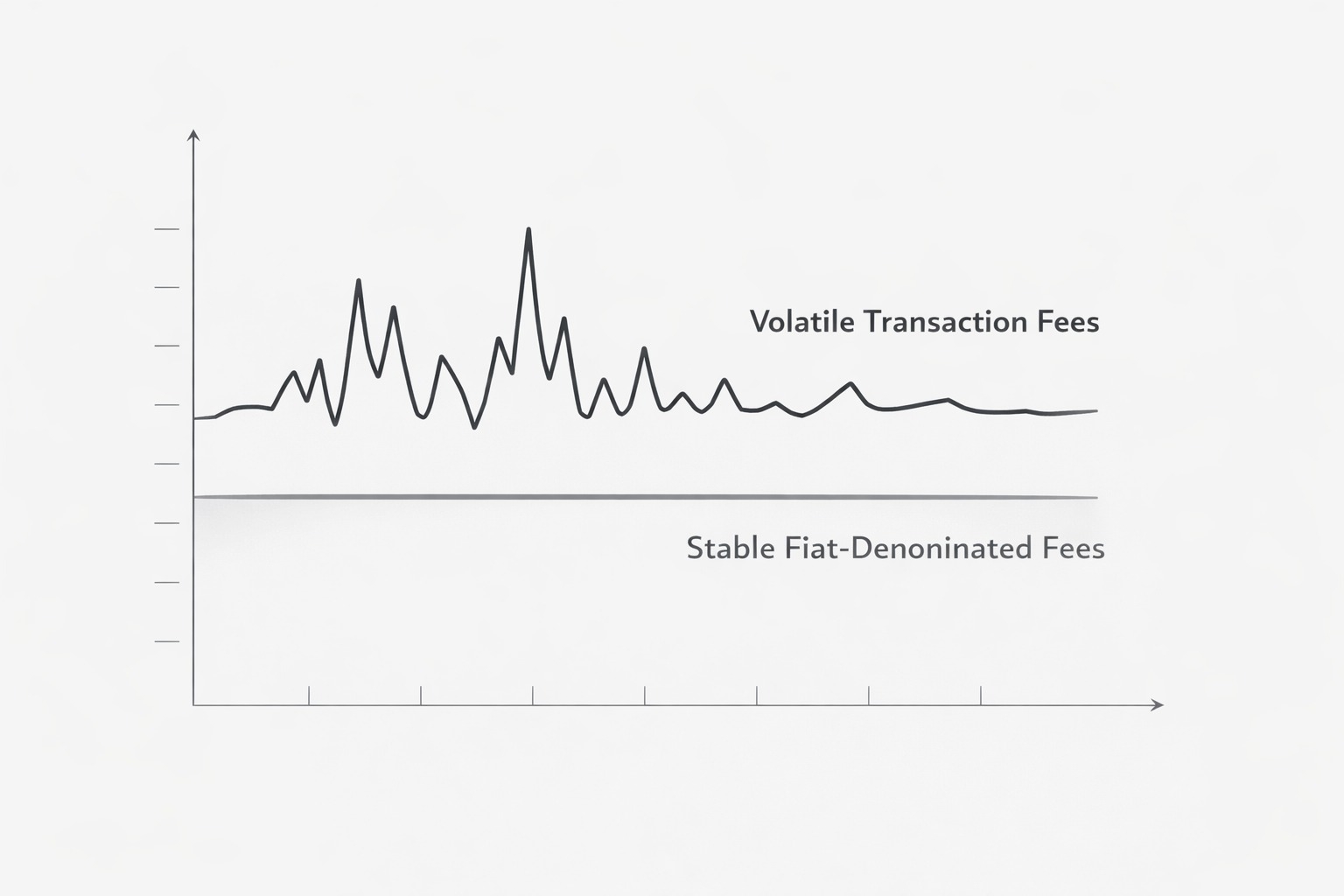
That design choice quietly unlocks a second-order effect that many chains struggle to achieve: developer honesty. When fees are predictable, application designers no longer have to build defensive UX around worst-case scenarios. There is no need for warning banners about congestion or elaborate fee estimators that users don’t understand anyway. Costs can be embedded, abstracted, or even subsidized in ways that feel natural to end users. Vanar doesn’t eliminate fees; it makes them boring. And in infrastructure, boring is usually a sign that something is working.
Under the hood, Vanar still respects the hard lessons learned by the broader blockchain ecosystem. It is not pretending that decentralization, security, and performance are optional. What it does instead is remove the performative aspect of these debates. The architecture is designed to scale without turning every interaction into a lesson in cryptoeconomics. Finality is fast, execution is efficient, and the system is built to support high-frequency, consumer-grade applications without forcing developers to compromise on reliability or user trust.
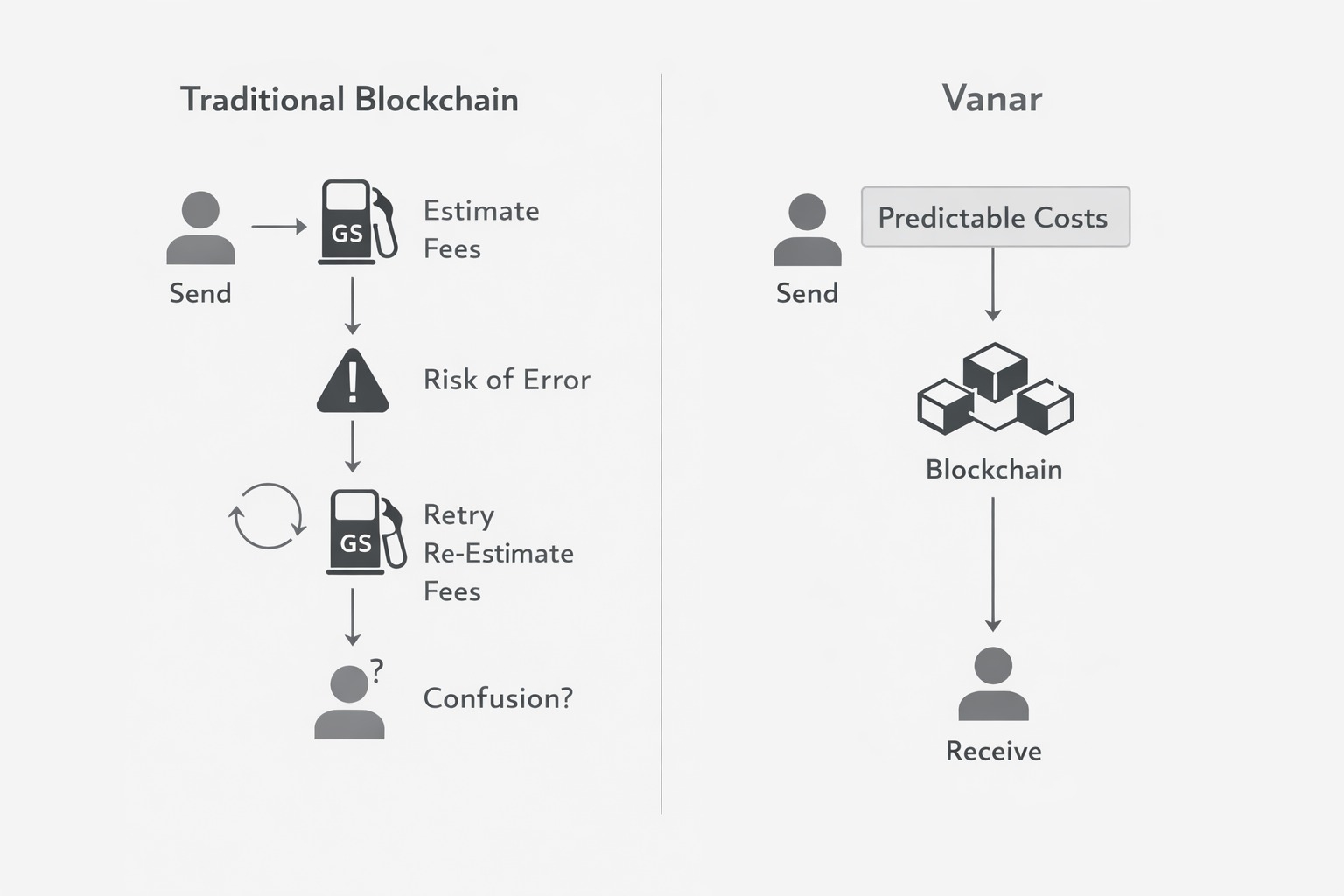
There is also a cultural shift embedded in Vanar’s design philosophy. Many blockchains are built to impress other blockchains—to win comparisons, benchmarks, and social media arguments. Vanar feels like it was built to disappear into the background. Its success metric is not how often it is discussed, but how rarely it needs to be explained. When a game studio, a fintech app, or a digital marketplace can ship on-chain functionality without turning their onboarding flow into a technical seminar, the infrastructure has done its job.
What makes Vanar especially interesting is that none of this relies on magical thinking. The ideas are grounded in well-understood economic principles and pragmatic engineering trade-offs. Fiat-pegged fee targeting acknowledges that most users think in national currencies, not in abstract tokens. Dynamic adjustment acknowledges that markets are noisy and require constant calibration. The chain does not fight reality; it aligns itself with it. That alignment is what gives the project its quiet confidence.
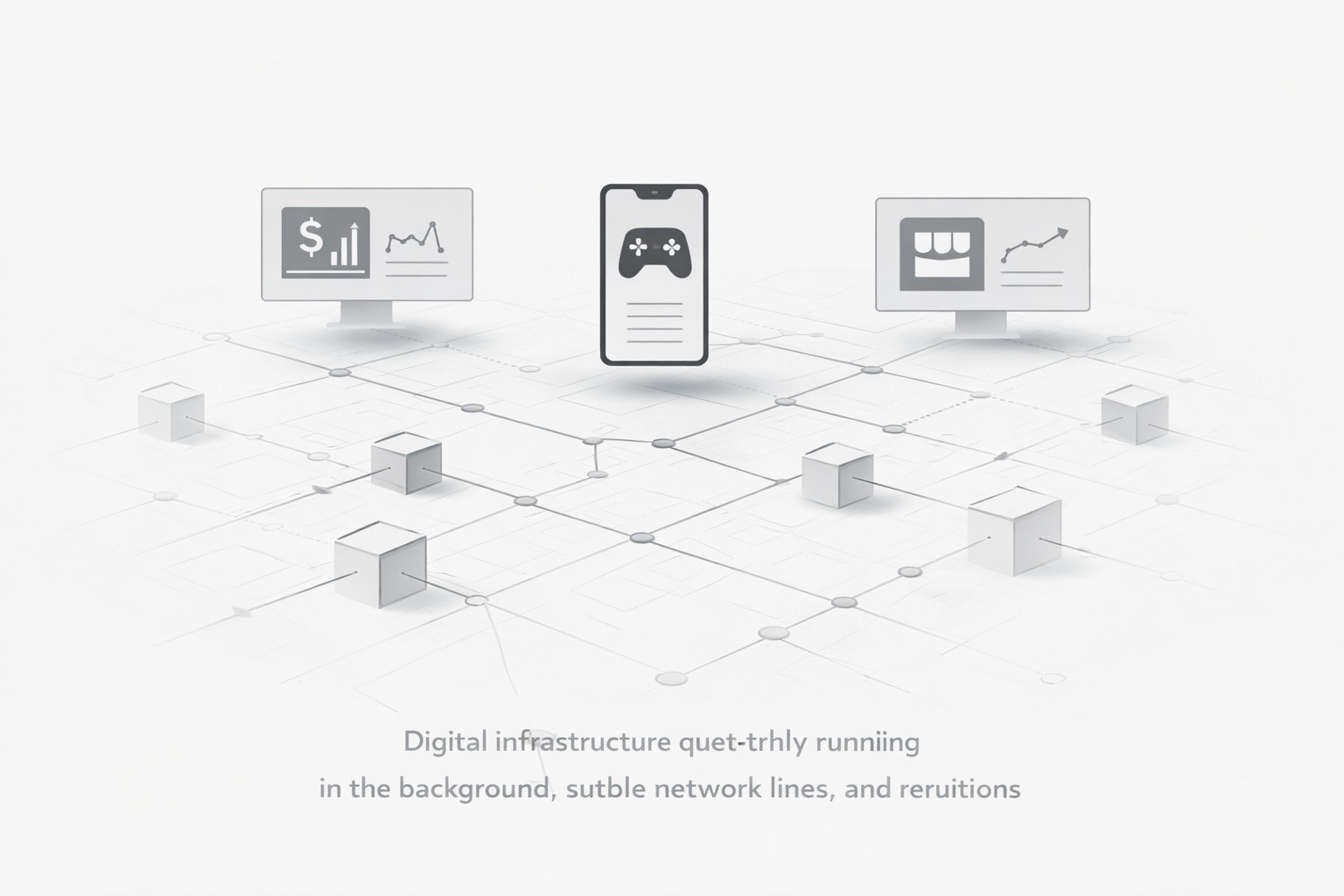
In a space that often equates innovation with novelty, Vanar’s approach feels almost contrarian. It innovates by subtracting rather than adding, by smoothing instead of amplifying, by refusing to make users carry the cognitive burden of the system. It is the blockchain you arrive at after years of explaining why things are complicated and realizing that the explanation itself is the problem.
Vanar doesn’t ask to be admired. It asks to be used. And in doing so, it gestures toward a more mature phase of blockchain development—one where the technology stops trying to prove that it is revolutionary and starts acting like infrastructure people can rely on without thinking twice. That may not sound glamorous, but it is often how genuinely transformative systems announce themselves: quietly, by making the hard parts feel invisible.
@Vanarchain #vanar #Vanar $VANRY
