
Vanar Chain is built on the idea of embedding intelligence directly into blockchain infrastructure. Its origins trace back to a realization that digital entertainment was advancing much faster than Web3 technology. The founding team, originally operating under the name Virtua, worked extensively in gaming, virtual environments, and digital content. Through that experience, they repeatedly encountered persistent obstacles such as high transaction fees, slow processing speeds, and complex infrastructure that limited large-scale adoption.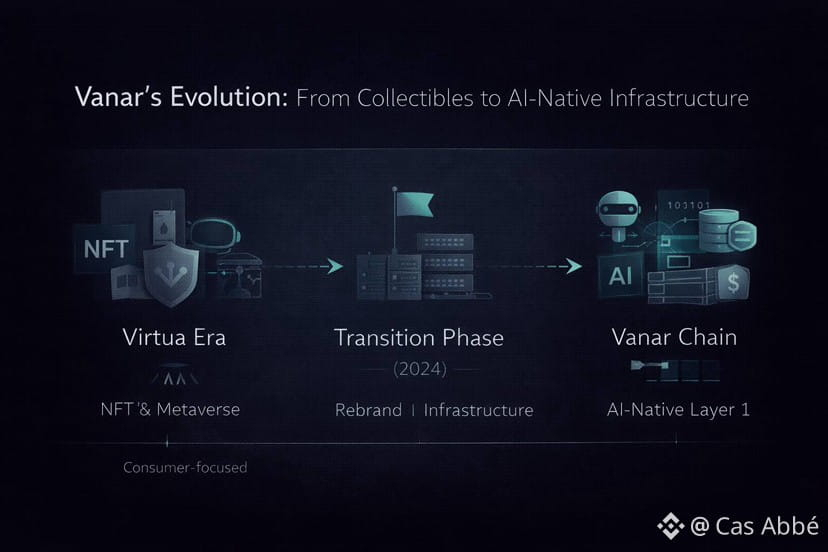
It became clear that blockchain systems were not adequately designed to support entertainment platforms or applications handling significant volumes of data. The initial mission focused on improving entertainment experiences within Web3, but over time the vision expanded. The team began exploring a more fundamental question: instead of relying on external systems for data processing and intelligence, could those capabilities be built directly into the blockchain itself? That shift ultimately shaped Vanar’s identity as an AI-native Layer 1 network.
The transition from Virtua to Vanar was more than a rebranding effort. It marked a deeper change in direction. Rather than functioning solely as an entertainment ecosystem, the project repositioned itself as foundational blockchain infrastructure built for intelligent applications. The launch of the VANRY token symbolized this evolution.
This transformation reflects a broader movement within the industry. Basic smart contracts are no longer sufficient for the next stage of Web3 innovation. Blockchain networks are increasingly expected to manage complex data and adaptive logic. Vanar’s strategy embraces this shift by integrating compression and AI reasoning capabilities directly into the protocol. The intention is to minimize reliance on centralized servers while enabling applications that are more dynamic and responsive. In this sense, the network aims to function not just as a ledger but as a platform for intelligent digital systems.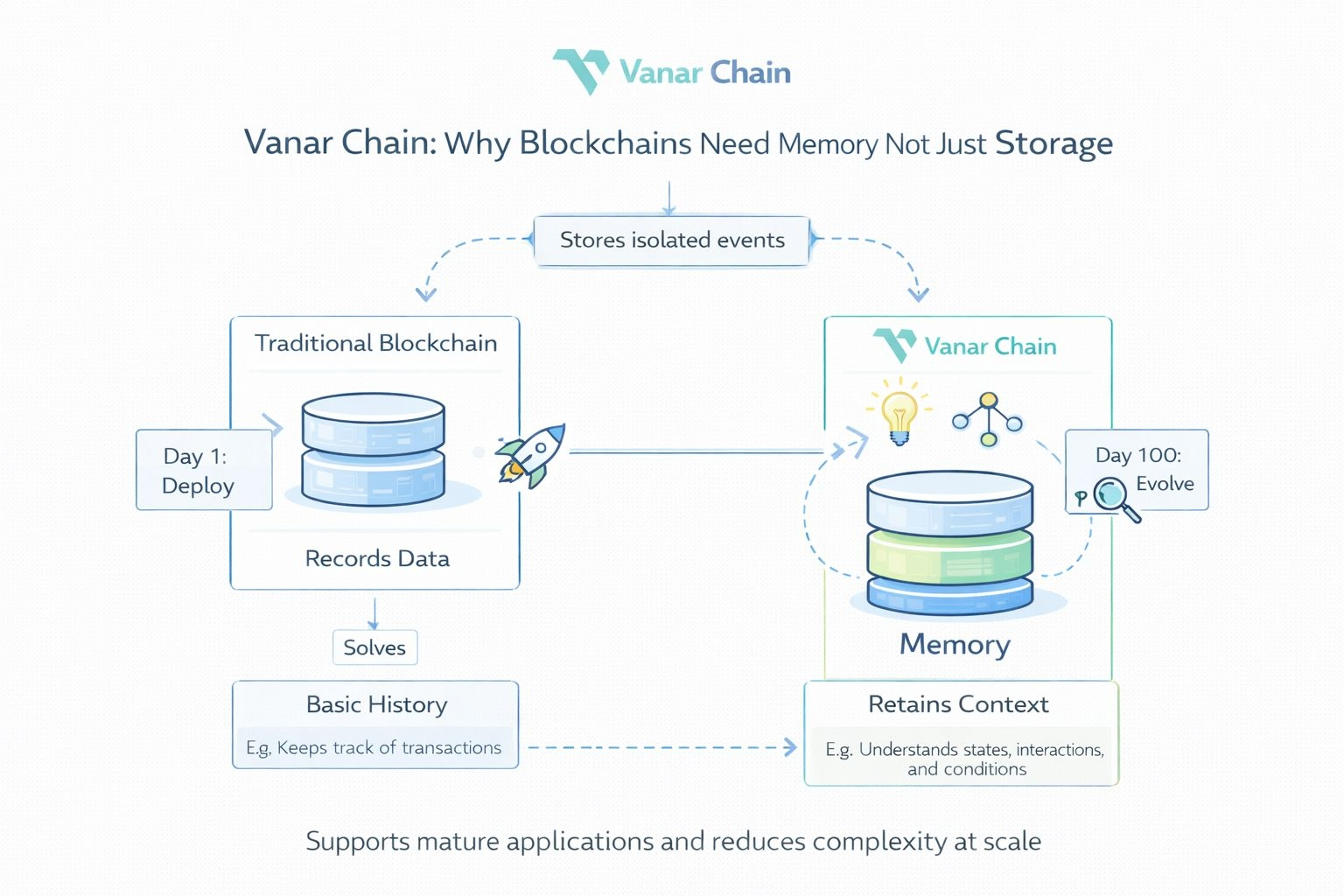
Technically, Vanar operates as an EVM-compatible Layer 1 blockchain, allowing developers familiar with Ethereum tools to deploy applications without relearning entirely new frameworks. This compatibility lowers barriers to entry and supports smoother adoption. The network is based on a customized version of the Go Ethereum framework, optimized to improve throughput and reduce transaction costs. In the competitive Layer 1 space, performance is as critical as innovation.
A notable feature of Vanar’s structure is its hybrid consensus mechanism combining Proof of Authority with Proof of Reputation. Validators are selected not only for financial stake or computational power but also for their credibility within the ecosystem. This approach aims to enhance accountability and stability by involving recognized organizations. However, it also raises ongoing discussions about decentralization and openness.
Vanar distinguishes itself most clearly through its AI-focused architecture. Instead of treating artificial intelligence as an external addition, the network integrates components specifically designed for compressing and processing large volumes of data. Technologies such as Neutron reduce substantial files into compact data “seeds,” improving storage efficiency. Another component, Kayon, enables reasoning over stored information, allowing applications to interact with complex datasets directly on-chain.
This design anticipates a future where blockchain applications require more than simple transactional logic. Supporting advanced digital identities, immersive experiences, and intelligent financial tools demands infrastructure capable of handling meaningful data at scale. In this way, Vanar positions itself as a kind of memory layer for intelligent systems. At the same time, embedding AI into blockchain architecture introduces questions regarding scalability, governance, and long-term sustainability.
Performance remains central to the network’s design philosophy. The system aims to process thousands of transactions per second while maintaining low fees and rapid confirmations. These characteristics are especially important for gaming and interactive platforms, where delays or unpredictable costs can discourage users. Techniques such as sharding and data compression are integrated to reduce latency without compromising security. The use of energy-efficient consensus mechanisms, rather than heavy mining processes, also reflects an effort to address environmental concerns and appeal to institutions mindful of sustainability.
The VANRY token plays multiple roles within the ecosystem. Beyond covering transaction fees, it supports staking, governance participation, and access to AI-driven services. A substantial portion of the supply is allocated toward validator incentives to encourage long-term network security. The economic model attempts to tie token demand to practical usage, particularly through subscription-based AI services, aiming to foster sustainability beyond speculative trading.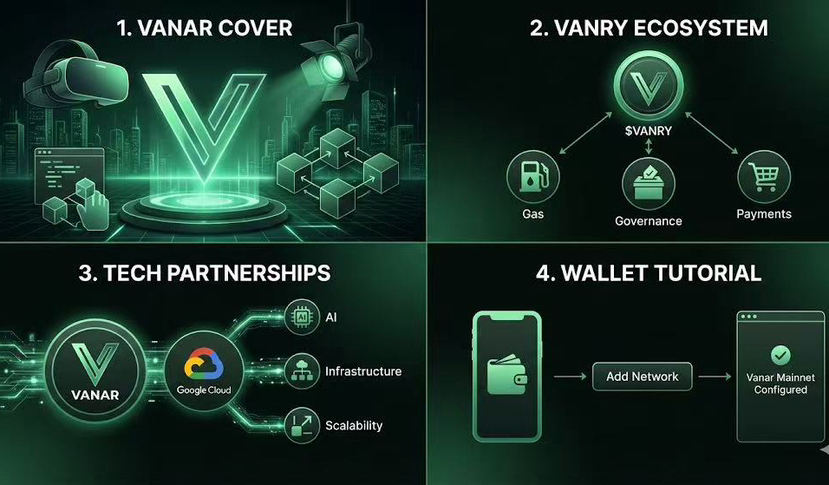
Vanar’s ambitions extend well beyond decentralized finance. Gaming platforms, metaverse environments, and content creation tools form key elements of its strategy. The founding team’s background in entertainment technology influences this focus, reflecting the belief that engaging experiences may drive broader Web3 adoption. Integrations involving AI services and biometric verification suggest a push toward real-world utility. Listings on major exchanges increase liquidity and visibility, expanding access to a global audience.
Despite its ambitious vision, the project faces meaningful challenges. The hybrid validator model may offer reliability but can prompt concerns about centralization. Maintaining a balance between performance and decentralization will be essential. Integrating AI directly into blockchain systems also presents technical complexity, requiring ongoing refinement and testing. In a competitive environment where numerous Layer 1 networks strive to deliver faster speeds and lower costs, differentiation and sustained adoption will be crucial.
The team emphasizes gradual development rather than rapid expansion. Through testnets, governance participation, and structured validator onboarding, they signal a preference for steady evolution. Continued partnerships and improved developer tools are intended to strengthen the ecosystem. Long-term success will depend on consistent user engagement with AI services, gaming platforms, and decentralized applications.
Looking ahead, Vanar’s roadmap includes broader AI-driven applications, tokenized real-world assets, and decentralized finance tools that rely on advanced data processing. The larger ambition is to create an environment where AI agents operate natively on-chain, interacting with users and data without relying on external infrastructure.
Ultimately, Vanar represents an attempt to rethink blockchain’s role in digital infrastructure. Rather than focusing solely on transaction speed, it explores whether intelligence itself can reside permanently within blockchain systems. Whether it achieves widespread adoption or remains an experimental milestone, the project reflects a broader evolution in Web3—one that shifts attention from speculation toward adaptive, data-driven systems designed to serve real users.
